Bike Sizing
Kids bike riding position
A correct kids riding position is four things at once: a saddle the child can reach the ground from, bars at or slightly above saddle height, elbows softly bent rather than locked, and the ball of the foot over the pedal spindle. Get those four and the bike feels easy; miss one and it feels wrong in a way the child cannot explain.
Set the saddle first, then the bars, then the levers, then the feet. Saddle: low enough for flat feet while learning, raised to a nearly straight leg once they are confident. Bars: level with the saddle or a little higher. Elbows: soft, never locked. Feet: ball of the foot on the pedal spindle, not the arch.
1. The saddle, which sets everything else
There are two correct saddle heights for a child, and which one you want depends on where they are in the learning curve.
Learning position: seated, both feet flat on the ground, knees slightly bent. Their feet are the brake, the stabiliser and the confidence. This is lower than efficient and that is the point.
Riding position: once they can start, stop and corner without thinking, raise the saddle until the leg is just short of straight with the heel on the pedal at the bottom of the stroke. In that position the ball of the foot sits on the pedal with a slight bend in the knee, which is where pedalling stops being hard work.
Move between them in half-inch steps, not one jump. The full method and the seat-post minimum-insertion warning are on kids bike seat height.
2. Handlebar height and the upright rule
A child should ride upright. Adult road-bike thinking — low bars, long reach, weight forward — is actively wrong for a kid: it loads their wrists, hides the road behind their own shoulders and makes a sudden stop a somersault risk.
Set the bars level with the saddle or an inch or two above it. On most kids bikes that means the stem spacers stay where the factory put them and you simply do not lower anything. If the bars cannot come up high enough to reach saddle level, the frame is too big.
3. Reach: elbows soft, shoulders relaxed
Sit them on the bike holding the grips. You are looking for a soft bend at the elbow and shoulders that are not hunched up by their ears. Two failures tell you something is wrong.
Locked, straight arms mean the reach is too long. The child steers with their whole torso instead of their hands, and the front wheel wanders in wide arcs at walking pace.
Knees brushing the bars mean the reach is too short, which happens when a child is kept on a bike a size too small for an extra season. Neither is adjustable by much on a kids bike, which is why reach is really a frame-size question.
4. Brake lever reach and finger position
Ask them to squeeze the lever hard while keeping their palm on the grip. If they re-grip, rotate the wrist, or need two hands, the lever reach is wrong. Better kids bikes fit a reach-adjustable lever with a small screw that pulls the blade closer to the bar; budget bikes often fit an adult lever and hope.
Teach two fingers on the lever, index and middle, with the other two still holding the grip. One finger on a kids brake is not enough force and four fingers means letting go of the bar.
5. Feet on the pedals
The ball of the foot goes over the pedal spindle, with the heel level or very slightly dropped. Children default to pedalling with the arch or even the heel, which costs them power and makes the foot slip off under load. It is worth correcting early and it takes one reminder per ride for about a week.
| Check | What you want | If it fails |
|---|---|---|
| Saddle height, learner | Both feet flat, knees slightly bent | Bike is too big — go back a size |
| Saddle height, confident rider | Leg nearly straight, heel on pedal | Raise the post in half-inch steps |
| Bar height | Level with the saddle or a little above | Remove no spacers; if still low, frame too big |
| Reach | Soft bend at the elbow | Arms locked = too long; knees hit bars = too small |
| Brake lever reach | Squeeze hard without re-gripping | Adjust the lever screw, or the bike is too big |
These are the same checks a shop does at handover, done with a 4, 5 or 6 mm hex key in about ten minutes.
What to re-check, and when
Children grow in sudden bursts, so a position that was right in March is often wrong by August. Re-check the saddle every two months and every time they say the bike feels different. The quick version of all of this before a ride is on the first ride checklist.
If three or more of the five checks fail at once, stop adjusting. That is a sizing problem rather than a setup problem, and the five diagnostic checks are on is my child's bike too big.
The picks
Every figure below is the manufacturer's own published spec, linked to the page we read it from, so you can check the one number your decision turns on — here is how we choose.
Quick picks — sorted by weight
| # | Product | Best for | Weight | Price |
|---|---|---|---|---|
| 1 | 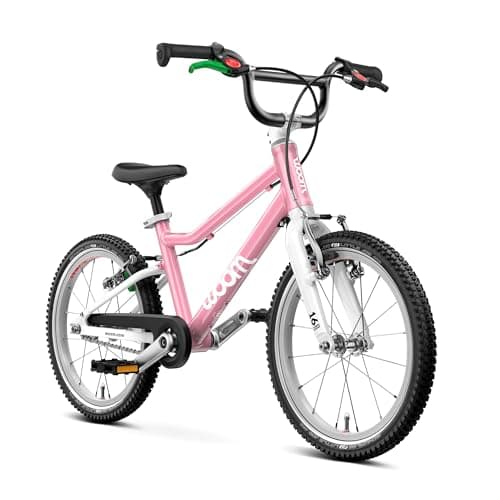 Top pickwoom GO 3 13 lb with a 19–25.1 in saddle range — the widest useful fit window of any 16-inch in this registry, on the lightest frame. | The longest fit window | 13 lb | |
| 2 | 16" Prevelo Alpha Two A 16.9 in minimum saddle on a 16-inch wheel, at 12.1 lb — it bridges the gap where a child has outgrown 14-inch but can't reach a woom GO 3. | The awkward in-between size | 12.1 lb | Not sold on Amazon · Prevelo specs |
| 3 | 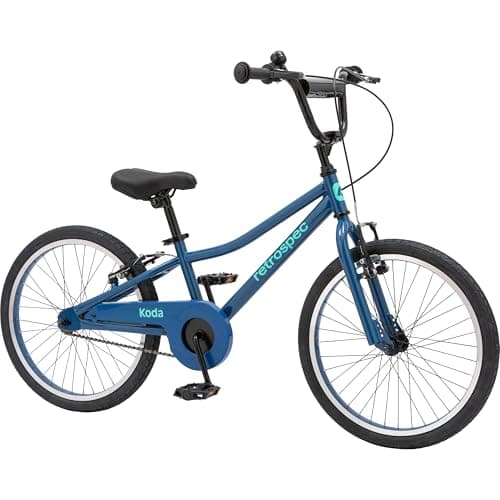 Retrospec Koda 20 A 20-inch with hand brakes and no coaster at all, a published 21.5–27.5 in saddle range, and a price that stays under the line most parents draw. | Hand brakes on a budget | 23.25 lb |
n/p = the manufacturer does not publish that figure. Every other number here comes straight off their spec page.
Top pick — The longest fit window
woom GO 3
13 lb with a 19–25.1 in saddle range — the widest useful fit window of any 16-inch in this registry, on the lightest frame.
| Wheel | 16" |
|---|---|
| Weight | 13 lb |
| Fits inseam | 19.1–25.2 in |
| Saddle height | 19–25.1 in |
| Brakes | Two independently operated mini V-brakes |
| Gearing | Single speed, 18t front / 10t rear |
| Frame | 6061 aluminum |
| Brand says | Manufacturer says 4–6 years, rider height 41–47 in |
What works
- 13 lb — about 29% of the median six-year-old's body weight
- 6.1 in of saddle adjustment, so it lasts two seasons for most kids
- Two proper hand brakes with a color-coded rear lever
What doesn't
- 19 in minimum saddle is too high for a small five-year-old
- No gears, which starts to matter on hills around age six
- Costs three times what a big-box 16-inch costs
How we checked it: Researched from published specs · woom — GO 3 specs
#ad · How we make money · Price as of October 10, 2026
#2 — The awkward in-between size
Prevelo Alpha Two
A 16.9 in minimum saddle on a 16-inch wheel, at 12.1 lb — it bridges the gap where a child has outgrown 14-inch but can't reach a woom GO 3.
| Wheel | 16" |
|---|---|
| Weight | 12.1 lb |
| Fits inseam | 15.5–22 in |
| Saddle height | 16.9–25.2 in |
| Brakes | Independently operated dual hand brakes, kid-sized levers |
| Gearing | Single-speed freewheel, 18t / 10t |
| Frame | Triple-butted 6061 aluminum, THRU-TUBE design |
| Brand says | Manufacturer says 4–6 years |
What works
- 16.9 in minimum saddle height — over 2 in lower than the woom GO 3
- 12.1 lb (manufacturer figure, without pedals)
- 8.3 in of saddle travel
What doesn't
- Published weight excludes pedals
- Direct-sale only
- Single speed
How we checked it: Researched from published specs · Prevelo — Alpha Two specs
Not sold on Amazon · Prevelo specs
#3 — Hand brakes on a budget
Retrospec Koda 20
A 20-inch with hand brakes and no coaster at all, a published 21.5–27.5 in saddle range, and a price that stays under the line most parents draw.
| Wheel | 20" |
|---|---|
| Weight | 23.25 lb |
| Saddle height | 21.5–27.5 in |
| Brakes | Hand-operated aluminum V-brake with a reach-adjustable lever; no coaster brake |
| Gearing | Single speed, 32T crank and 16T freewheel cog |
| Frame | High-tensile steel, low-profile step-over |
| Brand says | Manufacturer says ages 6–8, riders 44–63 in, up to 150 lb |
What works
- 21.5–27.5 in published saddle range — 6 in of travel, the longest here at this size
- Hand V-brake only, with no coaster to confuse the feet
- 150 lb rider limit
What doesn't
- 23.25 lb — about a third of the median eight-year-old
- Single speed, so hills get walked
- Steel frame and entry-level parts; budget for adjustment
How we checked it: Researched from published specs · Retrospec — Koda 20 specs
#ad · How we make money · Price as of October 10, 2026
Questions parents actually ask
01What is the correct riding position for a child on a bike?
Upright, with the handlebars level with the saddle or slightly higher, a soft bend at the elbows, the ball of the foot over the pedal spindle, and a saddle set so a learner can put both feet flat on the ground.
02Should handlebars be higher than the seat on a kids bike?
Level or a little higher. An upright position lets a child see ahead, keeps weight off their wrists and makes a sudden stop far less likely to tip them forward.
03How should a child's leg look at the bottom of the pedal stroke?
Almost straight with the heel on the pedal, which leaves a slight bend in the knee when the ball of the foot is in its normal place. That is the efficient position, and it comes after they can already start and stop confidently.
04How do I know if the handlebars are too far away?
Their arms lock straight and they steer with their shoulders instead of their hands, which shows up as the front wheel wandering in wide arcs at walking pace. Reach is not adjustable by much on a kids bike, so that usually means the frame is too big.
Sources
Read next
- Bike SizingKids bike seat heightTwo correct saddle heights, and when to move between them.
- Bike SizingIs my child's bike too big?Five checks that settle it, without a tape measure.
- Learning to RideFirst ride checklistNine checks, ten minutes, before the first ride.
- Bike SizingHow to measure your child's inseamTwo minutes, a book and a wall. The only measurement that matters.