The how · the part gear can't solve
Learning to ride
How to teach a child to ride in an afternoon, when to move off the balance bike, and the honest case against training wheels.
6 pages in this section
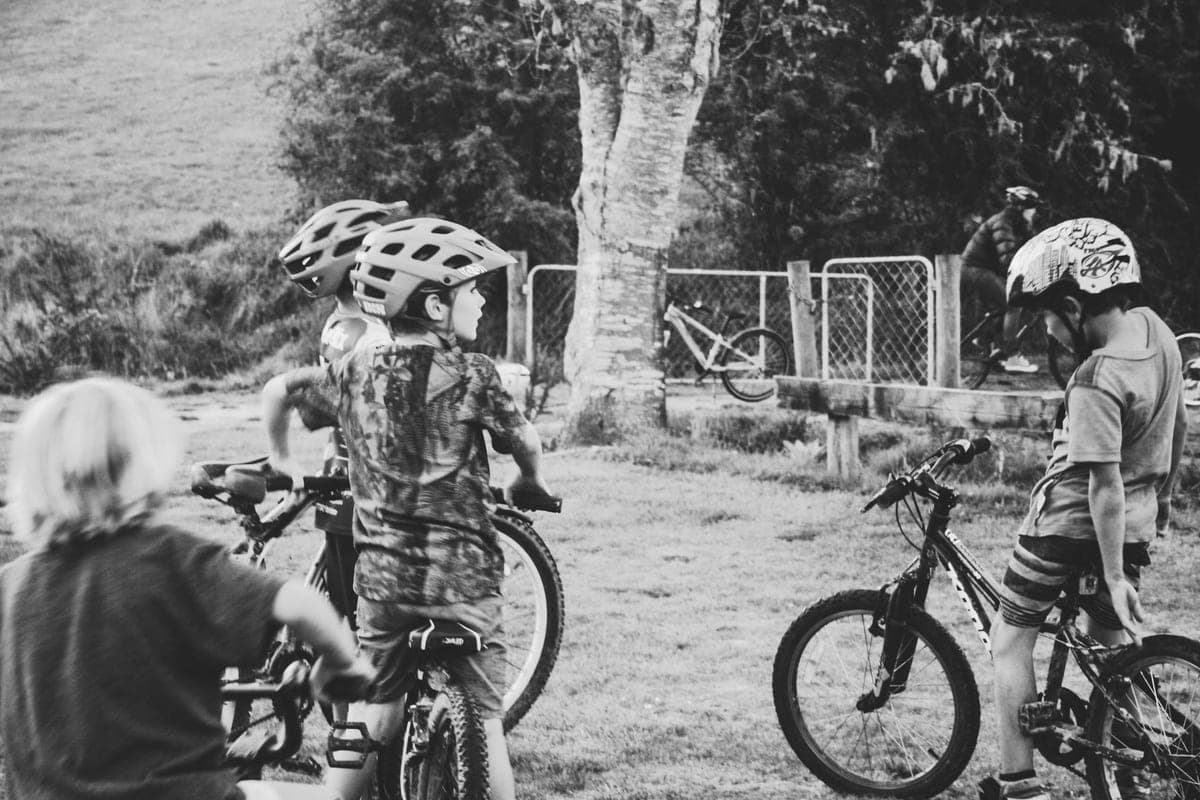
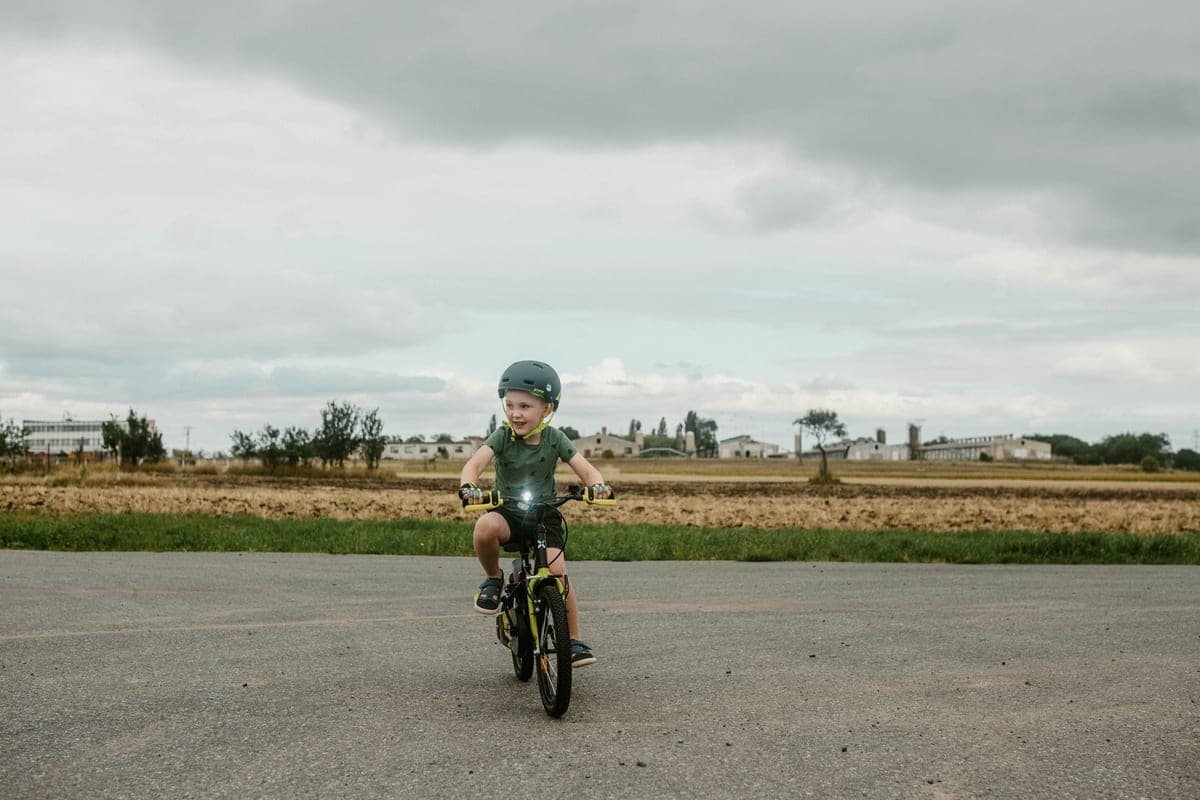
Riding a bike is two separate skills: balancing a leaning two-wheeler, and turning the pedals. Balancing is the hard one and takes months. Pedaling is mechanical and takes an afternoon. Almost every problem in teaching a child to ride comes from trying to teach both at once.
So the method is the same whatever equipment you own: isolate balance first, add pedals second. On a balance bike that happens by design. On a pedal bike you do it by taking the pedals off for a fortnight and dropping the saddle until both feet are flat.
What a ready-to-pedal child looks like
Three signals, all of which you can watch for in a single session: they can glide with both feet up for ten seconds or more; they can steer deliberately while gliding, around a tree or between two chalk marks; and they can start and stop where they intended without asking for help. When those are routine, pedals are next.
The training wheel question
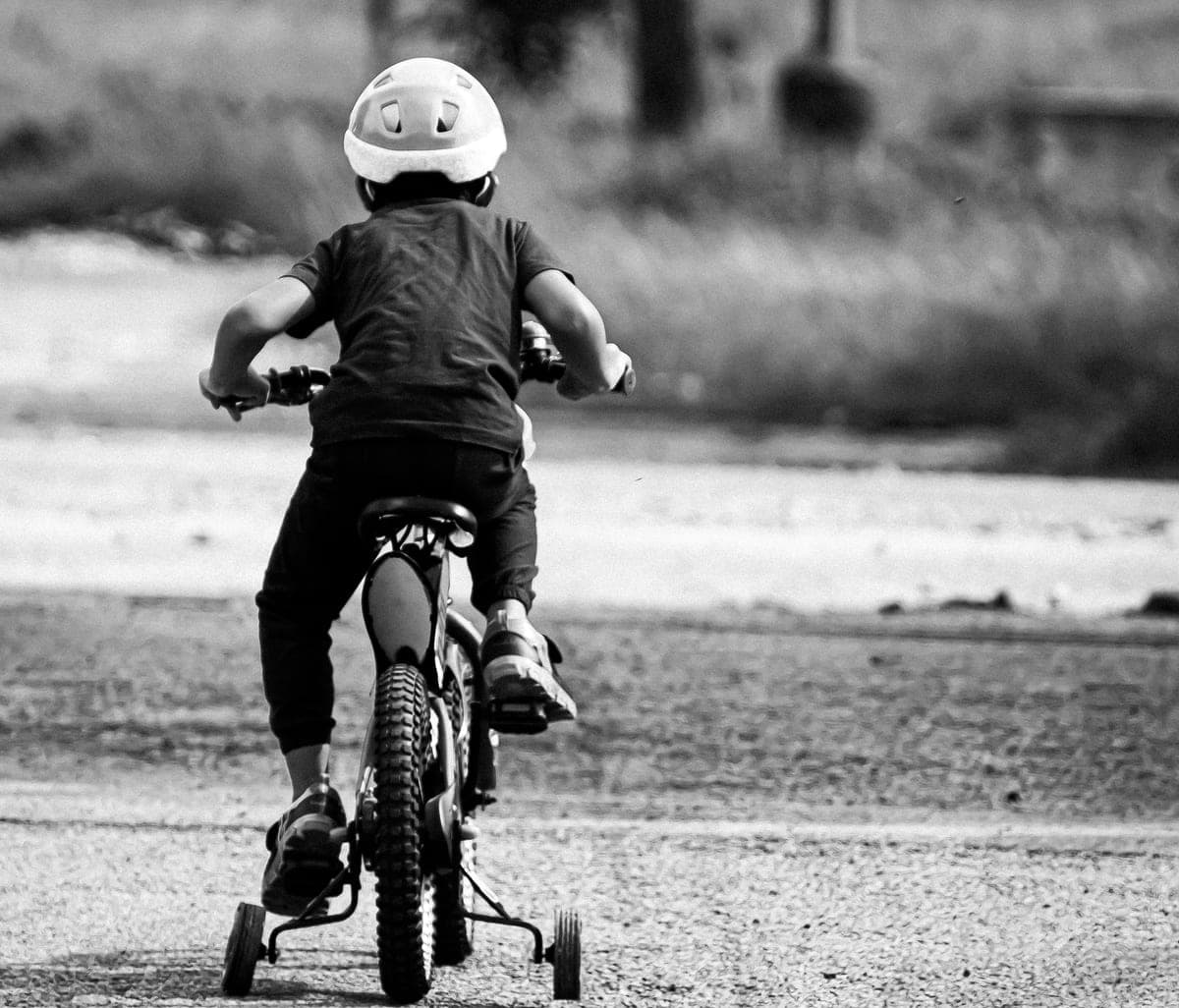
Our answer is a straight no. A two-wheeler stays up because the rider steers into the lean, and training wheels prevent the bike from leaning at all. The child pedals happily, the reflex never forms, and on a cambered driveway they even learn to correct the wrong way. The day the stabilizers come off, learning starts from zero — except the child is now older, heavier and aware that falling hurts.
If they are already fitted, nothing is ruined. Take the training wheels and the pedals off on the same day and let them glide: how to get rid of training wheels.
Where to do it
A gentle grassy slope or a quiet, very slightly downhill paved area. Flat ground makes them work for every foot of momentum; a real hill is frightening. You want just enough gradient that the bike rolls at walking pace on its own.
Two rules that matter more than technique
Stop while they still want more. Twenty good minutes beats two frustrated hours, and a child who finishes wanting one more lap asks to go again tomorrow.
Give one instruction at a time. "Look where you want to go" is usually the highest-value sentence available to a beginner. Three instructions at once is none.
If it is not working
Nine times out of ten the bike is too big. Confirm they can sit at the lowest saddle setting with both feet flat before you change anything else — five checks are here. The tenth time, they are simply not ready, and three weeks does more than three hours.
Everything in learning to ride
Some links on this page are affiliate links. If you buy through one, we earn a commission at no extra cost to you. It never changes which bike we put first — here is exactly how we make money.