Learning to Ride
When to switch from a balance bike to a pedal bike
Switch when your child can glide with both feet up for ten seconds or more, steer deliberately while gliding, and start and stop without help. Age is not the signal — plenty of confident gliders are three, and plenty of five-year-olds are not there yet.
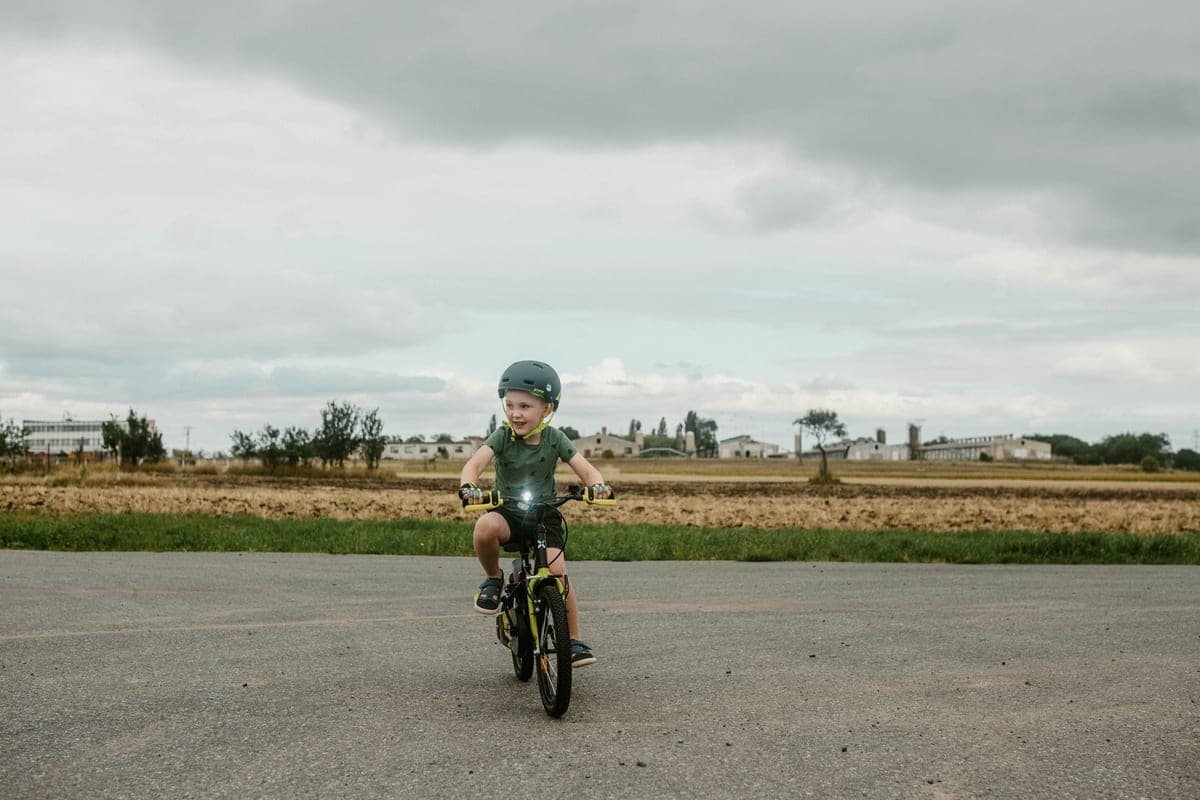
The balance bike has done its job when balance is no longer the problem. Look for ten-second glides with feet up, deliberate steering at speed, and confident starts and stops. When all three are routine, pedals are the next thing — not before.
The three signals
Step 01
Ten-second glides, feet up
Not a lucky two seconds. A child who can lift both feet and hold a line for ten seconds has solved balance. That is the hard part of riding a bike, and it is done.
Step 02
Deliberate steering while gliding
Ask them to ride around a tree or between two chalk marks while gliding. Steering under momentum is a separate skill from steering while walking the bike, and it is the one that transfers.
Step 03
Confident starts and stops
They get on, push off and stop where they meant to, without asking for help. If stopping is still chaotic, spend a few more weeks — braking on a pedal bike is harder, not easier.
The fit signal
Independently of skill, a balance bike gets outgrown. If the saddle is at its maximum and their knees hit the bars, they need a bigger bike whether or not they are ready for pedals. That is when a longer-range balance bike or a convertible becomes relevant — see balance bikes with pedals.
What the transition actually looks like
For a child who glides confidently, it is usually an afternoon. They have the balance; they need to learn that feet go on the pedals and push in circles.
Two things make it smoother. First, drop the new bike's saddle to feet-flat for the first week, even though it is inefficient. Second, teach the starting position — lead pedal up at two o'clock — because on a coaster-brake bike they cannot backpedal to get there.
What to buy
The lightest bike that fits, with hand brakes if you can. A child coming off a balance bike has never used a coaster brake and does not need to start now. The shortlist is on best first pedal bikes, and the reason weight matters so much is on why kids bikes are so heavy.
If it goes badly
Put the balance bike back out for a fortnight with no comment. Nothing is lost. Children who go back for a couple of weeks almost always return to the pedal bike and ride it.
The picks
Every figure below is the manufacturer's own published spec, linked to the page we read it from. We have not ridden these bikes and the cards say so — here is how we choose.
Quick picks — sorted by weight
| # | Product | Best for | Weight | Price |
|---|---|---|---|---|
| 1 | 14" Top pickwoom GO 2 12.2 lb on a 14-inch wheel is the number that matters here — it is the lightest first pedal bike in this registry, and a first pedal bike is mostly a weight problem. | The lightest 14-inch | 12.2 lb | |
| 2 | 14" Prevelo Alpha One 11.3 lb without pedals and a 14.75 in minimum saddle: the bike for the child who is ready to pedal before their legs agree. | Small legs, real pedals | 11.3 lb | |
| 3 | 14" Guardian 14 Inch One lever brakes both wheels, which removes the single most common first-year crash — grabbing only the front brake and going over the bars. | Braking that cannot go wrong | 16 lb | |
| 4 | 16" Prevelo Alpha Two A 16.9 in minimum saddle on a 16-inch wheel, at 12.1 lb — it bridges the gap where a child has outgrown 14-inch but can't reach a woom GO 3. | The awkward in-between size | 12.1 lb |
n/p = the manufacturer does not publish that figure. We do not fill in a number they never gave.
Top pick — The lightest 14-inch
woom GO 2
12.2 lb on a 14-inch wheel is the number that matters here — it is the lightest first pedal bike in this registry, and a first pedal bike is mostly a weight problem.
| Wheel | 14" |
|---|---|
| Weight | 12.2 lb |
| Fits inseam | 16–19.1 in |
| Saddle height | 15.5–19.3 in |
| Brakes | Two independently operated mini V-brakes; ships with a rear coaster brake as a CPSC requirement |
| Gearing | Single speed, 18t front / 10t rear |
| Frame | 6061 aluminum |
| Brand says | Manufacturer says 3–4.5 years, rider height 37–43 in |
What works
- 12.2 lb — roughly 34% of the median four-year-old's body weight
- Two real hand brakes with short-reach levers
- 15.5 in minimum saddle height suits a genuinely small first-pedaler
- Coaster brake can be removed by a shop if you want a pure freewheel
What doesn't
- 19.3 in maximum saddle height — a tall four-year-old will move up fast
- Direct-sale pricing
- Coaster brake ships fitted whether you want it or not
Hands-on status: Researched from published specs · woom — GO 2 specs
#2 — Small legs, real pedals
Prevelo Alpha One
11.3 lb without pedals and a 14.75 in minimum saddle: the bike for the child who is ready to pedal before their legs agree.
| Wheel | 14" |
|---|---|
| Weight | 11.3 lb |
| Fits inseam | 14–17.5 in |
| Saddle height | 14.75–25.2 in |
| Brakes | Independently operated dual hand brakes, kid-sized levers |
| Gearing | Single-speed freewheel, no coaster brake |
| Frame | Triple-butted 6061 aluminum |
| Brand says | Manufacturer says 3–5 years |
What works
- Lowest published minimum saddle height of any 14-inch here
- 11.3 lb (manufacturer figure, measured without pedals)
- True freewheel — no coaster brake to confuse the feet
What doesn't
- Published weight excludes pedals, so compare it carefully against rivals
- 14–17.5 in inseam range is narrow
- Direct-sale only
Hands-on status: Researched from published specs · Prevelo — Alpha One specs
#3 — Braking that cannot go wrong
Guardian 14 Inch
One lever brakes both wheels, which removes the single most common first-year crash — grabbing only the front brake and going over the bars.
| Wheel | 14" |
|---|---|
| Weight | 16 lb |
| Fits inseam | 15–24 in |
| Brakes | SureStop single-lever hand brake; no coaster brake |
| Gearing | Single speed |
| Frame | Steel |
| Brand says | Manufacturer says 3–5 years, rider height 37–43 in |
What works
- SureStop puts both brakes on one lever, in the correct order
- No coaster brake, so pedaling backwards does not stop the bike
- 15 in published minimum leg length is genuinely low for a 14-inch
- Ships nearly assembled
What doesn't
- 16 lb steel frame is ~4 lb heavier than the aluminum competition
- One brake lever means no independent rear-only braking to learn later
- Single speed only
Hands-on status: Researched from published specs · Guardian — 14 inch specs
#4 — The awkward in-between size
Prevelo Alpha Two
A 16.9 in minimum saddle on a 16-inch wheel, at 12.1 lb — it bridges the gap where a child has outgrown 14-inch but can't reach a woom GO 3.
| Wheel | 16" |
|---|---|
| Weight | 12.1 lb |
| Fits inseam | 15.5–22 in |
| Saddle height | 16.9–25.2 in |
| Brakes | Independently operated dual hand brakes, kid-sized levers |
| Gearing | Single-speed freewheel, 18t / 10t |
| Frame | Triple-butted 6061 aluminum, THRU-TUBE design |
| Brand says | Manufacturer says 4–6 years |
What works
- 16.9 in minimum saddle height — over 2 in lower than the woom GO 3
- 12.1 lb (manufacturer figure, without pedals)
- 8.3 in of saddle travel
What doesn't
- Published weight excludes pedals
- Direct-sale only
- Single speed
Hands-on status: Researched from published specs · Prevelo — Alpha Two specs
Questions parents actually ask
01When should you move from a balance bike to pedals?
When the child can glide with their feet up for around ten seconds, steer deliberately while gliding, and start and stop confidently. Age is not the signal.
02When do you switch from a Strider to a pedal bike?
The same three signals apply regardless of brand. A Strider 12 Sport fits a 12 to 18 inch inseam, so fit may also force the move before skill does.
03Do kids need training wheels after a balance bike?
Almost never. A confident glider usually rides a pedal bike within an afternoon of the pedals going on.
04When to move from a trike to a balance bike?
As soon as they can sit on the balance bike's lowest saddle setting with both feet flat, typically around two.
Sources
Read next
- Learning to RideHow to teach a child to ride a bikeThe pedals-off method, step by step.
- First Pedal BikesBest first pedal bikesSeven real bikes, from 11.3 lb to 21.16 lb, on published specs.
- Learning to RideDo kids need training wheels?A straight no, and the faster alternative.
- Balance BikesBest balance bike for a 4 year oldWhat actually fits a 4-year-old, by saddle height.