Safety · every stage, no exceptions
Helmets and gear
Helmet sizing by head circumference, how a kids helmet should actually sit, what CPSC certification covers, and whether MIPS is worth paying for.
6 pages in this section
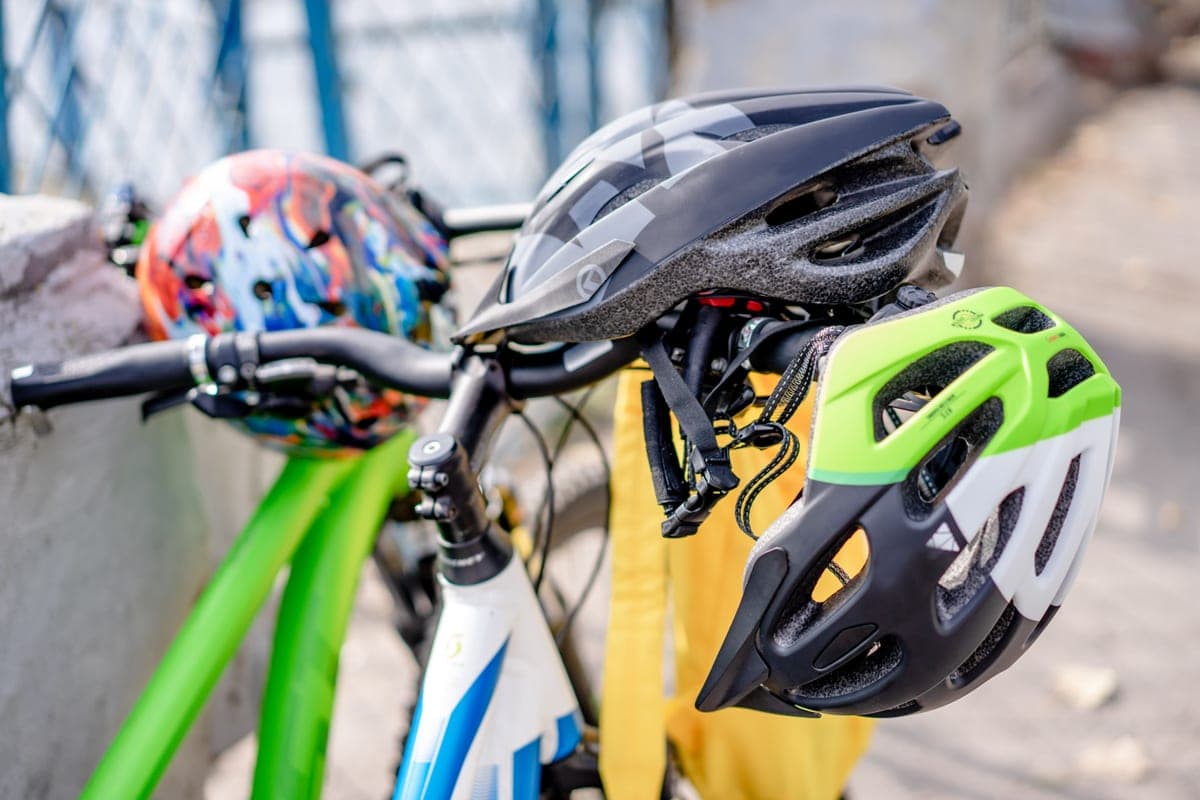
Start with the part that surprises most parents: every bicycle helmet manufactured or imported for sale in the United States has been required to meet the same federal safety standard since February 1999, published at 16 CFR 1203. You are not choosing between safe and unsafe. You are choosing between helmets that fit and helmets that do not.
That reframing matters, because fit is the variable that actually determines whether a helmet works, and it is entirely in your control.
Size is head circumference, not age
Wrap a soft tape around the head about an inch above the eyebrows. That number in centimeters selects the helmet. Two five-year-olds can be three centimeters apart, which is a whole size — so any chart mapping helmet size to age, including ours, is a starting point rather than an answer.
| Size | Head (cm) | Head (in) | Age it usually lands on |
|---|---|---|---|
| Toddler / XS | 45–50 | 17.7–19.7 | 1 – 3 |
| Small / Child | 48–54 | 18.9–21.3 | 3 – 7 |
| Youth | 50–57 | 19.7–22.4 | 7 – 12 |
Measure with a soft tape around the head, about an inch above the eyebrows. Sizes come from Giro, Bell, Nutcase and Lazer published charts.
The under-five rule
CPSC requires helmets intended for children up to age five to cover more of the head than an adult helmet, protecting the more fragile areas of a young child's skull. This is why a toddler helmet is a different product rather than a smaller one, and why the certification wording is worth reading: Giro certifies the Scamp XS for age 1 and older with extended coverage, and the larger S size for age 5 and older.
Fitting it: two, V, one
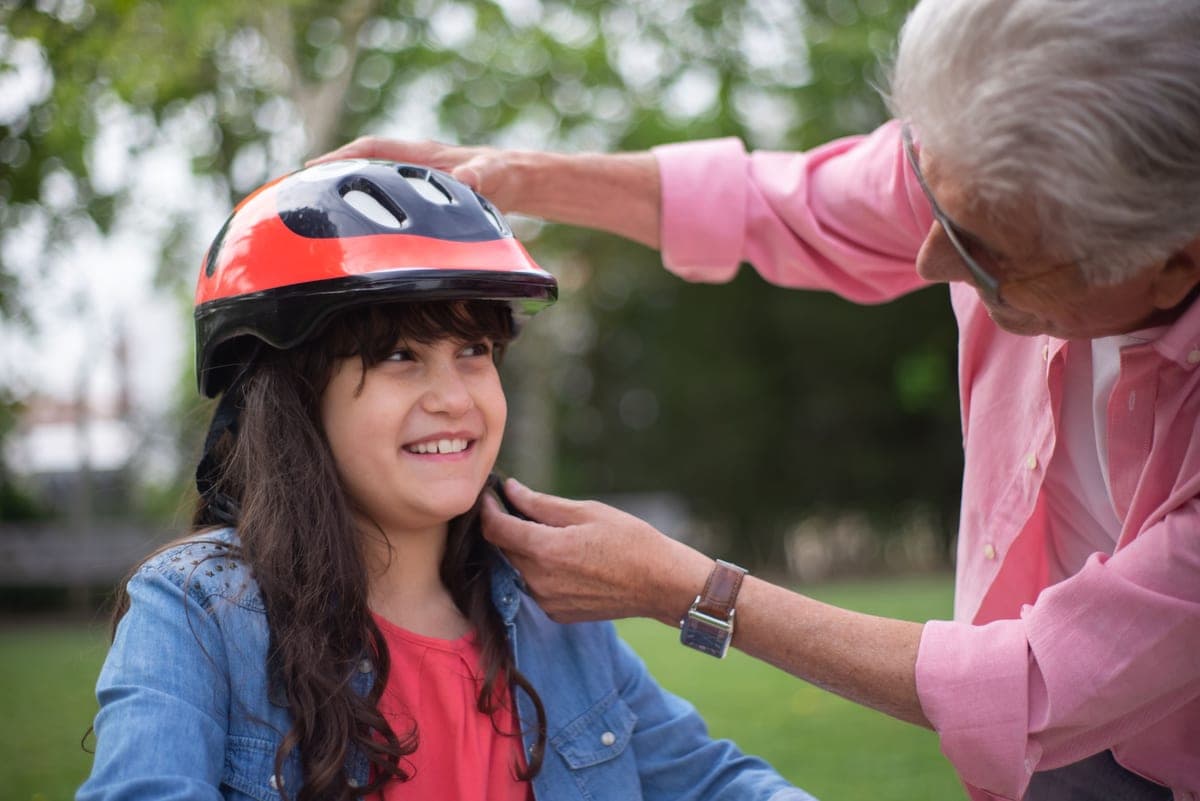
Two finger-widths of gap above the eyebrows. A V formed by the side straps just below each ear. One finger of space under the buckled chin strap. Then shake the head — a correctly fitted helmet moves the eyebrows, not the shell. The full sequence is on how to fit a kids bike helmet.
MIPS and the alternatives
MIPS is a low-friction layer that lets the helmet slide a few millimeters against the head during an angled impact, reducing rotational force. Bell's Mips Evolve integrates it into the retention system; Lazer's KinetiCore builds the idea into the foam itself. All are genuine engineering rather than marketing — and all of them matter less than whether the helmet fits and gets worn.
When to replace
After any impact where the head actually struck something, as soon as it stops fitting, and whenever the shell, foam or straps show damage. Helmets protect by crushing, and crushed foam does not recover — the damage is frequently invisible beneath an intact shell.
Beyond the helmet, very little is mandatory. Pads help a nervous child more than a confident one, gloves are a nice-to-have, and lights matter the moment your child rides at dusk. The honest list is on what to buy with a first bike.
Everything in helmets & gear
Some links on this page are affiliate links. If you buy through one, we earn a commission at no extra cost to you. It never changes which bike we put first — here is exactly how we make money.
Roundup
Best kids bike helmets
Five helmets, compared on head size and certification.
Top pick: Giro Scamp MIPS II
Roundup
Best toddler bike helmets
Helmets certified for age 1+, with the extra coverage required.
Top pick: Nutcase Baby Nutty MIPS