First Pedal Bikes
woom vs Retrospec kids bikes
woom wins on weight by a margin nothing else in this registry matches — 13 lb for a 16-inch against Retrospec's 18.5 lb. Retrospec wins on availability and price, and it publishes saddle ranges that let you size the bike before it ships. Buy woom if the child is small for their age; buy Retrospec if they are not.
Some links on this page are affiliate links. If you buy through one, we earn a commission at no extra cost to you. It never changes which bike we put first — here is exactly how we make money.
At every shared wheel size, the woom is between four and five pounds lighter than the Retrospec and costs several times more. If your child is small for their age, or the riding involves hills, the weight gap is the whole argument and woom wins it. If your child is average or large for their age and the riding is flat, Retrospec gives you a bike you can size from a published saddle range for a fraction of the money.
| Wheel | woom model | woom weight | Retrospec model | Retrospec weight | Difference |
|---|---|---|---|---|---|
| 14" | woom GO 2 | 12.2 lb | — (no 14 in Koda) | — | — |
| 16" | woom GO 3 | 13 lb | Retrospec Koda 16 | 18.5 lb | 5.5 lb |
| 20" | woom GO 4 | 17.2 lb | Retrospec Koda 20 | 23.25 lb | 6.05 lb |
| 24" | woom EXPLORE 5 | 20.75 lb | Retrospec Dart 24 | 28.25 lb | 7.5 lb |
Every weight read from the manufacturer's own spec page. Retrospec does not currently list a 14-inch Koda, so the 14-inch row has no matching pair.
The weight gap is real and it grows with the bike
Five and a half pounds on a 16-inch bike sounds trivial written down. It is not. The CDC median five-year-old weighs about 39.8 lb, so a woom GO 3 is roughly 33 percent of that child and a Retrospec Koda 16 is roughly 46 percent. Scaled onto a 180 lb adult, that is a 59 lb bicycle against a 83 lb one.
The gap widens as the bikes grow: 6 lb at 20 inches, 7.5 lb at 24. woom achieves it with butted aluminum frames and components chosen for mass rather than durability. Retrospec uses high-tensile steel on the Koda line, which is heavier, tougher and much cheaper to make. Neither choice is wrong; they are answers to different questions.
Where Retrospec genuinely wins
It publishes a saddle range, which many cheap bikes do not
The Koda 16 publishes an 18.5 to 23 inch saddle range and the Koda 20 a 21.5 to 27.5 inch range. That is enough to run the inseam check before you order, which you cannot do with most big-box bikes — a Schwinn Koen 16 publishes rider height and nothing else. If budget is the constraint, buying the cheap bike that publishes its fit is a far better decision than buying the cheap bike that does not.
It is in stock, and it ships
Retrospec sells through general retail and is almost always available in several colors at once. woom sells in smaller quantities and individual sizes go out of stock for weeks at a time, which matters a great deal if you are buying for a birthday on a fixed date.
The Koda 20 drops the coaster brake entirely
Retrospec specifies a hand-operated V-brake with a reach-adjustable lever and no coaster brake on the Koda 20. That is the brake setup we recommend at that size, and it is not a given even on much more expensive bikes. The Koda 12 and Koda 16 still carry a coaster alongside their hand brake.
Where woom wins
Fit range per frame
The GO 3 publishes a 19 to 25.1 inch saddle range — 6.1 inches of adjustment, enough for two seasons for most children. The Koda 16 gives 4.5 inches. On a bike you intend to keep until it is outgrown, that difference is close to a year.
Brakes a small hand can actually pull
woom fits two independently operated mini V-brakes with short-reach, color-coded levers on the GO 2 and GO 3. Lever reach is the thing parents overlook: a brake a five-year-old cannot squeeze is not a brake. Retrospec's reach-adjustable levers are good; woom's are better out of the box.
Resale
A woom holds a meaningful fraction of its price second hand because the demand for light kids bikes is permanent and the supply is not. That changes the real cost of ownership enough that the sticker gap is misleading. We work through that arithmetic on are expensive kids bikes worth it.
Which one to buy
Buy the woom if your child is small or light for their age, if you ride anywhere with hills, if the bike has to last two seasons, or if you intend to resell it. The GO 3 is the single best first pedal bike in this registry on the numbers.
Buy the Retrospec if the budget is the constraint and you still want to size the bike properly, if you need it in your hands this week, or if your child is average-to-large for their age and the riding is flat. The Koda 20 in particular is the cheapest bike here with the brake setup we would choose.
Either way, size it on the inseam first. The full picture at each size is on the kids bike size chart, and the brand-by-brand ranking is on kids bike brands ranked.
Components, where the money actually goes
The weight gap is not magic. It comes from a handful of decisions that each cost money at manufacture and each save a few ounces.
| Component | woom approach | Retrospec approach | Why it matters |
|---|---|---|---|
| Frame | Butted 6061 aluminum | High-tensile steel (Koda line) | The single biggest contributor to the gap |
| Brakes | Mini V-brakes, short-reach kid levers | Alloy V-brake, reach-adjustable lever | Both work; woom's levers suit smaller hands as supplied |
| Crank length | Child-specific short cranks | Shorter than adult, not child-specific | Short cranks let a small leg turn a full circle |
| Q-factor | Narrowed for a child's hips | Standard | A narrow pedal stance is easier to balance |
Component descriptions read from each manufacturer's published spec pages. Frame material is the headline difference; the rest is why the gap is larger than frame material alone explains.
None of that makes the Retrospec a bad bike. It makes it a heavier bike, built to a price that puts a sized-and-braked bicycle under a child who would otherwise be on a big-box special with no published fit figures at all. That is a real contribution to the category.
What about availability and support?
woom sells direct and through a small dealer network, which means popular sizes go out of stock and come back weeks later. If you are buying for a fixed date, check stock before you commit to the brand rather than after. Retrospec sells through general retail and is almost always available in multiple colors.
On assembly, both arrive mostly built. The jobs left to you are the same on either: front wheel, handlebar alignment, pedals, saddle height and brake lever reach. Budget twenty minutes and a torque wrench if you own one.
The second-hand angle
Both brands appear on the used market, and they behave very differently there. A woom in good condition holds a substantial share of its original price, because demand for light kids bikes is constant and supply is not — which makes buying one used a genuinely good way into the brand, and makes the real cost of ownership much lower than the sticker suggests.
A used Retrospec is cheap, widely available and rarely worth shipping. Buy one locally if you find one, check the rear hub turns freely and the rims are not rusted, and treat the saving against a new one as modest. The general checklist for buying any used kids bike is on buying a used kids bike.
The picks
Every figure below is the manufacturer's own published spec, linked to the page we read it from, so you can check the one number your decision turns on — here is how we choose.
Quick picks — sorted by weight
| # | Product | Best for | Weight | Price |
|---|---|---|---|---|
| 1 | 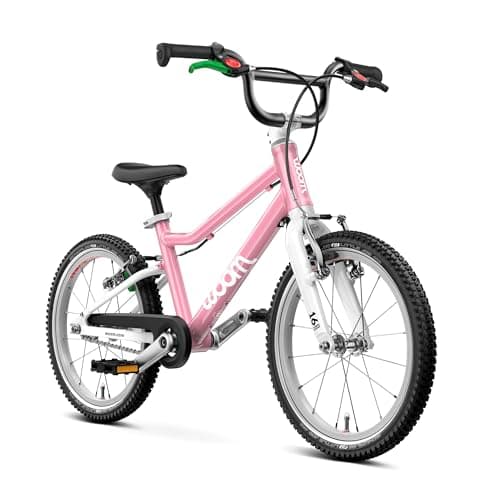 Top pickwoom GO 3 13 lb with a 19–25.1 in saddle range — the widest useful fit window of any 16-inch in this registry, on the lightest frame. | The longest fit window | 13 lb | |
| 2 | 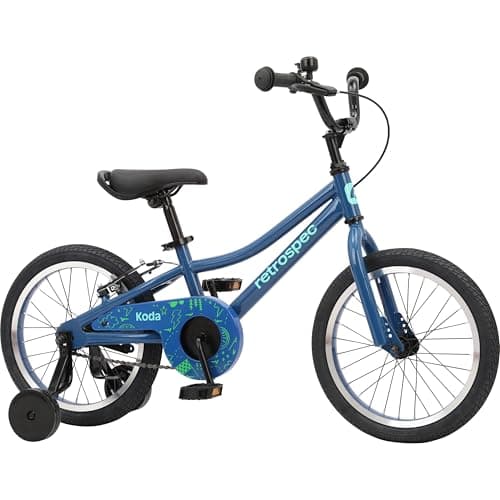 Retrospec Koda 16 18.5 lb, a published 18.5–23 in saddle range and training wheels fitted — the budget 16-inch that does not make you guess at the fit. | The budget 16 inch that publishes its fit | 18.5 lb | |
| 3 | 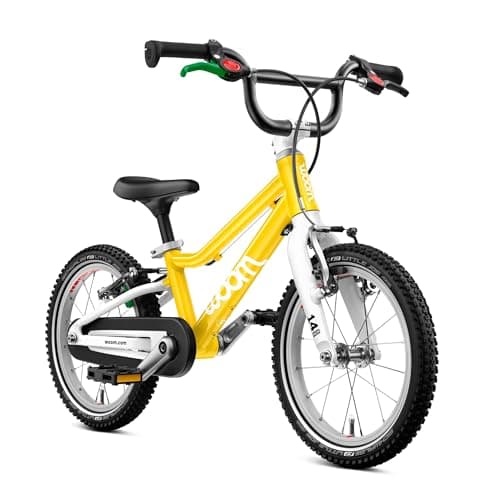 woom GO 2 12.2 lb on a 14-inch wheel is the number that matters here — it is the lightest first pedal bike in this registry, and a first pedal bike is mostly a weight problem. | The lightest 14-inch | 12.2 lb | |
| 4 | 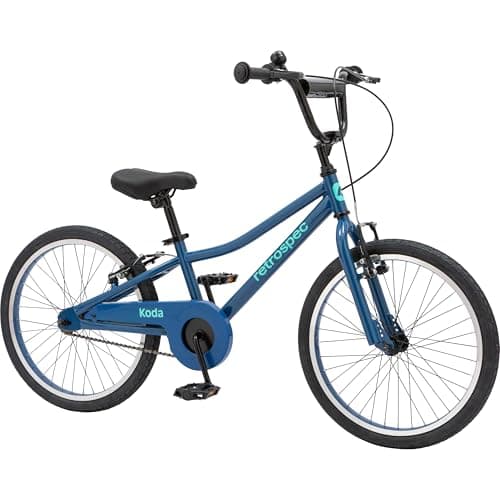 Retrospec Koda 20 A 20-inch with hand brakes and no coaster at all, a published 21.5–27.5 in saddle range, and a price that stays under the line most parents draw. | Hand brakes on a budget | 23.25 lb |
n/p = the manufacturer does not publish that figure. Every other number here comes straight off their spec page.
Top pick — The longest fit window
woom GO 3
13 lb with a 19–25.1 in saddle range — the widest useful fit window of any 16-inch in this registry, on the lightest frame.
| Wheel | 16" |
|---|---|
| Weight | 13 lb |
| Fits inseam | 19.1–25.2 in |
| Saddle height | 19–25.1 in |
| Brakes | Two independently operated mini V-brakes |
| Gearing | Single speed, 18t front / 10t rear |
| Frame | 6061 aluminum |
| Brand says | Manufacturer says 4–6 years, rider height 41–47 in |
What works
- 13 lb — about 29% of the median six-year-old's body weight
- 6.1 in of saddle adjustment, so it lasts two seasons for most kids
- Two proper hand brakes with a color-coded rear lever
What doesn't
- 19 in minimum saddle is too high for a small five-year-old
- No gears, which starts to matter on hills around age six
- Costs three times what a big-box 16-inch costs
How we checked it: Researched from published specs · woom — GO 3 specs
#ad · How we make money · Price as of November 1, 2026
#2 — The budget 16 inch that publishes its fit
Retrospec Koda 16
18.5 lb, a published 18.5–23 in saddle range and training wheels fitted — the budget 16-inch that does not make you guess at the fit.
| Wheel | 16" |
|---|---|
| Weight | 18.5 lb |
| Saddle height | 18.5–23 in |
| Brakes | Rear coaster brake plus a hand-operated aluminum V-brake |
| Gearing | Single speed, 32T crank and 16T cog, 4.0 gain ratio |
| Frame | High-tensile steel, low-profile step-over |
| Brand says | Manufacturer says ages 4–6, riders 39–53 in, up to 80 lb |
What works
- 18.5–23 in published saddle range, 4.5 in of travel
- 18.5 lb — lighter than every Schwinn 16 in here by about 3 lb
- Training wheels come installed, and come off when they are ready
- Hand V-brake as well as the coaster
What doesn't
- The coaster brake is still the primary stop
- Retrospec publishes rider height, not inseam, so the saddle number does the sizing work
- 80 lb rider limit
How we checked it: Researched from published specs · Retrospec — Koda 16 specs
#ad · How we make money · Price as of November 1, 2026
#3 — The lightest 14-inch
woom GO 2
12.2 lb on a 14-inch wheel is the number that matters here — it is the lightest first pedal bike in this registry, and a first pedal bike is mostly a weight problem.
| Wheel | 14" |
|---|---|
| Weight | 12.2 lb |
| Fits inseam | 16–19.1 in |
| Saddle height | 15.5–19.3 in |
| Brakes | Two independently operated mini V-brakes; ships with a rear coaster brake as a CPSC requirement |
| Gearing | Single speed, 18t front / 10t rear |
| Frame | 6061 aluminum |
| Brand says | Manufacturer says 3–4.5 years, rider height 37–43 in |
What works
- 12.2 lb — roughly 34% of the median four-year-old's body weight
- Two real hand brakes with short-reach levers
- 15.5 in minimum saddle height suits a genuinely small first-pedaler
- Coaster brake can be removed by a shop if you want a pure freewheel
What doesn't
- 19.3 in maximum saddle height — a tall four-year-old will move up fast
- Coaster brake ships fitted whether you want it or not
- Costs three times what a big-box 14-inch costs
How we checked it: Researched from published specs · woom — GO 2 specs
#ad · How we make money · Price as of November 1, 2026
#4 — Hand brakes on a budget
Retrospec Koda 20
A 20-inch with hand brakes and no coaster at all, a published 21.5–27.5 in saddle range, and a price that stays under the line most parents draw.
| Wheel | 20" |
|---|---|
| Weight | 23.25 lb |
| Saddle height | 21.5–27.5 in |
| Brakes | Hand-operated aluminum V-brake with a reach-adjustable lever; no coaster brake |
| Gearing | Single speed, 32T crank and 16T freewheel cog |
| Frame | High-tensile steel, low-profile step-over |
| Brand says | Manufacturer says ages 6–8, riders 44–63 in, up to 150 lb |
What works
- 21.5–27.5 in published saddle range — 6 in of travel, the longest here at this size
- Hand V-brake only, with no coaster to confuse the feet
- 150 lb rider limit
What doesn't
- 23.25 lb — about a third of the median eight-year-old
- Single speed, so hills get walked
- Steel frame and entry-level parts; budget for adjustment
How we checked it: Researched from published specs · Retrospec — Koda 20 specs
#ad · How we make money · Price as of November 1, 2026
Questions parents actually ask
01Is woom worth the extra money over Retrospec?
If your child is small or light for their age, or you ride hills, yes — the woom is 5.5 lb lighter at 16 inch and 6 lb lighter at 20 inch. If the child is average-sized and the riding is flat, the Retrospec Koda does the job and publishes a saddle range you can size against.
02How much lighter is a woom than a Retrospec?
At matching wheel sizes: 5.5 lb at 16 inch (13 lb vs 18.5 lb), 6.05 lb at 20 inch (17.2 lb vs 23.25 lb) and 7.5 lb at 24 inch (20.75 lb vs 28.25 lb). All figures are the manufacturers' own published weights.
03Do Retrospec kids bikes have hand brakes?
Yes. The Koda 12 and Koda 16 have a hand-operated aluminum V-brake alongside a rear coaster brake, and the Koda 20 has a reach-adjustable hand brake with no coaster at all.
04Which woom size matches which Retrospec?
The GO 3 and Koda 16 are both 16-inch, the GO 4 and Koda 20 are both 20-inch, and the EXPLORE 5 and Dart 24 are both 24-inch. Retrospec does not currently list a 14-inch Koda to pair with the woom GO 2.
Sources
Read next
- First Pedal BikesBest woom bikesThe full woom line, 6.4 lb to 22.2 lb, sized by inseam.
- Big Kid BikesBest Retrospec kids bikesSix Retrospec bikes, 15.9 lb to 30.6 lb, with published saddle ranges.
- First Pedal BikesKids bike brands rankedRanked on weight and on how much they tell you before you buy.
- First Pedal BikesWhy kids bikes are so heavyBike weight as a share of the child's body weight. The number nobody publishes.