Balance Bikes
Strider vs Guardian balance bike
These two balance bikes are built around opposite ideas. The Strider 12 Sport buys you fit range — six inches of seat travel, roughly twice anything else in this category. The Guardian buys you its SureStop brake, one lever driving both wheels. Nothing else separates them much.
Some links on this page are affiliate links. If you buy through one, we earn a commission at no extra cost to you. It never changes which bike we put first — here is exactly how we make money.
Buy the Strider 12 Sport if you want one balance bike to cover the whole stage: its published 11 to 17 inch seat range is six inches of travel, about twice what any rival offers. Buy the Guardian if the brake is the point — SureStop is one lever driving both wheels, and no other balance bike does that. Note that Guardian publishes a minimum leg length but no seat-height range at all.
Head to head
| Strider 12 Sport | Guardian Balance Bike | |
|---|---|---|
| Wheel | 12" | Guardian does not publish one |
| Weight | 6.7 lb | 8.5 lb |
| Seat height | 11–17" | not published |
| Seat travel | 6" | not published |
| Fit floor | 12" inseam | 11.5" leg length |
| Child height | not published | 33–40" |
| Brake | None | SureStop, one lever, both wheels |
| Tires | Flat-free foam | Guardian does not publish |
| Frame | Steel | Aluminum |
| Brand quotes age | 1–4 yrs | 1.5–4 yrs |
| Where you buy it | Amazon and retail | Direct from Guardian only |
Read from striderbikes.com and guardianbikes.com. The blanks are not omissions on our part — Guardian genuinely does not publish a wheel size, a seat-height range or a tire type for this model, which is itself a mark against it when the whole purchase turns on fit.
The four things a balance bike has to get right
Before either badge, here is the order we judge any bike in this category on. It is worth setting out first, because the two bikes above win and lose on different lines of it.
1. The fit floor. Can the child sit on the lowest seat setting with both feet flat on the ground? If not, nothing else matters — the bike becomes something they stand next to. Strider publishes an 11 inch seat and a 12 inch inseam floor; Guardian publishes an 11.5 inch minimum leg length, which is a different measurement.
2. The runway. How much seat travel is there above that floor? A balance bike has roughly one to two years of growth to cover before pedals, and a bike that runs out early forces the transition on the bike's schedule instead of the child's. Strider publishes six inches. Guardian publishes no maximum at all.
3. Weight. Toddlers drop the bike and have to lift it again unaided. Under about a quarter of their body weight is the mark we use. Strider is 6.7 lb, Guardian 8.5 lb.
4. Everything else. Brake, tires, frame material, colorway, footrest. These are real differences and they are also where most of the marketing lives. A brake is a head start on a skill, not a safety requirement at walking pace. Air tires grip better than foam on grass; foam never needs a pump. None of it rescues a bike that fails the first two.
Measured that way, this is not a close contest on paper — but the one line Guardian wins, it wins outright, and for some buyers that is the line that matters.
The two bikes are answering different questions
Most balance-bike comparisons come down to weight and seat height, because those are the two specs that decide whether a toddler can ride the thing. This matchup is unusual: the gap in weight is under two pounds and the fit floors are within half an inch of each other. What actually separates them is one design decision each brand made and the other did not.
Strider's decision was range. Six inches of seat travel on a 12-inch wheel is an outlier — the woom GO 1 publishes 3.7 inches, the Prevelo Alpha Zero 3.1, Retrospec's Cub 3.5. Strider maps that range onto a 12 to 18 inch inseam, which is roughly the whole span from a small two-year-old to a child ready for pedals.
Guardian's decision was the brake. SureStop is a single lever that drives both wheels in a sequence, and Guardian's entire product line is built on it. On a balance bike it means a toddler who panics and grabs cannot lock the front wheel on its own, which is the one way a hand brake can make things worse rather than better.
Where Guardian's missing numbers matter
We will say this plainly because it affects the buying decision: Guardian publishes an 11.5 inch minimum leg length and a 33 to 40 inch child height for this bike, and nothing else about fit. No seat-height range, no maximum, no wheel size.
Minimum leg length and minimum seat height are not the same measurement, so the 11.5 inch figure cannot be lined up against Strider's 11 inch seat. And with no published maximum, there is no way to know on paper how long the Guardian keeps fitting. For a category where the single most common buying mistake is a bike the child cannot reach — or outgrows in eight months — that is a real handicap, not a formatting quibble.
Strider publishes both ends. That is why it wins our best balance bikes roundup and the two-year-old pick: not because Strider builds a better frame, but because you can check the fit before you spend the money.
Does a balance bike need a brake at all?
No. At balance-bike speeds a toddler stops with their feet, and they are good at it. A hand brake on a bike with no pedals is not a safety feature — it is a rehearsal. The lever goes under their fingers a year or two before the pedal bike arrives, so squeezing to stop is already a habit rather than a new skill learned at speed.
That is a genuine benefit and it is worth something. It is not worth accepting a bike you cannot size, and it is not worth two extra pounds on a child who has to pick the bike up after every tip-over. If the brake is what you want, there are cheaper routes to one: the Retrospec Cub Plus 12 has a reach-adjustable rear V-brake and publishes an 11.5 to 15.25 inch seat range, and the woom GO 1 has a proper rear hand brake at 6.4 lb. Both are compared on best balance bikes with brakes.
Weight, and why two pounds is not nothing
The Strider is 6.7 lb and the Guardian 8.5 lb. Written down, 1.8 pounds sounds like rounding. Against a two-year-old the CDC puts at about 27.3 lb, it is the difference between 25% and 31% of the child.
25%
Strider 12 Sport, 6.7 lb
31%
Guardian Balance Bike, 8.5 lb
What that buys or costs is self-rescue. A toddler who can lift the bike back upright after a fall keeps going; one who cannot comes looking for an adult, and the ride ends. It is the clearest practical consequence of weight at this age, and it is the reason the Guardian being the aluminum bike and still the heavier one is worth noting.
Buying and returns
The Strider is sold through Amazon and ordinary retail. The Guardian is direct-sale only — Guardian has no affiliate program we can join, so we earn nothing if you buy one, and there is no Prime return window if the fit turns out wrong. Given that Guardian does not publish a seat range, that combination is worth thinking about before you order: you cannot check the fit on paper, and returning it is Guardian's process rather than Amazon's.
What about the bigger Strider?
If your child is already past a 16 inch inseam, neither bike above is the right starting point — they are both aimed at a 12-inch wheel. Strider's 14x Classic takes a 15 to 22 inch seat and a 16 to 23 inch inseam, and it accepts an optional pedal kit that converts it into a first pedal bike, which takes it from 12.5 lb to 15.1 lb. That is a different purchase with a different argument, laid out on balance bikes with pedals.
Buy the Strider 12 Sport if…
You want one bike for the whole stage. Six inches of published seat travel is the headline, and it is the only figure here that reliably saves you buying twice.
You want to check the fit before you spend. Strider publishes both ends of the seat range and an inseam band; Guardian publishes neither.
You want the lighter bike, or you want to buy somewhere with a straightforward return. Both point the same way.
The honest costs: a steel frame, no brake at all, and foam tires that give up grip and cushioning to air on grass and gravel.
Buy the Guardian if…
The brake is specifically what you are buying, and you want the one design where a toddler cannot grab the front brake alone. No other balance bike offers that.
You are already buying Guardian's pedal bikes and want the same brake behavior from the start, so the lever means the same thing on every bike your child rides.
You have measured the child, they clear 11.5 inches of leg comfortably, and you are prepared to size the bike on arrival rather than on paper.
The honest costs: 8.5 lb, no published seat range or maximum, no published wheel size or tire type, direct-sale only, and a brake that solves a problem a balance bike does not really have.
What neither of them settles
The failure mode in this category is almost never the badge. It is buying a bike the child cannot reach, or starting the stage so late that it gets rushed and skipped. If that is the live question, read what age to start a balance bike before you pick a brand — and if you are still deciding whether the whole category is worth it, we answer that honestly on are balance bikes worth it.
The picks
Every figure below is the manufacturer's own published spec, linked to the page we read it from, so you can check the one number your decision turns on — here is how we choose.
Quick picks — sorted by the inseam it fits
| # | Product | Best for | Inseam | Price |
|---|---|---|---|---|
| 1 | 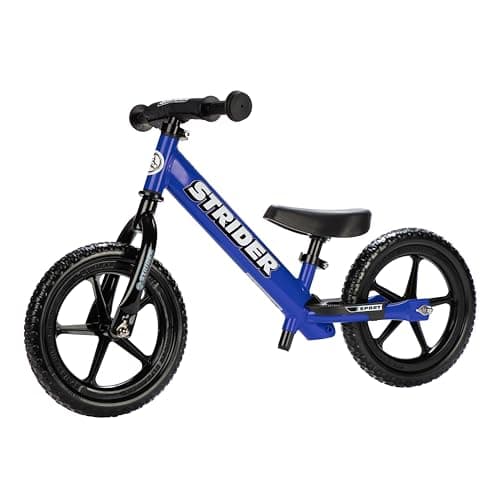 Top pickStrider 12 Sport The widest fit range of any 12-inch balance bike we found, and the one most likely to still fit a year after you buy it. | The widest age window | 12–18" | |
| 2 | 8.5 LB Guardian Balance Bike The only balance bike we have found where one lever works both brakes — which is the whole Guardian argument, applied at the age where a panicked grab is most likely. | One-lever braking | n/p | Not sold on Amazon · Guardian Bikes specs |
| 3 | 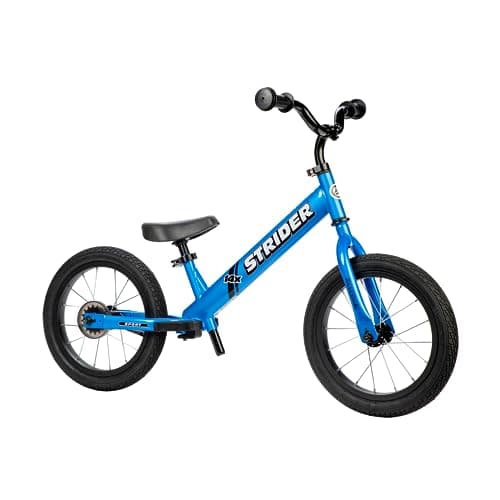 Strider 14x Classic The convertible answer: one frame that runs as a balance bike now and takes pedals later, at the cost of being heavier than either a dedicated balance bike or a good 14-inch pedal bike. | One bike across two stages | 16–23" |
n/p = the manufacturer does not publish that figure. Every other number here comes straight off their spec page.
Top pick — The widest age window
Strider 12 Sport
The widest fit range of any 12-inch balance bike we found, and the one most likely to still fit a year after you buy it.
| Wheel | 12" |
|---|---|
| Weight | 6.7 lb |
| Fits inseam | 12–18 in |
| Saddle height | 11–17 in |
| Brakes | None — riders stop with their feet |
| Gearing | None (balance bike) |
| Frame | Steel |
| Brand says | Manufacturer says 1–4 years |
What works
- 11–17 in saddle range covers a 12–18 in inseam — roughly two years of growth
- 6.7 lb, light enough for a toddler to pick up unaided
- Flat-free foam tires never need air
- Tool-free saddle and bar adjustment
What doesn't
- Steel frame, so it is not the lightest 12-inch on the market
- No hand brake — fine at balance-bike speeds, but nothing to learn braking on
- Foam tires give up grip and cushioning to air tires on rough ground
How we checked it: Researched from published specs · Strider — 12 Sport specs
#ad · How we make money · Price as of October 8, 2026
#2 — One-lever braking
Guardian Balance Bike
The only balance bike we have found where one lever works both brakes — which is the whole Guardian argument, applied at the age where a panicked grab is most likely.
| Weight | 8.5 lb |
|---|---|
| Fits | Leg length 11.5"+ · height 33–40" |
| Brakes | SureStop single-lever hand brake driving both wheels |
| Gearing | None (balance bike) |
| Frame | Aluminum |
| Brand says | Manufacturer says 1.5–4 years, child height 33–40 in, minimum leg length 11.5 in |
What works
- SureStop: one lever, both wheels, so a toddler cannot lock the front brake on its own
- 11.5 in published minimum leg length, among the lowest of any balance bike
- Aluminum frame with a tool-free adjustable seat
- Guardian lists it as shipping in 1–2 days
What doesn't
- 8.5 lb — around two pounds heavier than the woom GO 1 or the Strider 12 Sport
- Guardian publishes a minimum leg length but no seat-height range and no wheel size
- Direct-sale only
- A brake is a head start at this age, not a safety requirement — feet already work
How we checked it: Researched from published specs · Guardian — balance bike specs
Not sold on Amazon · Guardian Bikes specs
#3 — One bike across two stages
Strider 14x Classic
The convertible answer: one frame that runs as a balance bike now and takes pedals later, at the cost of being heavier than either a dedicated balance bike or a good 14-inch pedal bike.
| Wheel | 14" |
|---|---|
| Weight | 12.5 lb |
| Fits inseam | 16–23 in |
| Saddle height | 15–22 in |
| Brakes | None as a balance bike; the pedal kit adds no brake |
| Gearing | Converts to single-speed with the separate Easy-Ride pedal kit |
| Frame | Steel |
| Brand says | Manufacturer says riders 37–49 in tall, up to 80 lb |
What works
- 15–22 in saddle range is the longest runway in this registry
- Pedal kit bolts on in minutes when the child is ready
- Air tires on alloy rims
What doesn't
- 12.5 lb without pedals, 15.1 lb with them — nearly double a dedicated balance bike
- The pedal kit is sold separately
- Still no brake after conversion, which a 14-inch pedal bike really wants
How we checked it: Researched from published specs · Strider — 14x Classic specs
#ad · How we make money · Price as of October 8, 2026
Questions parents actually ask
01Is Strider or Guardian better for a balance bike?
Strider, for most buyers. The Strider 12 Sport publishes an 11 to 17 inch seat range - six inches of travel, roughly twice any rival - so one bike covers the whole balance stage, and it is 1.8 lb lighter. The Guardian's advantage is its SureStop brake, one lever driving both wheels, which no other balance bike has.
02Does the Guardian balance bike have a brake?
Yes, and it is the reason to consider it. SureStop is a single lever that drives both wheels in sequence, so a toddler who panics and grabs cannot lock the front wheel on its own. On a pedal-less bike a brake is a head start rather than a safety requirement, but it is a real one.
03How tall does a child need to be for a Guardian balance bike?
Guardian publishes a 33 to 40 inch child height and an 11.5 inch minimum leg length. It does not publish a seat-height range, a maximum, or a wheel size, so the fit cannot be checked against other bikes on paper - you are sizing it on arrival.
04How much does a Strider 12 Sport weigh?
6.7 lb, on a steel frame with flat-free foam tires. That is about a quarter of the body weight of a median two-year-old, and it is light enough for a toddler to lift the bike upright on their own after a fall.
05Can you buy a Guardian balance bike on Amazon?
No. Guardian sells direct from guardianbikes.com only. That means no Prime return window, and it means we earn nothing if you buy one - we recommend it here on the merits of the brake, not because it pays.
Sources
Read next
- Balance BikesBest balance bikesFour real balance bikes, compared on saddle height and weight.
- Balance BikesStrider 12 Sport vs woom GO 1The two best-known balance bikes, on the numbers.
- Balance BikesBest balance bikes with brakesThe four balance bikes with a real lever, and what it is for.
- Balance BikesStrider 12 Sport reviewSix inches of saddle travel at 6.7 lb. The long-runway pick.
- Balance BikesBest balance bike for a 2 year oldWhat actually fits a 2-year-old, by saddle height.