Balance Bikes
Are balance bikes worth it?
Yes, for most families — because balance is the hard part of riding a bike and a balance bike teaches it first. Pedaling is the easy part and takes an afternoon. The exception is a child starting at four or five, who can often skip straight to a pedal bike.
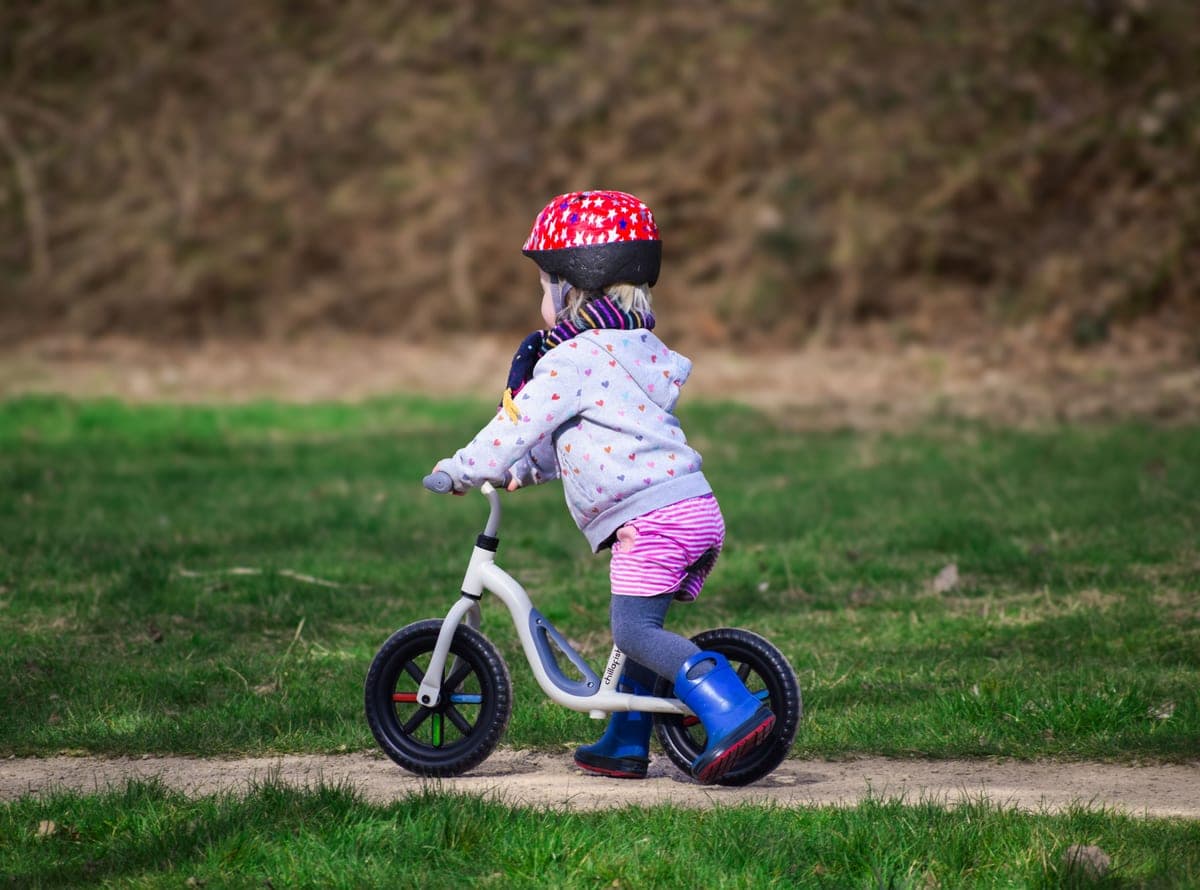
The case for
Riding a bike is two separate skills: balancing a moving two-wheeler, and turning pedals. Balancing is the hard one, and it is the one that takes months. Pedaling is mechanical and most children get it in an afternoon once they can already balance.
A balance bike isolates the hard skill and lets the child practice it with an escape hatch — their feet — permanently available. That is why the balance-bike route so often ends with a child riding a pedal bike the first time the pedals go on.
The case against
It is a second purchase. A balance bike is a bike you will own for one to two years and then sell, and for some families that is simply an extra cost with an extra decision attached.
It is also not strictly necessary. You can get the same effect by taking the pedals off a properly sized pedal bike for two weeks — the method described on how to teach a child to ride. It works, it costs nothing, and it is the better plan for a child who is already four or five.
What it is worth in money terms
Used balance bikes hold their value unusually well, because demand is constant and the bikes barely wear out — there is no drivetrain to destroy. Factor the resale into the decision: the real cost of a balance bike is usually a fraction of its purchase price.
We will not quote a number here, because prices move and a stale price is worse than none. The how much to spend page deals with budgets properly.
Where the money actually matters
Not on the balance bike. Spend on the first pedal bike instead, where weight makes a measurable difference to whether a child can start, stop and corner. A 6.7 lb balance bike and a 6.4 lb balance bike ride much the same; a 12 lb pedal bike and a 21 lb pedal bike do not.
The short version
Starting at two or three: buy the balance bike. Starting at four or five: consider going straight to pedals. Either way, do not buy training wheels — the reasons are on balance bike vs training wheels.
The picks
Every figure below is the manufacturer's own published spec, linked to the page we read it from, so you can check the one number your decision turns on — here is how we choose.
Quick picks — sorted by the inseam it fits
| # | Product | Score | Best for | Inseam | Price |
|---|---|---|---|---|---|
| 1 | 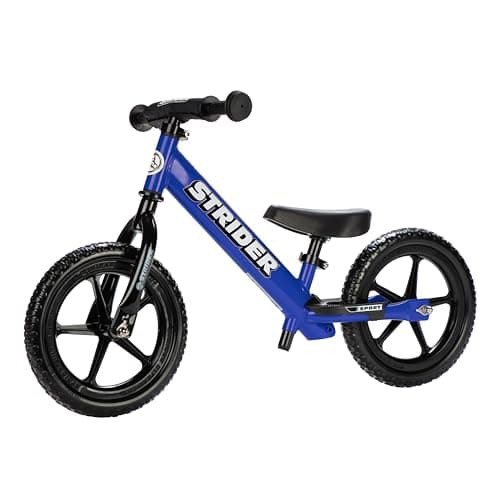 Top pickStrider 12 Sport The widest fit range of any 12-inch balance bike we found, and the one most likely to still fit a year after you buy it. | 9.8/10 | The widest age window | 12–18" | |
| 2 | 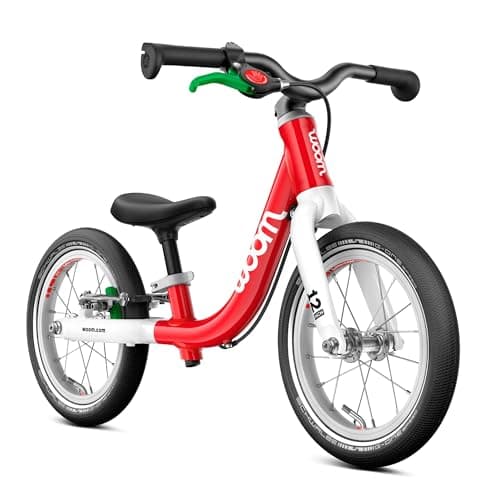 woom GO 1 The lowest published saddle height here, which is the whole argument for it: it fits a 10-inch inseam, and almost nothing else does. | 9.8/10 | The smallest riders | 10–14.4" | |
| 3 | 12" Prevelo Alpha Zero A low standover and a real rear brake in a 6.9 lb package — the closest thing to the woom GO 1 with a slightly wider published inseam range. | 9.7/10 | Brake practice before pedals | 12.5–16.5" | Not sold on Amazon · Prevelo specs |
n/p = the manufacturer does not publish that figure. Every other spec number here comes straight off their spec page. Scores are ours, on the 8.4–9.8 scale explained on our how we choose page.
Top pick — The widest age window
Category-defining · our scale
Strider 12 Sport
The widest fit range of any 12-inch balance bike we found, and the one most likely to still fit a year after you buy it.
| Wheel | 12" |
|---|---|
| Weight | 6.7 lb |
| Fits inseam | 12–18 in |
| Saddle height | 11–17 in |
| Brakes | None — riders stop with their feet |
| Gearing | None (balance bike) |
| Frame | Steel |
| Brand says | Manufacturer says 1–4 years |
Why we picked it
- 11–17 in saddle range covers a 12–18 in inseam — roughly two years of growth
- 6.7 lb, light enough for a toddler to pick up unaided
- Flat-free foam tires never need air
- Tool-free saddle and bar adjustment
Good to knowFoam tires and a steel frame mean nothing to inflate and nothing to break; there is no hand brake at this stage, so feet do the stopping.
How we checked it: Researched from published specs · Strider — 12 Sport specs
#ad · How we make money · Price as of November 12, 2026
#2 — The smallest riders
Category-defining · our scale
woom GO 1
The lowest published saddle height here, which is the whole argument for it: it fits a 10-inch inseam, and almost nothing else does.
| Wheel | 12" |
|---|---|
| Weight | 6.4 lb |
| Fits inseam | 10–14.4 in |
| Saddle height | 10.2–13.9 in |
| Brakes | Child-friendly mini V-brake with a hand lever |
| Gearing | None (balance bike) |
| Frame | 6061 aluminum |
| Brand says | Manufacturer says 1.5–3.5 years |
Why we picked it
- 10.2 in minimum saddle height fits genuinely small toddlers
- 6.4 lb aluminum frame — the lightest in this registry
- Has a real hand brake, so braking is learned before the pedal bike
- Air tires
Good to knowThe 13.9 in saddle ceiling is the number to check - it is built for small riders, so a fast-growing toddler moves up to the GO 2 sooner.
How we checked it: Researched from published specs · woom — GO 1 specs
#ad · How we make money · Price as of November 12, 2026
#3 — Brake practice before pedals
Category-defining · our scale
Prevelo Alpha Zero
A low standover and a real rear brake in a 6.9 lb package — the closest thing to the woom GO 1 with a slightly wider published inseam range.
| Wheel | 12" |
|---|---|
| Weight | 6.9 lb |
| Fits inseam | 12.5–16.5 in |
| Saddle height | 10.9–14 in |
| Brakes | Rear hand brake with a kid-sized lever |
| Gearing | None (balance bike) |
| Frame | Butted 6061 aluminum |
| Brand says | Manufacturer says 1.5 years and up |
Why we picked it
- 12.5–16.5 in published inseam range, wider at the top than the woom GO 1
- Rear hand brake teaches the lever before pedals arrive
- Low center of gravity, child-specific geometry
Good to knowSold direct by Prevelo rather than on Amazon, and the 14 in saddle ceiling suits the earliest riders best.
How we checked it: Researched from published specs · Prevelo — Alpha Zero specs
Not sold on Amazon · Prevelo specs
Questions parents actually ask
01Are balance bikes actually better than training wheels?
For teaching the skill, yes: a balance bike teaches balance, which is the difficult part, while training wheels prevent a child from practicing it at all.
02Are baby balance bikes worth it?
Only if the child can sit with both feet flat on the lowest saddle setting. A balance bike a toddler cannot reach is a piece of furniture.
03Can you skip the balance bike?
Yes. Take the pedals off a correctly sized pedal bike, let them scoot for a fortnight, then put the pedals back on. That is the best route for a child starting at four or five.
Our recommendation
Top pick
9.8/10Strider 12 Sport
The widest age window. Foam tires and a steel frame mean nothing to inflate and nothing to break; there is no hand brake at this stage, so feet do the stopping.
#ad · How we make money · Price as of November 12, 2026
Runner-up
9.8/10woom GO 1
The smallest riders. The 13.9 in saddle ceiling is the number to check - it is built for small riders, so a fast-growing toddler moves up to the GO 2 sooner.
#ad · How we make money · Price as of November 12, 2026
Sources
Read next
- Balance BikesBalance bike vs training wheelsWhy one route teaches balance and the other postpones it.
- Balance BikesWhat age to start a balance bikeThe readiness signal is reach, not age.
- Balance BikesBest balance bikesFour real balance bikes, compared on saddle height and weight.
- Learning to RideDo kids need training wheels?A straight no, and the faster alternative.
- Balance BikesBalance bike vs scooterDifferent skills, different ages. The verdict, with real specs.
- Balance BikesBalance bike vs regular bikeHalf the weight, five inches lower. The verdict on which to buy first.