Big Kid Bikes
Kids bike brake types explained
Kids bikes use six brake types: the coaster brake in the rear hub, rim brakes (V-brake or caliper), mechanical and hydraulic disc brakes, and single-lever systems that drive both wheels at once. Which one you want depends almost entirely on how old the rider is and how wet it gets.
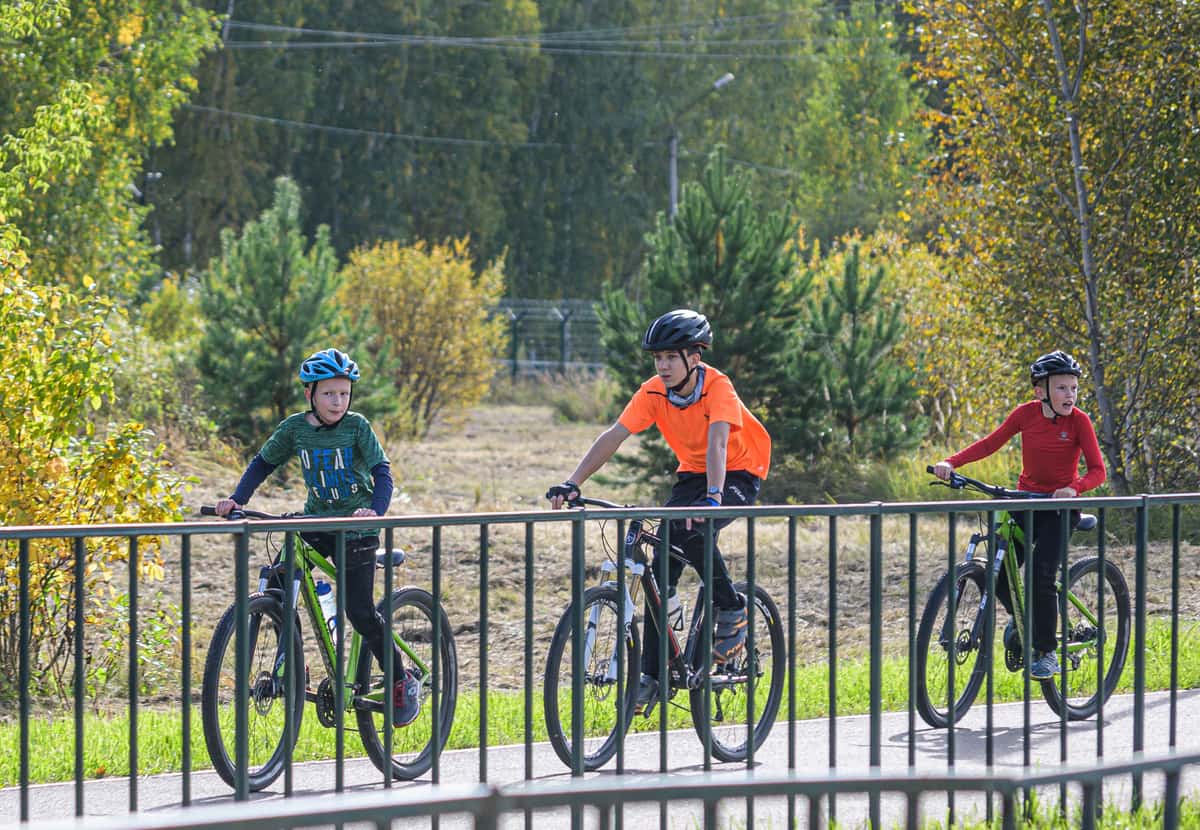
Four of the six brake types on kids bikes are worth seeking out and one is worth avoiding. A learner wants hand levers they can reach; a child riding hills in the rain wants discs; a bike with only a coaster brake gives a beginner no way to slow down without the right foot position.
| Type | How it works | Wet weather | Typical rider |
|---|---|---|---|
| Coaster (back-pedal) | Pedal backwards to engage a hub brake | Unaffected | Big-box 12–16 inch bikes |
| V-brake (linear pull) | Two arms squeeze the rim | Degrades | 16–24 inch, most light bikes |
| Caliper | A single arch squeezes the rim | Degrades | Front brake on budget bikes |
| Mechanical disc | A cable pulls pads onto a rotor | Good | Budget 20–24 inch trail bikes |
| Hydraulic disc | Fluid pushes pads onto a rotor | Best | Premium 20 inch and up |
| Single-lever linked | One lever drives front and rear in sequence | As per rim or disc | Guardian, all sizes |
Examples in this registry: Schwinn Koen 16 is coaster only; woom GO 4 uses two V-brakes; Retrospec Dart Plus runs Tektro mechanical discs; Prevelo Alpha Three and woom EXPLORE 5 use hydraulic discs; every Guardian uses SureStop.
Coaster brakes: the one to think twice about
A coaster brake lives in the rear hub and engages when the rider pedals backwards. It never needs adjusting and it works in the rain, which is why it is standard on inexpensive 12 to 16 inch bikes.
The problem is what it does to a beginner. A child learning to pedal needs to back-pedal to set the cranks before pushing off — and on a coaster bike that locks the rear wheel. It also means every stop depends on the feet happening to be in the right place. A child who learned on a balance bike already brakes with a lever, and a coaster brake asks them to unlearn it. We go through this properly on coaster brakes vs hand brakes.
Rim brakes: V-brake and caliper
A V-brake (also called linear pull) uses two long arms to squeeze pads onto the wheel rim. It is light, cheap, easy to adjust and strong enough for any kids bike. Almost every lightweight bike in this registry uses them — the woom GO line runs two independently operated mini V-brakes, which is exactly what you want.
A caliper brake does the same job with a single arch over the tyre. It is weaker and usually appears as the front brake on budget bikes paired with a rear coaster, as on the Schwinn Elm line.
The weakness of both is the rim itself: wet, gritty or slightly buckled rims brake worse, and steel rims brake much worse than aluminum. For pavement riding that is a non-issue. For a muddy trail it is the reason discs exist.
Disc brakes: mechanical and hydraulic
A disc brake clamps a rotor bolted to the hub instead of the rim, so water and mud barely matter and a buckled wheel does not stop the bike braking. Mechanical discs are cable-operated and appear on budget trail bikes — the Retrospec Dart Plus models run 160 mm Tektro rotors. They work well and need occasional pad adjustment.
Hydraulic discs use fluid instead of cable, which means far less hand force for the same stopping power. On a child that is the whole point: small fingers, lots of braking. The Prevelo Alpha Three and the woom EXPLORE line use Promax hydraulics. The trade-off is price and the fact that a bleed is a workshop job.
Single-lever linked systems
Guardian's SureStop is the one system here that does something genuinely different: one lever drives the rear brake first and then the front, in sequence. The intent is to make an over-the-bars front-wheel lockup impossible for a child who grabs the lever in panic, and to remove the question of which lever is which.
It is a real safety argument and the reason Guardian keeps appearing in our picks for nervous or very young riders. The cost is that your child never learns to modulate front and rear independently, which they will have to do on their next bike.
Lever reach is the spec nobody checks
Whatever brake type you buy, the lever has to be reachable. Ask your child to squeeze it hard while keeping their palm on the grip. If they have to re-grip, rotate the wrist or use two hands, the reach is wrong. Good kids bikes publish a reach-adjustable lever; budget bikes often fit an adult lever and hope.
This is one of the five checks on is my child's bike too big, and it fails more often than any of the others.
What to buy, by rider
A first pedal bike: two hand levers, no coaster, with reach-adjustable levers. Failing that, a coaster plus a front hand lever so the skill still gets learned.
A confident 20-inch rider on pavement: V-brakes are plenty, and they save weight over discs.
Hills, gravel or wet climates: discs. Mechanical if the budget is tight, hydraulic if it is not.
A nervous or very young rider: a single-lever linked system takes the choice away, which at that stage is the point.
The picks
Every figure below is the manufacturer's own published spec, linked to the page we read it from, so you can check the one number your decision turns on — here is how we choose.
Quick picks — sorted by weight
| # | Product | Best for | Weight | Price |
|---|---|---|---|---|
| 1 | 20" Top pickGuardian 20 Inch Small An 18.3 in minimum leg length on a 20-inch wheel is unusual, and it is the reason to look here when a kid has outgrown 16-inch but is nowhere near a geared bike. | Outgrowing 16-inch early | 20.7 lb | Not sold on Amazon · Guardian Bikes specs |
| 2 | 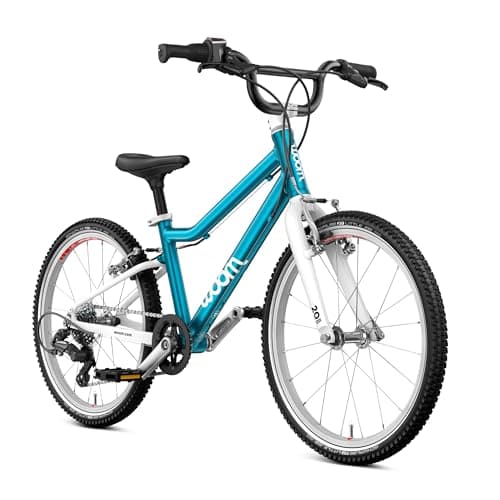 woom GO 4 Seven gears with a numbered indicator and 17.2 lb on the scale — the point where a kid's bike stops being a toy and starts being transport. | First gears done right | 17.2 lb | |
| 3 | 20" Prevelo Alpha Three Hydraulic discs and a 19 in minimum inseam make this the 20-inch for a smaller kid who rides hills, trails or wet pavement. | Hills and wet weather | 16.9 lb | Not sold on Amazon · Prevelo specs |
| 4 | 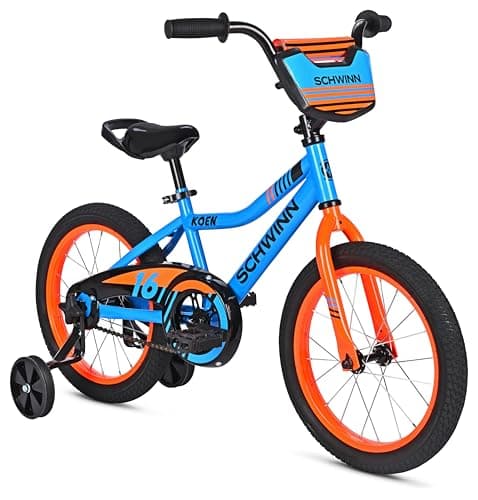 Schwinn Koen 16 The bike most American kids actually get, and the honest reason to consider it is price — but at 21.16 lb it asks a five-year-old to manage half their own body weight. | The budget reality check | 21.16 lb | $142.49 · View on Amazon
|
n/p = the manufacturer does not publish that figure. Every other number here comes straight off their spec page.
Top pick — Outgrowing 16-inch early
Guardian 20 Inch Small
An 18.3 in minimum leg length on a 20-inch wheel is unusual, and it is the reason to look here when a kid has outgrown 16-inch but is nowhere near a geared bike.
| Wheel | 20" |
|---|---|
| Weight | 20.7 lb |
| Fits inseam | 18.3–26 in |
| Brakes | SureStop single-lever hand brake; no coaster brake |
| Gearing | Single speed |
| Frame | Steel |
| Brand says | Manufacturer says 5–8 years, rider height 43–51 in |
What works
- 18.3 in published minimum leg length — the lowest 20-inch in this registry
- SureStop braking
- Single speed keeps it simple and cheap to maintain
What doesn't
- 20.7 lb steel frame
- No gears, so hills stay hard
- Guardian publishes leg length but not a saddle-height range
How we checked it: Researched from published specs · Guardian — 20 inch Small specs
Not sold on Amazon · Guardian Bikes specs
#2 — First gears done right
woom GO 4
Seven gears with a numbered indicator and 17.2 lb on the scale — the point where a kid's bike stops being a toy and starts being transport.
| Wheel | 20" |
|---|---|
| Weight | 17.2 lb |
| Fits inseam | 22.1–27.9 in |
| Saddle height | 22.4–28.7 in |
| Brakes | Two independently operated mini V-brakes |
| Gearing | 7 speed with a child-friendly gear indicator |
| Frame | Butted 6061 aluminum |
| Brand says | Manufacturer says 6–8 years, rider height 45–51 in |
What works
- 17.2 lb with gears fitted — about 34% of the median seven-year-old
- Gear indicator makes shifting teachable
- 6.3 in of saddle adjustment
What doesn't
- 22.4 in minimum saddle rules out shorter six-year-olds
- Rim brakes rather than discs
- Costs three times what a big-box 20-inch costs
How we checked it: Researched from published specs · woom — GO 4 specs
#ad · How we make money · Price as of October 10, 2026
#3 — Hills and wet weather
Prevelo Alpha Three
Hydraulic discs and a 19 in minimum inseam make this the 20-inch for a smaller kid who rides hills, trails or wet pavement.
| Wheel | 20" |
|---|---|
| Weight | 16.9 lb |
| Fits inseam | 19–23 in |
| Saddle height | 21.2–26.4 in |
| Brakes | Promax hydraulic disc brakes |
| Gearing | 8 speed Microshift Acolyte |
| Frame | Triple-butted 6061 aluminum |
| Brand says | Manufacturer says 5–9 years |
What works
- Hydraulic discs — one-finger braking in the wet, which rim brakes cannot match
- 21.2 in minimum saddle, the lowest 20-inch here
- 8 speeds
What doesn't
- 16.9 lb is a manufacturer figure measured without pedals
- Hydraulic brakes need a shop for a proper bleed
- Direct-sale only
How we checked it: Researched from published specs · Prevelo — Alpha Three specs
Not sold on Amazon · Prevelo specs
#4 — The budget reality check
Schwinn Koen 16
The bike most American kids actually get, and the honest reason to consider it is price — but at 21.16 lb it asks a five-year-old to manage half their own body weight.
| Wheel | 16" |
|---|---|
| Weight | 21.16 lb |
| Brakes | Rear coaster brake (pedal backwards to stop) |
| Gearing | Single speed |
| Frame | Steel |
| Brand says | Manufacturer says rider height 38–48 in, roughly 3–7 years |
What works
- Widely stocked and cheap to replace
- Training wheels and a parent push handle included
- Tool-free seat adjustment
What doesn't
- 21.16 lb — roughly 52% of the median five-year-old's body weight
- Coaster brake only, which teaches the wrong stopping reflex
- Schwinn publishes rider height but no saddle-height or inseam range, so you cannot size it properly before it arrives
How we checked it: Researched from published specs · Schwinn — Koen 16 specs
Questions parents actually ask
01What brake types do kids bikes use?
Six: coaster brakes in the rear hub, V-brakes and caliper brakes on the rim, mechanical and hydraulic disc brakes on a rotor, and single-lever linked systems that drive both wheels in sequence.
02Are coaster brakes bad for kids?
They are not unsafe, but they make learning harder. A coaster brake stops a beginner back-pedalling to set the cranks before pushing off, and it means every stop depends on where the feet happen to be.
03Do kids bikes need disc brakes?
Only if the child rides in the wet, on gravel or down real hills. On pavement a pair of V-brakes stops a kids bike perfectly well and saves weight.
04What is the best brake for a child learning to ride?
Two reach-adjustable hand levers with no coaster brake, so the child can back-pedal freely and learns to modulate braking. A single-lever linked system is a good alternative for a very nervous rider.
Sources
Read next
- First Pedal BikesCoaster brakes vs hand brakesWhy the easier brake is the worse one to learn on.
- First Pedal BikesBest kids bikes with hand brakesReal levers, and which bikes skip the coaster brake entirely.
- Big Kid BikesBest kids bikes with gearsSix geared bikes at 20 and 24 inch, ranked on weight and shifter.
- Learning to RideFirst ride checklistNine checks, ten minutes, before the first ride.