First Pedal Bikes
Coaster brakes vs hand brakes
A coaster brake stops the bike when your child pedals backwards. A hand brake stops it when they squeeze a lever. The coaster is easier on day one and a problem afterwards: it blocks backpedaling to reposition the pedals for a start, and it teaches a reflex that has to be unlearned.
What each one is
A coaster brake lives inside the rear hub. Pedal backwards and it engages. There is no lever, no cable and nothing to adjust.
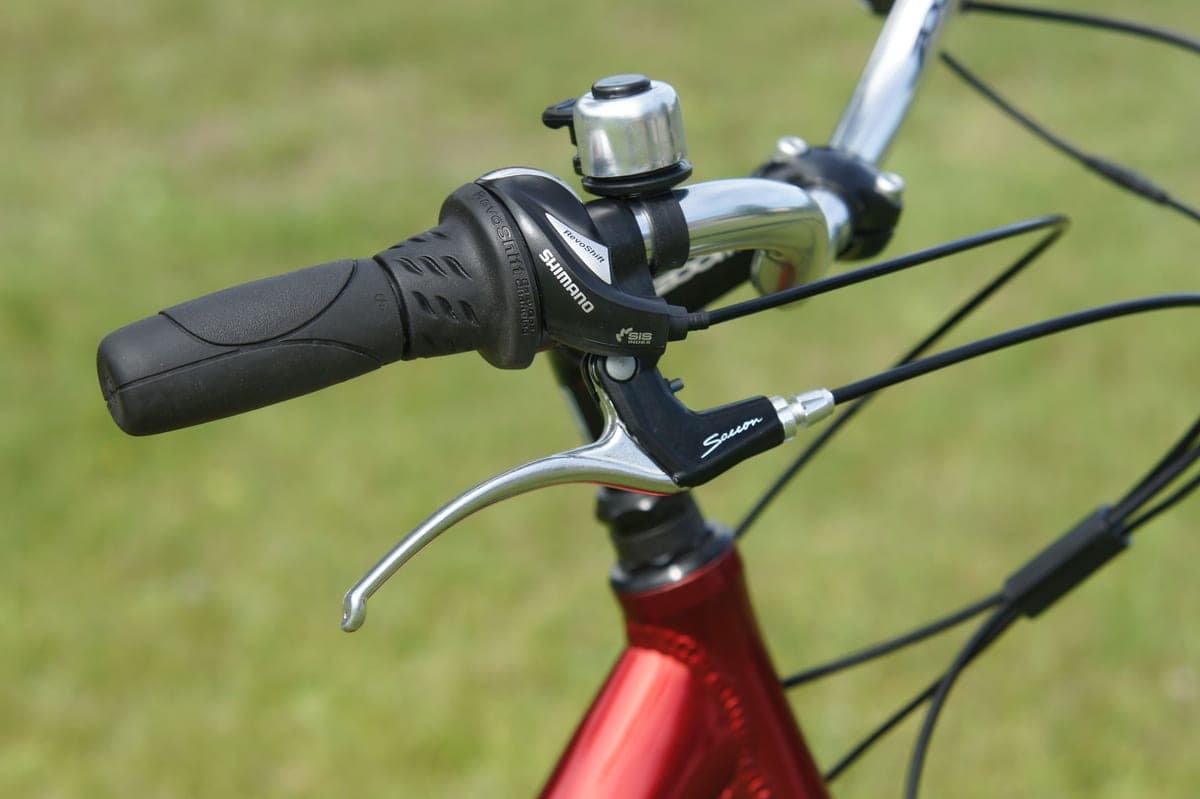
A hand brake is a lever on the bar pulling a cable to a caliper at the wheel. Every bike your child will ride after this one works that way.
The case for the coaster
It is intuitive for a three-year-old who has just worked out pedaling. It works whatever their hands are doing. It never needs adjusting, and it cannot be pulled too hard in a panic.
It is also legally near-unavoidable at the smallest sizes — woom notes that the GO 2 ships with a coaster brake fitted as a CPSC requirement.
The case against
It blocks the start position
To start pedaling, a rider backpedals until the lead pedal is up at about two o'clock, then pushes down. On a coaster bike, backpedaling brakes instead. So every start begins with the pedal in the wrong place, which is exactly the moment a beginner wobbles.
It teaches the wrong reflex
A child who learns to stop by pedaling backwards will do that under stress on a bike that has no coaster. That is a relearning job in the worst possible circumstances.
It is heavy
A coaster hub is steel and it sits in the rear wheel, which is the worst place to add mass. See why kids bikes are so heavy.
What we would do
Teach the hand brake from the balance bike stage if the balance bike has one, and buy a first pedal bike with real levers. If the bike you have has a coaster, do not replace it over this — just teach the lever alongside, and let the coaster be a backup.
The Guardian variation
Guardian's SureStop is a hand brake that removes the front-brake risk by putting both on one lever in a fixed sequence. It is a genuine third option, covered in the Guardian review.
The picks
Every figure below is the manufacturer's own published spec, linked to the page we read it from. We have not ridden these bikes and the cards say so — here is how we choose.
Quick picks — sorted by weight
| # | Product | Best for | Weight | Price |
|---|---|---|---|---|
| 1 | 14" Top pickPrevelo Alpha One 11.3 lb without pedals and a 14.75 in minimum saddle: the bike for the child who is ready to pedal before their legs agree. | Small legs, real pedals | 11.3 lb | |
| 2 | 16" Guardian 16 Inch Original The 16-inch with the lowest published minimum leg length — 16.25 in — which makes it the one to check first if your kid is between sizes. | Kids between sizes | 17.5 lb | |
| 3 | 16" woom GO 3 13 lb with a 19–25.1 in saddle range — the widest useful fit window of any 16-inch in this registry, on the lightest frame. | The longest fit window | 13 lb | |
| 4 | 16" Schwinn Koen 16 The bike most American kids actually get, and the honest reason to consider it is price — but at 21.16 lb it asks a five-year-old to manage half their own body weight. | The budget reality check | 21.16 lb |
n/p = the manufacturer does not publish that figure. We do not fill in a number they never gave.
Top pick — Small legs, real pedals
Prevelo Alpha One
11.3 lb without pedals and a 14.75 in minimum saddle: the bike for the child who is ready to pedal before their legs agree.
| Wheel | 14" |
|---|---|
| Weight | 11.3 lb |
| Fits inseam | 14–17.5 in |
| Saddle height | 14.75–25.2 in |
| Brakes | Independently operated dual hand brakes, kid-sized levers |
| Gearing | Single-speed freewheel, no coaster brake |
| Frame | Triple-butted 6061 aluminum |
| Brand says | Manufacturer says 3–5 years |
What works
- Lowest published minimum saddle height of any 14-inch here
- 11.3 lb (manufacturer figure, measured without pedals)
- True freewheel — no coaster brake to confuse the feet
What doesn't
- Published weight excludes pedals, so compare it carefully against rivals
- 14–17.5 in inseam range is narrow
- Direct-sale only
Hands-on status: Researched from published specs · Prevelo — Alpha One specs
#2 — Kids between sizes
Guardian 16 Inch Original
The 16-inch with the lowest published minimum leg length — 16.25 in — which makes it the one to check first if your kid is between sizes.
| Wheel | 16" |
|---|---|
| Weight | 17.5 lb |
| Fits inseam | 16.25–23.5 in |
| Saddle height | 18.5–23.5 in |
| Brakes | SureStop single-lever hand brake; no coaster brake |
| Gearing | Single speed |
| Frame | Steel |
| Brand says | Manufacturer says 4–6 years, rider height 40–46 in |
What works
- 16.25 in minimum leg length fits kids other 16-inch bikes don't
- SureStop single-lever braking
- Kickstand, reflectors and tools in the box
What doesn't
- 17.5 lb — around 39% of the median six-year-old's body weight
- Steel frame
- Single lever means no independent brake control
Hands-on status: Researched from published specs · Guardian — 16 inch Original specs
#3 — The longest fit window
woom GO 3
13 lb with a 19–25.1 in saddle range — the widest useful fit window of any 16-inch in this registry, on the lightest frame.
| Wheel | 16" |
|---|---|
| Weight | 13 lb |
| Fits inseam | 19.1–25.2 in |
| Saddle height | 19–25.1 in |
| Brakes | Two independently operated mini V-brakes |
| Gearing | Single speed, 18t front / 10t rear |
| Frame | 6061 aluminum |
| Brand says | Manufacturer says 4–6 years, rider height 41–47 in |
What works
- 13 lb — about 29% of the median six-year-old's body weight
- 6.1 in of saddle adjustment, so it lasts two seasons for most kids
- Two proper hand brakes with a color-coded rear lever
What doesn't
- 19 in minimum saddle is too high for a small five-year-old
- No gears, which starts to matter on hills around age six
- Direct-sale pricing
Hands-on status: Researched from published specs · woom — GO 3 specs
#4 — The budget reality check
Schwinn Koen 16
The bike most American kids actually get, and the honest reason to consider it is price — but at 21.16 lb it asks a five-year-old to manage half their own body weight.
| Wheel | 16" |
|---|---|
| Weight | 21.16 lb |
| Brakes | Rear coaster brake (pedal backwards to stop) |
| Gearing | Single speed |
| Frame | Steel |
| Brand says | Manufacturer says rider height 38–48 in, roughly 3–7 years |
What works
- Widely stocked and cheap to replace
- Training wheels and a parent push handle included
- Tool-free seat adjustment
What doesn't
- 21.16 lb — roughly 52% of the median five-year-old's body weight
- Coaster brake only, which teaches the wrong stopping reflex
- Schwinn publishes rider height but no saddle-height or inseam range, so you cannot size it properly before it arrives
Hands-on status: Researched from published specs · Schwinn — Koen 16 specs
Questions parents actually ask
01What are coaster brakes on a bike?
A braking system inside the rear hub that engages when the rider pedals backwards. No lever, no cable, nothing to adjust.
02Are coaster brakes bad for kids?
They are not dangerous, but they prevent backpedaling to set the pedal position for a start, and they teach a stopping reflex that has to be unlearned on any bike with hand brakes.
03Can you disable a coaster brake on a kids bike?
Sometimes — a shop may be able to fit a freewheel rear wheel or swap the hub. It depends on the bike, so ask before buying rather than after.
04Is there a law requiring coaster brakes on kids bikes?
US bicycle requirements under CPSC rules mean some small-wheel bikes ship with a footbrake fitted; woom states the coaster brake on its 14-inch GO 2 is there as a CPSC requirement.
Sources
Read next
- First Pedal BikesBest kids bikes with hand brakesReal levers, and which bikes skip the coaster brake entirely.
- Learning to RideHow to teach a child to ride a bikeThe pedals-off method, step by step.
- First Pedal BikesGuardian Bikes reviewOne lever, both brakes, in the right order — at a weight cost.
- First Pedal BikesBest first pedal bikesSeven real bikes, from 11.3 lb to 21.16 lb, on published specs.