Bike Sizing
What age is a 20 inch bike for?
Five to eight covers most of it. But the 20-inch bikes here publish minimum inseams from 18.3 inches to 22.1 inches — nearly four inches of disagreement inside one wheel size — so a 20-inch can fit a small five-year-old or a tall eight-year-old depending on which one you buy.
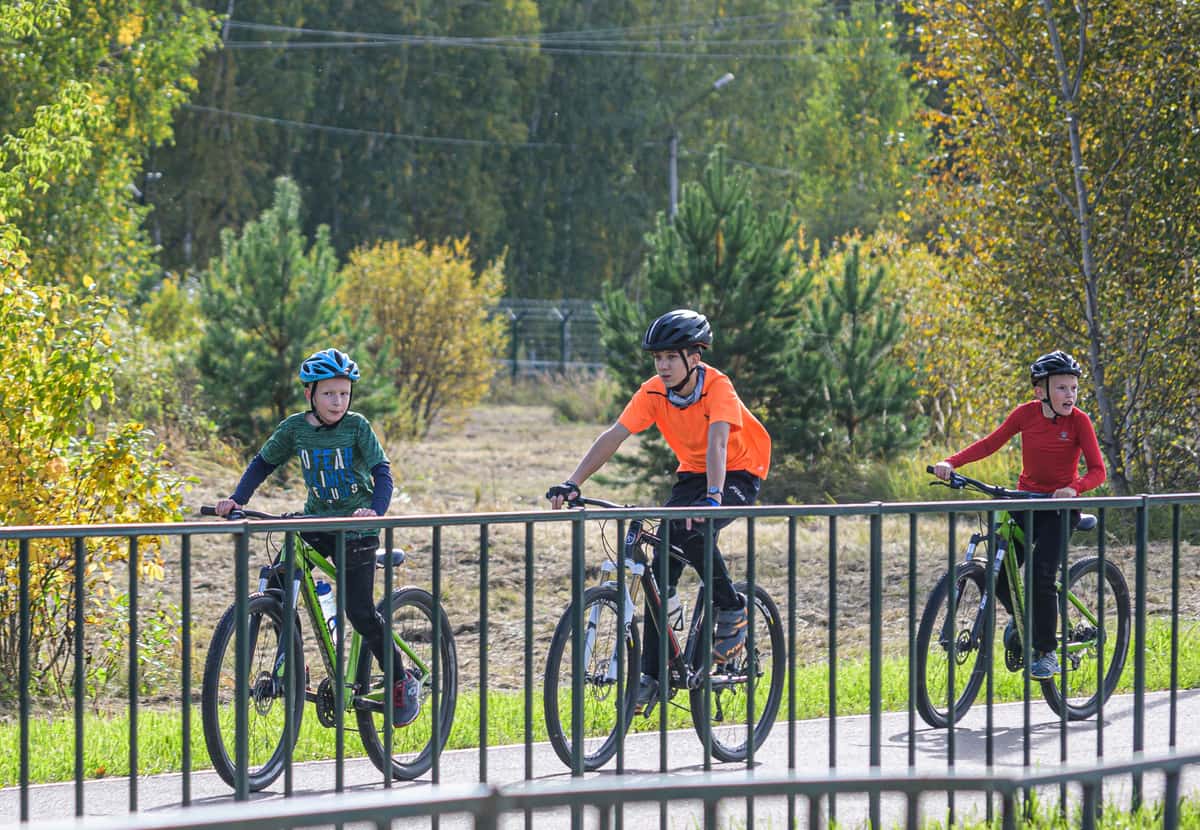
Five to eight is the honest band. A Guardian 20 Small takes an 18.3 inch inseam, which a tall five-year-old has. A woom GO 4 needs 22.1 inches, which plenty of seven-year-olds have not reached. That is 3.8 inches of spread on one wheel size, and it is the reason the age on the box is close to useless on its own.
| Model | Age the brand quotes | Fit figure the brand publishes | Gears | Weight |
|---|---|---|---|---|
| Guardian 20 Small | 5–8 yrs | Inseam 18.3–26", rider 43–51" | Single speed | 20.7 lb |
| Prevelo Alpha Three | 5–9 yrs | Inseam 19–23", saddle 21.2–26.4" | 8 speed | 16.9 lb* |
| Retrospec Koda 20 | 6–8 yrs | Saddle 21.5–27.5", riders 44–63" | Single speed | 23.25 lb |
| woom GO 4 | 6–8 yrs | Inseam 22.1–27.9", saddle 22.4–28.7" | 7 speed | 17.2 lb |
| woom EXPLORE 4 | 6–8 yrs | Saddle 22.4–28.5", rider 45–51" | 7 speed | 18 lb |
| Retrospec Dart Plus 20 | 6–8 yrs | Saddle 21.75–27" | 7 speed | 27 lb |
* Prevelo publishes weight without pedals fitted. Every figure read from the manufacturer's own spec page.
Twenty inch is where the category splits in two
Up to 16 inches, a kids bike is a kids bike. At 20 inches the market divides: single-speed bikes aimed at five- and six-year-olds who have just moved up, and geared bikes aimed at seven- and eight-year-olds riding further from home. They share a wheel diameter and almost nothing else.
That split is why the fit floors are so far apart. The Guardian 20 Small is deliberately the lowest-fitting 20-inch here because it is meant to catch children coming off a 16-inch early. The woom GO 4 sits at the other end because it is meant to be the last bike before 24 inch.
When a five-year-old fits a 20-inch
When their inseam clears 18.3 inches and they are already a confident rider on a 16. Going up a size early is defensible at this point in a way it is not at three, because the bikes are no longer heavy relative to the child — the CDC median five-year-old is about 39.8 lb and a 20.7 lb Guardian is roughly half of that, where a first pedal bike is often closer to two thirds.
What you should not do is put a nervous five-year-old on the tallest 20-inch you can find. The confidence cost of a bike they cannot flat-foot outweighs the extra season of use.
When an eight-year-old is still on a 20-inch
Often, and legitimately. A woom GO 4 runs to a 28.7 inch saddle and a Retrospec Koda 20 to 27.5 inches, which covers most eight-year- olds comfortably. The signals that the bike is finished are the saddle at its maximum with the knees still cramped at the top of the stroke, or the child outrunning the gearing on every descent.
The 24-inch options and the crossover are on what age is a 24 inch bike.
Gears at 20 inch: who needs them
A single speed is fine for a five- or six-year-old riding on the flat. By seven or eight, a child is riding far enough from home that an incline turns into a walk, and that is when gears start earning their keep rather than adding complication. Three of the six bikes above are geared and three are not, which is a reasonable summary of the whole size.
The longer argument is on when do kids need gears, and the full ranked picks at this size are on best 20 inch kids bikes.
Weight still matters at 20 inch
The spread here is 16.9 lb to 27 lb — more than ten pounds inside one wheel size. On a seven-year-old at roughly 50.3 lb, that is the difference between a bike that is about a third of their body weight and one that is more than half. Hills are where a child notices, and hills are where they decide whether cycling is fun.
What changes when a child moves to 20 inch
The 16-to-20 step is the biggest change in a child's cycling life after learning to balance. The bike gets faster, the gearing usually appears, the brakes get stronger, and the child starts riding beyond where you can see them. That is a behavior change as much as an equipment one.
Practically, it means two things are worth getting right at this size that you could get away with earlier: brakes that work in the wet, and a bike light enough that they will ride it home rather than call you. Those are the two figures to compare in the table above.
Weight at 20 inch, in proportion
The spread here is 16.9 lb to 27 lb. On a seven-year-old at the CDC median of about 50.3 lb, the lightest bike is roughly a third of their body weight and the heaviest is more than half. Scaled to a 180 lb adult, those are very different bicycles, and the difference shows up on exactly the sort of terrain a seven-year-old is newly able to reach.
Single speed or geared at this size?
Two of the bikes here are single speed by design — the Guardian 20 Small and the Retrospec Koda 20 — and both are aimed at the younger end of the band. A single speed is simpler, lighter and has nothing to go out of adjustment, which on a bike that will be dropped regularly is worth something.
Geared bikes earn their place when the child's range exceeds the flat ground near home. If they are riding to school, riding with you on longer trips, or living anywhere with real hills, the gears stop being a complication. The shifter type matters: a trigger is easier to use accurately than a twist grip, especially with cold hands.
Standover, which catches people out at 20 inch
A 20-inch frame has a meaningfully higher top tube than a 16-inch, and a child who clears the saddle height can still fail the standover check. Have them straddle the bike flat-footed in shoes and look for daylight between them and the top tube. No gap means the frame is too big regardless of what the seatpost can do.
Tires and where the bike will be ridden
Twenty inches is where tire choice starts to matter. A narrow, lightly treaded tire rolls faster on pavement and makes the bike feel quicker for the same effort. A wider knobby tire grips on gravel and grass at the cost of noticeable drag on tarmac.
Most children at this age do most of their riding on pavement and on school runs, which makes the faster tire the better default. Keep them inflated: an underinflated kids tire is the most common hidden reason a bike feels heavy, and it is a two-minute fix. The routine checks are on kids bike maintenance basics.
The picks
Every figure below is the manufacturer's own published spec, linked to the page we read it from, so you can check the one number your decision turns on — here is how we choose.
Quick picks — sorted by weight
| # | Product | Best for | Weight | Price |
|---|---|---|---|---|
| 1 | 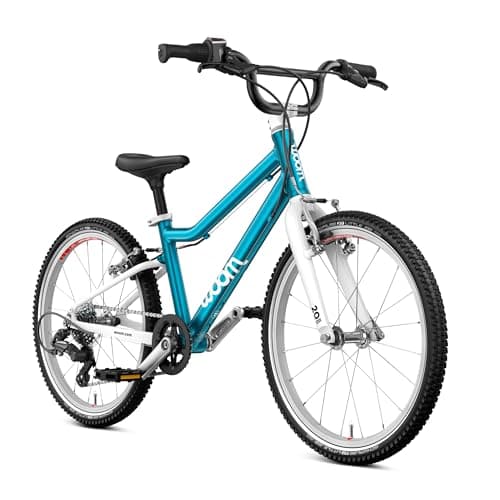 Top pickwoom GO 4 Seven gears with a numbered indicator and 17.2 lb on the scale — the point where a kid's bike stops being a toy and starts being transport. | First gears done right | 17.2 lb | |
| 2 | 20" Prevelo Alpha Three Hydraulic discs and a 19 in minimum inseam make this the 20-inch for a smaller kid who rides hills, trails or wet pavement. | Hills and wet weather | 16.9 lb | Not sold on Amazon · Prevelo specs |
| 3 | 20" Guardian 20 Inch Small An 18.3 in minimum leg length on a 20-inch wheel is unusual, and it is the reason to look here when a kid has outgrown 16-inch but is nowhere near a geared bike. | Outgrowing 16-inch early | 20.7 lb | Not sold on Amazon · Guardian Bikes specs |
| 4 | 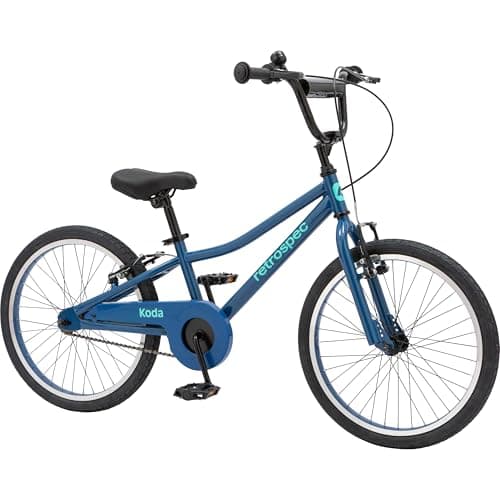 Retrospec Koda 20 A 20-inch with hand brakes and no coaster at all, a published 21.5–27.5 in saddle range, and a price that stays under the line most parents draw. | Hand brakes on a budget | 23.25 lb |
n/p = the manufacturer does not publish that figure. Every other number here comes straight off their spec page.
Top pick — First gears done right
woom GO 4
Seven gears with a numbered indicator and 17.2 lb on the scale — the point where a kid's bike stops being a toy and starts being transport.
| Wheel | 20" |
|---|---|
| Weight | 17.2 lb |
| Fits inseam | 22.1–27.9 in |
| Saddle height | 22.4–28.7 in |
| Brakes | Two independently operated mini V-brakes |
| Gearing | 7 speed with a child-friendly gear indicator |
| Frame | Butted 6061 aluminum |
| Brand says | Manufacturer says 6–8 years, rider height 45–51 in |
What works
- 17.2 lb with gears fitted — about 34% of the median seven-year-old
- Gear indicator makes shifting teachable
- 6.3 in of saddle adjustment
What doesn't
- 22.4 in minimum saddle rules out shorter six-year-olds
- Rim brakes rather than discs
- Costs three times what a big-box 20-inch costs
How we checked it: Researched from published specs · woom — GO 4 specs
#ad · How we make money · Price as of November 1, 2026
#2 — Hills and wet weather
Prevelo Alpha Three
Hydraulic discs and a 19 in minimum inseam make this the 20-inch for a smaller kid who rides hills, trails or wet pavement.
| Wheel | 20" |
|---|---|
| Weight | 16.9 lb |
| Fits inseam | 19–23 in |
| Saddle height | 21.2–26.4 in |
| Brakes | Promax hydraulic disc brakes |
| Gearing | 8 speed Microshift Acolyte |
| Frame | Triple-butted 6061 aluminum |
| Brand says | Manufacturer says 5–9 years |
What works
- Hydraulic discs — one-finger braking in the wet, which rim brakes cannot match
- 21.2 in minimum saddle, the lowest 20-inch here
- 8 speeds
What doesn't
- 16.9 lb is a manufacturer figure measured without pedals
- Hydraulic brakes need a shop for a proper bleed
- Direct-sale only
How we checked it: Researched from published specs · Prevelo — Alpha Three specs
Not sold on Amazon · Prevelo specs
#3 — Outgrowing 16-inch early
Guardian 20 Inch Small
An 18.3 in minimum leg length on a 20-inch wheel is unusual, and it is the reason to look here when a kid has outgrown 16-inch but is nowhere near a geared bike.
| Wheel | 20" |
|---|---|
| Weight | 20.7 lb |
| Fits inseam | 18.3–26 in |
| Brakes | SureStop single-lever hand brake; no coaster brake |
| Gearing | Single speed |
| Frame | Steel |
| Brand says | Manufacturer says 5–8 years, rider height 43–51 in |
What works
- 18.3 in published minimum leg length — the lowest 20-inch in this registry
- SureStop braking
- Single speed keeps it simple and cheap to maintain
What doesn't
- 20.7 lb steel frame
- No gears, so hills stay hard
- Guardian publishes leg length but not a saddle-height range
How we checked it: Researched from published specs · Guardian — 20 inch Small specs
Not sold on Amazon · Guardian Bikes specs
#4 — Hand brakes on a budget
Retrospec Koda 20
A 20-inch with hand brakes and no coaster at all, a published 21.5–27.5 in saddle range, and a price that stays under the line most parents draw.
| Wheel | 20" |
|---|---|
| Weight | 23.25 lb |
| Saddle height | 21.5–27.5 in |
| Brakes | Hand-operated aluminum V-brake with a reach-adjustable lever; no coaster brake |
| Gearing | Single speed, 32T crank and 16T freewheel cog |
| Frame | High-tensile steel, low-profile step-over |
| Brand says | Manufacturer says ages 6–8, riders 44–63 in, up to 150 lb |
What works
- 21.5–27.5 in published saddle range — 6 in of travel, the longest here at this size
- Hand V-brake only, with no coaster to confuse the feet
- 150 lb rider limit
What doesn't
- 23.25 lb — about a third of the median eight-year-old
- Single speed, so hills get walked
- Steel frame and entry-level parts; budget for adjustment
How we checked it: Researched from published specs · Retrospec — Koda 20 specs
#ad · How we make money · Price as of November 1, 2026
Questions parents actually ask
01What age is a 20 inch bike for?
Five to eight for most children. The brands quote bands from 5 to 9 years, but publish minimum inseams from 18.3 inches (Guardian 20 Small) to 22.1 inches (woom GO 4) for the same wheel size.
02Can a 5 year old ride a 20 inch bike?
A tall and confident one can. The Guardian 20 Small takes an 18.3 inch inseam, the lowest 20-inch floor here. A nervous five-year-old is better off finishing their 16-inch than on a bike they cannot flat-foot.
03Is a 20 inch bike too small for an 8 year old?
Usually not. The woom GO 4 runs to a 28.7 inch saddle and the Retrospec Koda 20 to 27.5 inches, which covers most eight-year-olds. Move up when the saddle is at maximum and the knees are still cramped at the top of the stroke.
04Does a 20 inch kids bike need gears?
Not at five or six on flat ground. By seven or eight a child rides far enough that an incline becomes a walk, which is the point at which gears stop being a complication and start being useful.
Sources
Read next
- Bike SizingKids bike wheel size by ageAge bands by wheel size — and how far the brands disagree.
- Bike SizingWhat age is a 24 inch bike for?The honest age range for a 24 inch bike, model by model.
- Big Kid BikesBest 20 inch kids bikesThree 20-inch bikes: gears, discs, and who fits which.
- Bike SizingWhat size bike for a 7 year old?The honest answer for a 7-year-old, starting with the inseam.