Helmets & Gear
When to replace a kids bike helmet
Replace it after any impact hard enough to matter, as soon as it stops fitting properly, and whenever the shell, foam or straps show damage. A helmet works by crushing, and crushed foam does not come back.
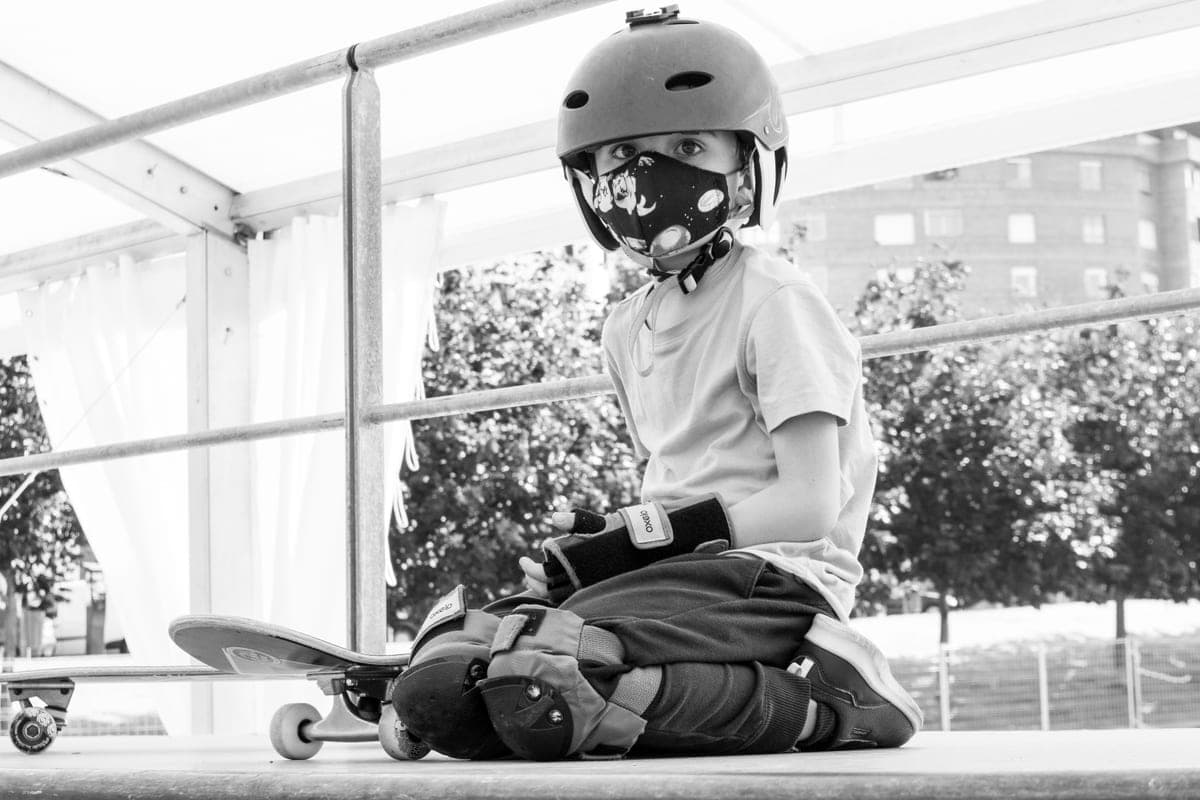
The four replacement triggers
Step 01
Any impact that would have hurt
A helmet protects by crushing, and crushed foam stays crushed. The damage is often invisible from the outside — a dent in the EPS liner under an intact shell. If your child hit their head, replace it.
Step 02
It no longer fits
Heads grow. When the dial is at its loosest and the helmet still presses, or when it is fully tight and still moves, the helmet is done. Check against the size chart.
Step 03
Visible damage
Cracks in the shell, compressed or crumbling foam, a shell separating from the liner, a buckle that does not latch first time, or straps that have frayed or lost their adjusters.
Step 04
You do not know its history
A hand-me-down helmet with an unknown crash record is not a saving. Foam damage is not reliably visible, and this is the one piece of equipment where the failure mode is a head injury.
What about age alone?
Manufacturers commonly suggest replacing a helmet every few years because foam, glue and straps degrade with UV, sweat and heat. For kids the point is usually academic — they outgrow helmets long before an undamaged one reaches that age.
How to store one so it lasts
Not in a hot car. Heat is the enemy of EPS foam, and a car in summer gets hot enough to matter. Indoors, out of direct sun, not at the bottom of a bag with a bike lock on top.
Clean it without destroying it
Mild soap and water on the pads and straps. No solvents, no bleach, no dishwasher — chemicals can degrade EPS foam without leaving any mark you can see.
The picks
Every figure below is the manufacturer's own published spec, linked to the page we read it from. We have not ridden these bikes and the cards say so — here is how we choose.
Quick picks — sorted by head size
| # | Product | Best for | Head | Price |
|---|---|---|---|---|
| 1 | 45–53 Top pickGiro Scamp MIPS II The XS covers a 45–49 cm head and carries the CPSC certification for age 1 and up with extended rear coverage — the combination most toddler helmets miss. | Toddlers and preschoolers | 45–53 cm | |
| 2 | 47–57 Bell Sidetrack II MIPS 320 g in youth size with a visor and Mips Evolve — the value pick once a child is past five and riding further than the driveway. | School-age riders | 47–57 cm | |
| 3 | 50–56 Lazer Nutz KinetiCore 250 g and 12 vents, with rotational protection built into the foam rather than added as a separate liner — the lightest helmet in this registry. | Hot-weather riding | 50–56 cm |
n/p = the manufacturer does not publish that figure. We do not fill in a number they never gave.
Top pick — Toddlers and preschoolers
Giro Scamp MIPS II
The XS covers a 45–49 cm head and carries the CPSC certification for age 1 and up with extended rear coverage — the combination most toddler helmets miss.
| Head size | 45–53 cm |
|---|---|
| Brakes | — |
| Frame | In-mold polycarbonate shell, MIPS liner |
| Brand says | XS is CPSC certified for age 1 and older; S for age 5 and older |
What works
- XS 45–49 cm, S 49–53 cm — two sizes across the whole toddler-to-kid range
- Extended rear coverage on the XS
- Roc Loc Jr. dial fit with a pinch-guard buckle
What doesn't
- MIPS versions cost more than the plain shell
- Dial fit systems can loosen and need re-checking
Hands-on status: Researched from published specs · Giro — Scamp MIPS II
#2 — School-age riders
Bell Sidetrack II MIPS
320 g in youth size with a visor and Mips Evolve — the value pick once a child is past five and riding further than the driveway.
| Head size | 47–57 cm |
|---|---|
| Brakes | — |
| Frame | In-mold polycarbonate shell, Mips Evolve |
| Brand says | CPSC certified for age 5 and older |
What works
- Universal Child 47–54 cm and Universal Youth 50–57 cm
- 320 g in size Y, light for a helmet with rotational protection
- Removable visor for trail riding
What doesn't
- CPSC certified for age 5 and older, so it is not a toddler helmet
- Universal sizing is less precise than two distinct shells
Hands-on status: Researched from published specs · Bell — Sidetrack II MIPS
#3 — Hot-weather riding
Lazer Nutz KinetiCore
250 g and 12 vents, with rotational protection built into the foam rather than added as a separate liner — the lightest helmet in this registry.
| Head size | 50–56 cm |
|---|---|
| Brakes | — |
| Frame | EPS with integrated KinetiCore rotational protection |
| Brand says | CPSC certified for age 5 and up |
What works
- 250 g published weight
- KinetiCore rotational protection integrated into the EPS
- 12 vents, which matters in summer
What doesn't
- One size, 50–56 cm — too big for a toddler
- EZ Fit auto-adjust gives less manual control than a dial
Hands-on status: Researched from published specs · Lazer — Nutz KinetiCore
Questions parents actually ask
01Do you have to replace a bike helmet after a crash?
Yes, if the head actually struck something. Helmets protect by crushing foam, and the damage is frequently invisible under an intact shell.
02How often should a kids helmet be replaced?
Whenever it stops fitting, after any real impact, or when the shell, foam or straps show damage. Most children outgrow a helmet before age alone becomes the reason.
03Is it safe to use a second-hand kids helmet?
Only if you know its history with certainty. Crash damage to the foam is often invisible, and this is the one item where the failure mode is a head injury.
Sources
Read next
- Helmets & GearHow to fit a kids bike helmetFour steps, two minutes, and the shake test that proves it.
- Helmets & GearKids helmet size chartHead circumference to helmet size, in one table.
- Helmets & GearBest kids bike helmetsFive helmets, compared on head size and certification.
- Learning to RideKids bike maintenance basicsFive jobs that keep a kids bike safe and rolling.