Learning to Ride
Why are my kid's bike pedals hard to push?
Six causes, in the order to check them: soft tyres, a rubbing brake pad, coaster brake drag, a dry or overtightened bottom bracket, a gain ratio that is too high for the child, and a bike that is simply too heavy. Five are fixable in ten minutes with a pump and a hex key.
Lift the rear wheel and spin it by hand. If it stops quickly, the problem is drag — a soft tyre, a rubbing pad or a coaster brake. If it spins freely but the cranks still feel heavy, the problem is the drivetrain or the gearing. If everything moves freely and it is still hard work, the bike is too heavy for the child.
Check them in this order
Step 01
Tyre pressure
The most common cause by a wide margin, and the easiest to miss because a kids tyre can look fine at half pressure. Find the range printed on the sidewall and pump to the upper end of it. A soft tyre on a 16-inch wheel can double the effort of pedalling on pavement.
Step 02
A rubbing brake pad
Spin each wheel and watch the gap between pad and rim. One pad grazing is enough to make a child think the bike is broken. On a V-brake, centre it with the small tension screw on each arm; on a disc, it is usually a caliper-bolt realignment.
Step 03
Coaster brake drag
A coaster hub always has a little drag, and a badly adjusted or dirt-filled one has a lot. Spin the rear wheel with the bike upside down: a healthy coaster wheel should turn several times. If it stops almost at once, the hub needs servicing — a shop job, not a driveway one.
Step 04
The bottom bracket and pedal bearings
Take the chain off the chainring and turn the cranks by hand. They should spin smoothly and keep going for a moment. Grinding means dirt, and stiff-but-smooth usually means a bottom bracket torqued too tight at the factory — common on inexpensive bikes straight out of the box. Spin each pedal on its own axle too.
Step 05
Chain tension and lubrication
A dry chain is noticeably harder to push and sounds like it. On a single speed, check for a tight spot by turning the cranks slowly through a full revolution — an over-tensioned chain binds at one point in the rotation. Clean, then one drop of lubricant per roller.
Step 06
The gear ratio, and the bike's weight
If the mechanicals are clean, the bike may simply be geared too high. Retrospec publishes a gain ratio for the Koda line — 3.5 on the Koda 12 and 4.0 on the Koda 16 — and a higher number means more distance per crank turn and more force to start moving. Most brands do not publish this figure at all.
| What you notice | Most likely cause | Fix |
|---|---|---|
| Rear wheel stops almost instantly when spun | Coaster brake drag or a rubbing pad | Service the hub, or centre the pad |
| Bike feels heavy only on pavement | Soft tyres | Pump to the sidewall maximum |
| Grinding or gritty feel through the cranks | Dirty or dry bottom bracket | Clean and regrease, or replace |
| Stiff at one point per revolution | Chain tight spot or bent crank | Re-tension the chain; check crank run |
| Hard to start, fine once rolling | Gear ratio too high for the child | Lower gear, or a smaller chainring |
| Everything spins freely, still hard work | Bike weight | A lighter bike is the only fix |
Work top to bottom. The first three cover most cases and take under ten minutes with a pump and a hex key.
When the answer is the bike, not a fault
Sometimes nothing is wrong. A 21 lb steel bike under a 40 lb five-year-old is more than half the rider's body weight, and no amount of tyre pressure changes that. If the drivetrain is clean, the wheels spin freely and your child still gives up at the first incline, the honest diagnosis is mass.
We work the arithmetic through on why kids bikes are so heavy, and the lighter alternatives are on best lightweight kids bikes.
The coaster brake trap
One thing parents routinely read as stiff pedals is not stiffness at all: on a coaster-brake bike, pedalling backwards engages the brake. A child trying to reposition their feet before pushing off finds the cranks lock solid and reports that the pedals do not work. Nothing is broken — that is how a coaster hub behaves, and it is one of the reasons we prefer hand brakes on a first bike.
What to keep in the garage
A floor pump with a gauge, a set of hex keys from 4 to 6 mm, a 15 mm pedal wrench and a small bottle of chain lubricant will fix five of the six causes above. The routine that prevents most of them is on kids bike maintenance basics.
The picks
Every figure below is the manufacturer's own published spec, linked to the page we read it from, so you can check the one number your decision turns on — here is how we choose.
Quick picks — sorted by weight
| # | Product | Best for | Weight | Price |
|---|---|---|---|---|
| 1 | 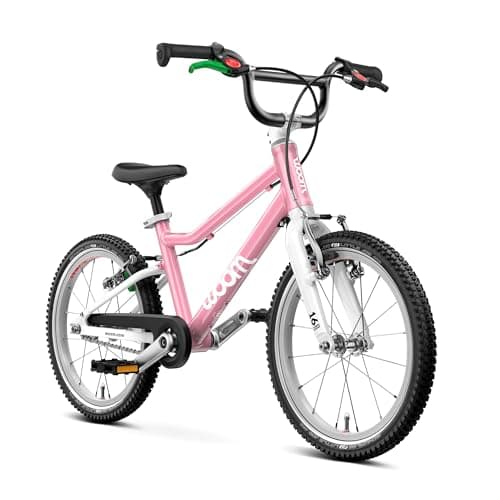 Top pickwoom GO 3 13 lb with a 19–25.1 in saddle range — the widest useful fit window of any 16-inch in this registry, on the lightest frame. | The longest fit window | 13 lb | |
| 2 | 16" Prevelo Alpha Two A 16.9 in minimum saddle on a 16-inch wheel, at 12.1 lb — it bridges the gap where a child has outgrown 14-inch but can't reach a woom GO 3. | The awkward in-between size | 12.1 lb | Not sold on Amazon · Prevelo specs |
| 3 | 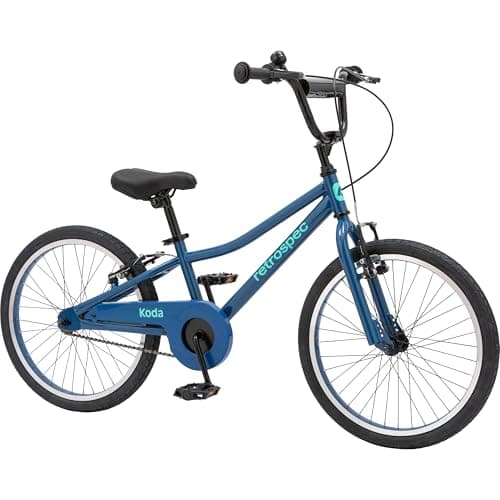 Retrospec Koda 20 A 20-inch with hand brakes and no coaster at all, a published 21.5–27.5 in saddle range, and a price that stays under the line most parents draw. | Hand brakes on a budget | 23.25 lb |
n/p = the manufacturer does not publish that figure. Every other number here comes straight off their spec page.
Top pick — The longest fit window
woom GO 3
13 lb with a 19–25.1 in saddle range — the widest useful fit window of any 16-inch in this registry, on the lightest frame.
| Wheel | 16" |
|---|---|
| Weight | 13 lb |
| Fits inseam | 19.1–25.2 in |
| Saddle height | 19–25.1 in |
| Brakes | Two independently operated mini V-brakes |
| Gearing | Single speed, 18t front / 10t rear |
| Frame | 6061 aluminum |
| Brand says | Manufacturer says 4–6 years, rider height 41–47 in |
What works
- 13 lb — about 29% of the median six-year-old's body weight
- 6.1 in of saddle adjustment, so it lasts two seasons for most kids
- Two proper hand brakes with a color-coded rear lever
What doesn't
- 19 in minimum saddle is too high for a small five-year-old
- No gears, which starts to matter on hills around age six
- Costs three times what a big-box 16-inch costs
How we checked it: Researched from published specs · woom — GO 3 specs
#ad · How we make money · Price as of October 10, 2026
#2 — The awkward in-between size
Prevelo Alpha Two
A 16.9 in minimum saddle on a 16-inch wheel, at 12.1 lb — it bridges the gap where a child has outgrown 14-inch but can't reach a woom GO 3.
| Wheel | 16" |
|---|---|
| Weight | 12.1 lb |
| Fits inseam | 15.5–22 in |
| Saddle height | 16.9–25.2 in |
| Brakes | Independently operated dual hand brakes, kid-sized levers |
| Gearing | Single-speed freewheel, 18t / 10t |
| Frame | Triple-butted 6061 aluminum, THRU-TUBE design |
| Brand says | Manufacturer says 4–6 years |
What works
- 16.9 in minimum saddle height — over 2 in lower than the woom GO 3
- 12.1 lb (manufacturer figure, without pedals)
- 8.3 in of saddle travel
What doesn't
- Published weight excludes pedals
- Direct-sale only
- Single speed
How we checked it: Researched from published specs · Prevelo — Alpha Two specs
Not sold on Amazon · Prevelo specs
#3 — Hand brakes on a budget
Retrospec Koda 20
A 20-inch with hand brakes and no coaster at all, a published 21.5–27.5 in saddle range, and a price that stays under the line most parents draw.
| Wheel | 20" |
|---|---|
| Weight | 23.25 lb |
| Saddle height | 21.5–27.5 in |
| Brakes | Hand-operated aluminum V-brake with a reach-adjustable lever; no coaster brake |
| Gearing | Single speed, 32T crank and 16T freewheel cog |
| Frame | High-tensile steel, low-profile step-over |
| Brand says | Manufacturer says ages 6–8, riders 44–63 in, up to 150 lb |
What works
- 21.5–27.5 in published saddle range — 6 in of travel, the longest here at this size
- Hand V-brake only, with no coaster to confuse the feet
- 150 lb rider limit
What doesn't
- 23.25 lb — about a third of the median eight-year-old
- Single speed, so hills get walked
- Steel frame and entry-level parts; budget for adjustment
How we checked it: Researched from published specs · Retrospec — Koda 20 specs
#ad · How we make money · Price as of October 10, 2026
Questions parents actually ask
01Why are my kid's bike pedals so hard to push?
Usually drag rather than the pedals themselves: soft tyres, a rubbing brake pad or coaster brake drag account for most cases. Lift the rear wheel and spin it — if it stops quickly, the cause is one of those three.
02Why do the pedals lock when my child pedals backwards?
That is a coaster brake doing its job. Pedalling backwards engages the rear hub brake, which is why a learner cannot reposition their feet before pushing off on a coaster-brake bike.
03How do I know if the bottom bracket is too tight?
Drop the chain off the chainring and turn the cranks by hand. They should spin smoothly and carry on for a moment. Stiff but smooth usually means a factory over-torque; gritty means dirt in the bearings.
04Can a bike be too heavy for a child to pedal?
Yes. A 21 lb bike under a 40 lb child is more than half their body weight, and no adjustment fixes that. If the wheels spin freely and the chain is clean, weight is the remaining explanation.
Sources
Read next
- Learning to RideKids bike maintenance basicsFive jobs that keep a kids bike safe and rolling.
- First Pedal BikesWhy kids bikes are so heavyBike weight as a share of the child's body weight. The number nobody publishes.
- First Pedal BikesCoaster brakes vs hand brakesWhy the easier brake is the worse one to learn on.
- Learning to RideFirst ride checklistNine checks, ten minutes, before the first ride.