Learning to Ride
What age do kids learn to ride a bike?
Most children ride unaided somewhere between three and seven years old, with five being the single most common year. What shifts the date is not maturity but practice at balancing: children who have spent a year on a balance bike routinely ride at three or four, and children who start on training wheels usually take longer.
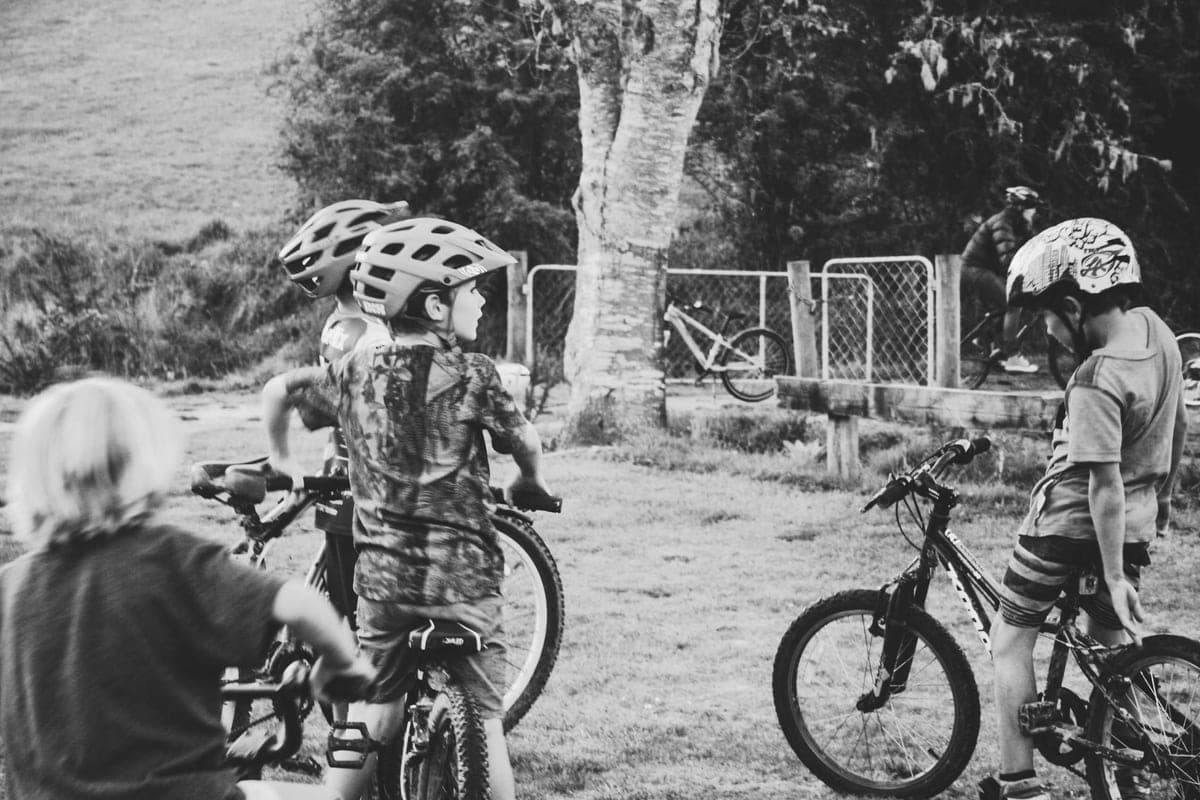
Between three and seven, with five the most common single year. The variable that moves that date is balance-bike time, not age or coordination: balance is a learned skill, and a child who has been practicing it since two often pedals away unaided at three or four. A child who starts from scratch on a pedal bike at six will usually get there inside a couple of afternoons anyway.
Why the range is so wide
Riding a bike is three separate skills stacked on top of each other, and children acquire them in different orders:
| Skill | What it actually is | Typical age it can be learned | What teaches it |
|---|---|---|---|
| Balancing | Steering into the lean to stay upright | 18 months – 3 yrs | A balance bike, or a scooter |
| Pedalling | Turning cranks in a circle under load | 2.5 – 4 yrs | A trike, or pedals on a bike held upright |
| Starting and stopping | Push off, find the pedal, brake under control | 3 – 6 yrs | Practice on a correctly sized bike |
Ages are the ranges over which these skills are commonly acquired, not a developmental schedule. The order children acquire them in varies, and the order matters more than the ages.
A child who learns balance first and pedalling second effectively skips the hard part of learning to ride. A child who learns pedalling first — on a trike, or on training wheels — has to unlearn sitting upright before they can learn to lean, which is why that route reliably takes longer.
The signals that a child is ready, regardless of age
Step 01
They can glide with both feet up
On a balance bike or scooter, for several seconds, in a straight line. This is the single best predictor. A child who can do it has already solved balancing and only needs pedals.
Step 02
They can steer around something while moving
Not just travel in a line. Steering into a corner is the same reflex as steering into a lean, which is what keeps a bike upright.
Step 03
They can flat-foot the bike
Feet flat on the ground from the saddle, with a slight knee bend. A child who cannot do this will not push off, and no amount of readiness overcomes a bike that is too big.
Step 04
They want to
The most under-rated signal. A reluctant four-year-old will learn in a single afternoon at five when it is their idea. Pushing against that costs you more time than waiting does.
What makes it happen earlier
Balance-bike time. More than anything else. A child who has had a balance bike since eighteen months has typically logged hundreds of hours of balancing practice before they ever meet a pedal, and the pedal bike is then a thirty-minute conversion rather than a project.
A light bike. A first pedal bike that weighs half what the child does is a bike they cannot correct when it leans. Weight is the most common invisible reason a ready child struggles, and it is covered on why kids bikes are so heavy.
A gentle slope and grass. A slight downhill removes the hardest part — generating speed — and grass makes falling boring. Both reduce the number of attempts needed.
What makes it happen later
Training wheels. They keep the bike upright, which means the child never practices the thing they actually need to learn, and they train a habit of leaning on the outside stabilizer that has to be undone afterwards. The honest case is on do kids need training wheels.
A bike bought a size too big. The most common single mistake, and it delays riding by a whole season because the child cannot put their feet down and therefore will not push off.
Holding the saddle. Running along holding the back of the seat gives the child no information about balance — you are doing the balancing. Let go earlier than feels comfortable, or use the pedals-off method instead.
If your child is six or seven and not riding yet
Nothing is wrong. A seven-year-old learning from scratch has better coordination, longer legs and more patience than a four-year-old does, and they usually get it in one or two sessions rather than one or two months. The only thing to avoid is the embarrassment spiral, which means practicing somewhere quiet rather than at the park on a Saturday.
Take the pedals off a correctly sized bike, drop the saddle so they can flat-foot it, and let them scoot for twenty minutes. Then put the pedals back on. The full method is on how to teach a child to ride a bike.
The three bikes behind the three stages
The Strider 12 Sport is the balance bike most children learn on: 6.7 lb, an 11 to 17 inch saddle range, no brake and nothing to go wrong. The woom GO 2 at 12.2 lb is the lightest 14-inch first pedal bike here, for the conversion at three or four. The Prevelo Alpha Two at 12.1 lb covers the child who comes to it later at five or six and needs a 16-inch wheel.
All three are chosen on the same principle: the lighter the bike, the more of the balancing the child can actually do themselves.
How long it takes once they start
Shorter than the folklore suggests, provided the bike fits and the method is right. A child who can already glide on a balance bike typically converts to pedals inside one session. A child learning balance and pedalling at the same time usually needs two to four sessions of twenty to thirty minutes.
Keep the sessions short. The limiting factor is almost never physical ability — it is patience, theirs and yours. Twenty minutes and a clear finish point beats an hour that ends in frustration, and the gap between sessions is when the skill consolidates.
What to do about fear
Fear of falling is the most common reason a physically ready child does not ride, and it is not solved by encouragement. It is solved by reducing the stakes: grass instead of tarmac, a slight downhill so they are not fighting for speed, long trousers and pads, and a saddle low enough that they can stop by standing up.
A child who has fallen once and been hurt will often need a deliberate reset — a week off the bike, then a session that is purely scooting with no pedals fitted and no expectation of riding. Pushing through it generally costs more time than stepping back does.
The picks
Every figure below is the manufacturer's own published spec, linked to the page we read it from, so you can check the one number your decision turns on — here is how we choose.
Quick picks — sorted by weight
| # | Product | Best for | Weight | Price |
|---|---|---|---|---|
| 1 | 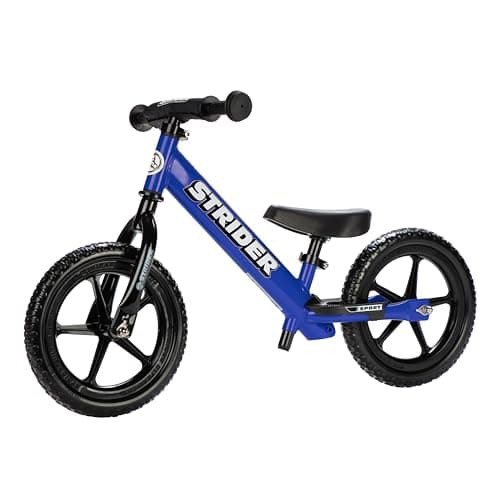 Top pickStrider 12 Sport The widest fit range of any 12-inch balance bike we found, and the one most likely to still fit a year after you buy it. | The widest age window | 6.7 lb | |
| 2 | 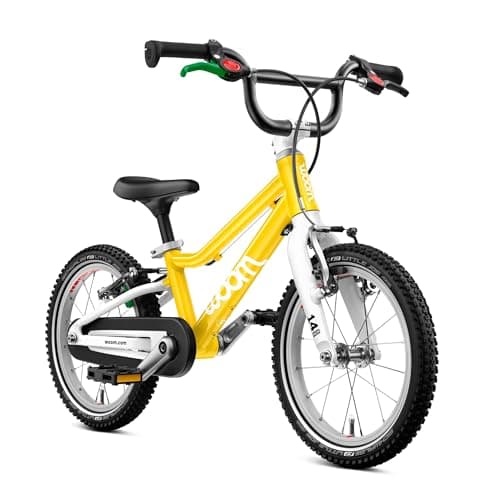 woom GO 2 12.2 lb on a 14-inch wheel is the number that matters here — it is the lightest first pedal bike in this registry, and a first pedal bike is mostly a weight problem. | The lightest 14-inch | 12.2 lb | |
| 3 | 16" Prevelo Alpha Two A 16.9 in minimum saddle on a 16-inch wheel, at 12.1 lb — it bridges the gap where a child has outgrown 14-inch but can't reach a woom GO 3. | The awkward in-between size | 12.1 lb | Not sold on Amazon · Prevelo specs |
n/p = the manufacturer does not publish that figure. Every other number here comes straight off their spec page.
Top pick — The widest age window
Strider 12 Sport
The widest fit range of any 12-inch balance bike we found, and the one most likely to still fit a year after you buy it.
| Wheel | 12" |
|---|---|
| Weight | 6.7 lb |
| Fits inseam | 12–18 in |
| Saddle height | 11–17 in |
| Brakes | None — riders stop with their feet |
| Gearing | None (balance bike) |
| Frame | Steel |
| Brand says | Manufacturer says 1–4 years |
What works
- 11–17 in saddle range covers a 12–18 in inseam — roughly two years of growth
- 6.7 lb, light enough for a toddler to pick up unaided
- Flat-free foam tires never need air
- Tool-free saddle and bar adjustment
What doesn't
- Steel frame, so it is not the lightest 12-inch on the market
- No hand brake — fine at balance-bike speeds, but nothing to learn braking on
- Foam tires give up grip and cushioning to air tires on rough ground
How we checked it: Researched from published specs · Strider — 12 Sport specs
#ad · How we make money · Price as of November 1, 2026
#2 — The lightest 14-inch
woom GO 2
12.2 lb on a 14-inch wheel is the number that matters here — it is the lightest first pedal bike in this registry, and a first pedal bike is mostly a weight problem.
| Wheel | 14" |
|---|---|
| Weight | 12.2 lb |
| Fits inseam | 16–19.1 in |
| Saddle height | 15.5–19.3 in |
| Brakes | Two independently operated mini V-brakes; ships with a rear coaster brake as a CPSC requirement |
| Gearing | Single speed, 18t front / 10t rear |
| Frame | 6061 aluminum |
| Brand says | Manufacturer says 3–4.5 years, rider height 37–43 in |
What works
- 12.2 lb — roughly 34% of the median four-year-old's body weight
- Two real hand brakes with short-reach levers
- 15.5 in minimum saddle height suits a genuinely small first-pedaler
- Coaster brake can be removed by a shop if you want a pure freewheel
What doesn't
- 19.3 in maximum saddle height — a tall four-year-old will move up fast
- Coaster brake ships fitted whether you want it or not
- Costs three times what a big-box 14-inch costs
How we checked it: Researched from published specs · woom — GO 2 specs
#ad · How we make money · Price as of November 1, 2026
#3 — The awkward in-between size
Prevelo Alpha Two
A 16.9 in minimum saddle on a 16-inch wheel, at 12.1 lb — it bridges the gap where a child has outgrown 14-inch but can't reach a woom GO 3.
| Wheel | 16" |
|---|---|
| Weight | 12.1 lb |
| Fits inseam | 15.5–22 in |
| Saddle height | 16.9–25.2 in |
| Brakes | Independently operated dual hand brakes, kid-sized levers |
| Gearing | Single-speed freewheel, 18t / 10t |
| Frame | Triple-butted 6061 aluminum, THRU-TUBE design |
| Brand says | Manufacturer says 4–6 years |
What works
- 16.9 in minimum saddle height — over 2 in lower than the woom GO 3
- 12.1 lb (manufacturer figure, without pedals)
- 8.3 in of saddle travel
What doesn't
- Published weight excludes pedals
- Direct-sale only
- Single speed
How we checked it: Researched from published specs · Prevelo — Alpha Two specs
Not sold on Amazon · Prevelo specs
Questions parents actually ask
01What age do most kids learn to ride a bike?
Between three and seven, with five the most common single year. Children who have spent a year or more on a balance bike often ride unaided at three or four; children who start on training wheels usually take longer.
02Is 7 too old to learn to ride a bike?
No. A seven-year-old learning from scratch has better coordination and more patience than a four-year-old and usually gets it in one or two sessions. Practice somewhere quiet and use the pedals-off method.
03Can a 3 year old learn to ride a pedal bike?
Yes, if they can already glide on a balance bike with both feet up and their inseam clears the pedal bike's minimum saddle height. Balance comes before pedalling, and a three-year-old who has that balance only needs the pedals added.
04What is the best predictor that a child is ready to ride?
Gliding with both feet up for several seconds on a balance bike or scooter. A child who can do that has already solved the hard part, and the pedal bike becomes a short conversion rather than a long project.
Sources
Read next
- Learning to RideHow to teach a child to ride a bikeThe pedals-off method, step by step.
- Learning to RideWhen to switch from a balance bike to a pedal bikeThree readiness signals, and what to buy when they appear.
- Learning to RideDo kids need training wheels?A straight no, and the faster alternative.
- Balance BikesWhat age to start a balance bikeThe readiness signal is reach, not age.