Learning to Ride
How to teach a child to ride a bike
Take the pedals off the bike, drop the saddle so both feet are flat, and let them scoot and glide on a gentle slope. When they can coast with their feet up for a few seconds, put the pedals back on. Most children ride within one or two sessions of that.
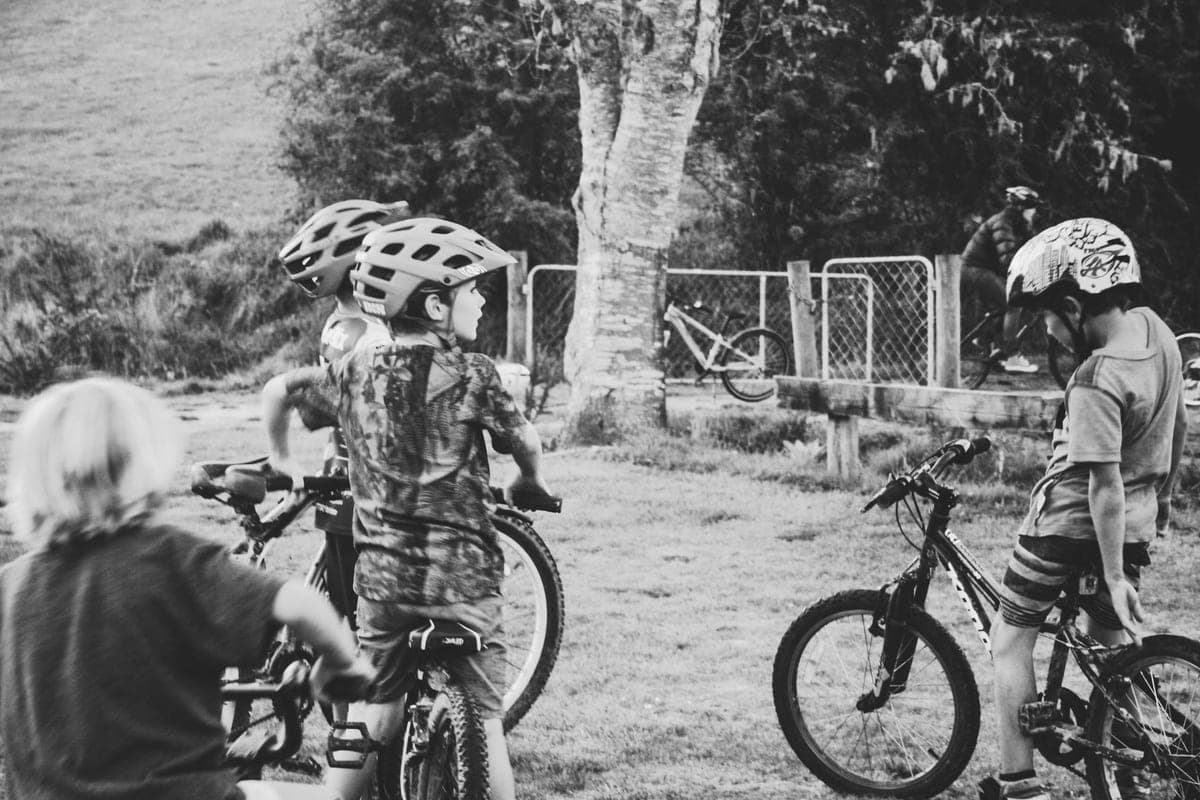
Riding a bike is two skills — balancing and pedaling — and trying to learn both at once is why it takes some children a whole summer. Teach balance first with the pedals off, and pedaling takes an afternoon.
Before you start
Pick a gentle grassy slope or an empty, very slightly downhill paved area. Flat ground makes them work for every foot of momentum; a real hill is frightening. You want just enough gradient that the bike rolls on its own at walking pace.
Helmet on and fitted properly — two fingers above the eyebrows, a V under the ear, one finger under the chin strap. The fitting steps are on how to fit a kids bike helmet.
The method
Step 01
Take the pedals off
A 15 mm pedal wrench or a 6 mm hex key. The left pedal is reverse threaded — it loosens clockwise. Leave the cranks on.
Step 02
Drop the saddle until both feet are flat
Seated, both feet flat on the ground, knees slightly bent. This is lower than the efficient riding position and that is deliberate: their feet are the brake, the stabilizer and the confidence.
Step 03
Walk it, then scoot it
Let them walk the bike while sitting on it. No instructions, no holding on. Once walking is easy, encourage longer pushes.
Step 04
Glide — the actual skill
On the gentle slope, ask them to push twice and lift their feet. Two seconds, then five, then ten. This is the whole thing. When they can glide ten seconds and steer around something, they can ride a bike.
Step 05
Put the pedals back on
Raise the saddle by about an inch so the leg has room to turn a full circle. Show them the starting position: lead pedal up at two o'clock, push down hard, and the bike moves.
Step 06
Teach braking the same day
Stationary first: squeeze until the bike will not roll. Then at walking pace. A child who can glide but cannot stop is not finished.
What not to do
Do not hold the saddle and run
It is the traditional method and it teaches the child that balance comes from you. They feel supported, then they feel the support disappear, and the fall is worse for being a surprise. The glide method has no such moment.
Do not fit training wheels first
They prevent the bike leaning, which is the thing that has to be learned. The full argument is on balance bike vs training wheels.
Do not keep going when it stops being fun
Twenty good minutes beats two frustrated hours, and a child who associates the bike with being nagged will avoid it for months. Stop while they still want one more go.
If it is not working
Nine times out of ten the bike is too big. Check that they can sit with both feet flat at the lowest saddle setting — the five checks are on is my child's bike too big. The tenth time, they are simply not ready, and three weeks makes more difference than three hours.
The picks
Every figure below is the manufacturer's own published spec, linked to the page we read it from. We have not ridden these bikes and the cards say so — here is how we choose.
Quick picks — sorted by weight
| # | Product | Best for | Weight | Price |
|---|---|---|---|---|
| 1 | 14" Top pickGuardian 14 Inch One lever brakes both wheels, which removes the single most common first-year crash — grabbing only the front brake and going over the bars. | Braking that cannot go wrong | 16 lb | |
| 2 | 14" woom GO 2 12.2 lb on a 14-inch wheel is the number that matters here — it is the lightest first pedal bike in this registry, and a first pedal bike is mostly a weight problem. | The lightest 14-inch | 12.2 lb | |
| 3 | 12" Strider 12 Sport The widest fit range of any 12-inch balance bike we found, and the one most likely to still fit a year after you buy it. | The widest age window | 6.7 lb |
n/p = the manufacturer does not publish that figure. We do not fill in a number they never gave.
Top pick — Braking that cannot go wrong
Guardian 14 Inch
One lever brakes both wheels, which removes the single most common first-year crash — grabbing only the front brake and going over the bars.
| Wheel | 14" |
|---|---|
| Weight | 16 lb |
| Fits inseam | 15–24 in |
| Brakes | SureStop single-lever hand brake; no coaster brake |
| Gearing | Single speed |
| Frame | Steel |
| Brand says | Manufacturer says 3–5 years, rider height 37–43 in |
What works
- SureStop puts both brakes on one lever, in the correct order
- No coaster brake, so pedaling backwards does not stop the bike
- 15 in published minimum leg length is genuinely low for a 14-inch
- Ships nearly assembled
What doesn't
- 16 lb steel frame is ~4 lb heavier than the aluminum competition
- One brake lever means no independent rear-only braking to learn later
- Single speed only
Hands-on status: Researched from published specs · Guardian — 14 inch specs
#2 — The lightest 14-inch
woom GO 2
12.2 lb on a 14-inch wheel is the number that matters here — it is the lightest first pedal bike in this registry, and a first pedal bike is mostly a weight problem.
| Wheel | 14" |
|---|---|
| Weight | 12.2 lb |
| Fits inseam | 16–19.1 in |
| Saddle height | 15.5–19.3 in |
| Brakes | Two independently operated mini V-brakes; ships with a rear coaster brake as a CPSC requirement |
| Gearing | Single speed, 18t front / 10t rear |
| Frame | 6061 aluminum |
| Brand says | Manufacturer says 3–4.5 years, rider height 37–43 in |
What works
- 12.2 lb — roughly 34% of the median four-year-old's body weight
- Two real hand brakes with short-reach levers
- 15.5 in minimum saddle height suits a genuinely small first-pedaler
- Coaster brake can be removed by a shop if you want a pure freewheel
What doesn't
- 19.3 in maximum saddle height — a tall four-year-old will move up fast
- Direct-sale pricing
- Coaster brake ships fitted whether you want it or not
Hands-on status: Researched from published specs · woom — GO 2 specs
#3 — The widest age window
Strider 12 Sport
The widest fit range of any 12-inch balance bike we found, and the one most likely to still fit a year after you buy it.
| Wheel | 12" |
|---|---|
| Weight | 6.7 lb |
| Fits inseam | 12–18 in |
| Saddle height | 11–17 in |
| Brakes | None — riders stop with their feet |
| Gearing | None (balance bike) |
| Frame | Steel |
| Brand says | Manufacturer says 1–4 years |
What works
- 11–17 in saddle range covers a 12–18 in inseam — roughly two years of growth
- 6.7 lb, light enough for a toddler to pick up unaided
- Flat-free foam tires never need air
- Tool-free saddle and bar adjustment
What doesn't
- Steel frame, so it is not the lightest 12-inch on the market
- No hand brake — fine at balance-bike speeds, but nothing to learn braking on
- Foam tires give up grip and cushioning to air tires on rough ground
Hands-on status: Researched from published specs · Strider — 12 Sport specs
Questions parents actually ask
01How do you teach a child to ride a bike?
Remove the pedals, drop the saddle so both feet are flat, and let them scoot and then glide down a very gentle slope. When they can coast ten seconds with their feet up, refit the pedals.
02What age can a child ride a bike without training wheels?
Most children can do it between three and five, and children who used a balance bike often manage it on the first attempt with pedals fitted.
03How long does it take to teach a kid to ride a bike?
With the pedals-off method, usually one or two sessions of twenty to thirty minutes, assuming the bike fits.
04Should I hold the seat while they learn?
No. It teaches them that balance comes from you, and the moment you let go becomes a surprise fall. Let their feet be the safety net instead.
Sources
Read next
- Learning to RideWhen to switch from a balance bike to a pedal bikeThree readiness signals, and what to buy when they appear.
- Learning to RideDo kids need training wheels?A straight no, and the faster alternative.
- Learning to RideHow to get rid of training wheelsTake both off at once. Two weekends, not two months.
- Learning to RideFirst ride checklistNine checks, ten minutes, before the first ride.