Balance Bikes
Balance bike vs training wheels
A balance bike teaches balance, which is the hard part of riding. Training wheels prevent the bike from leaning, so the child practices pedaling instead — and then has to learn balance from scratch once the training wheels come off. One route teaches the skill; the other postpones it.
Some links on this page are affiliate links. If you buy through one, we earn a commission at no extra cost to you. It never changes which bike we put first — here is exactly how we make money.
The mechanical difference
A two-wheeler stays up because the rider steers into the lean. That is the whole trick, and it is learned by feel, not by instruction.
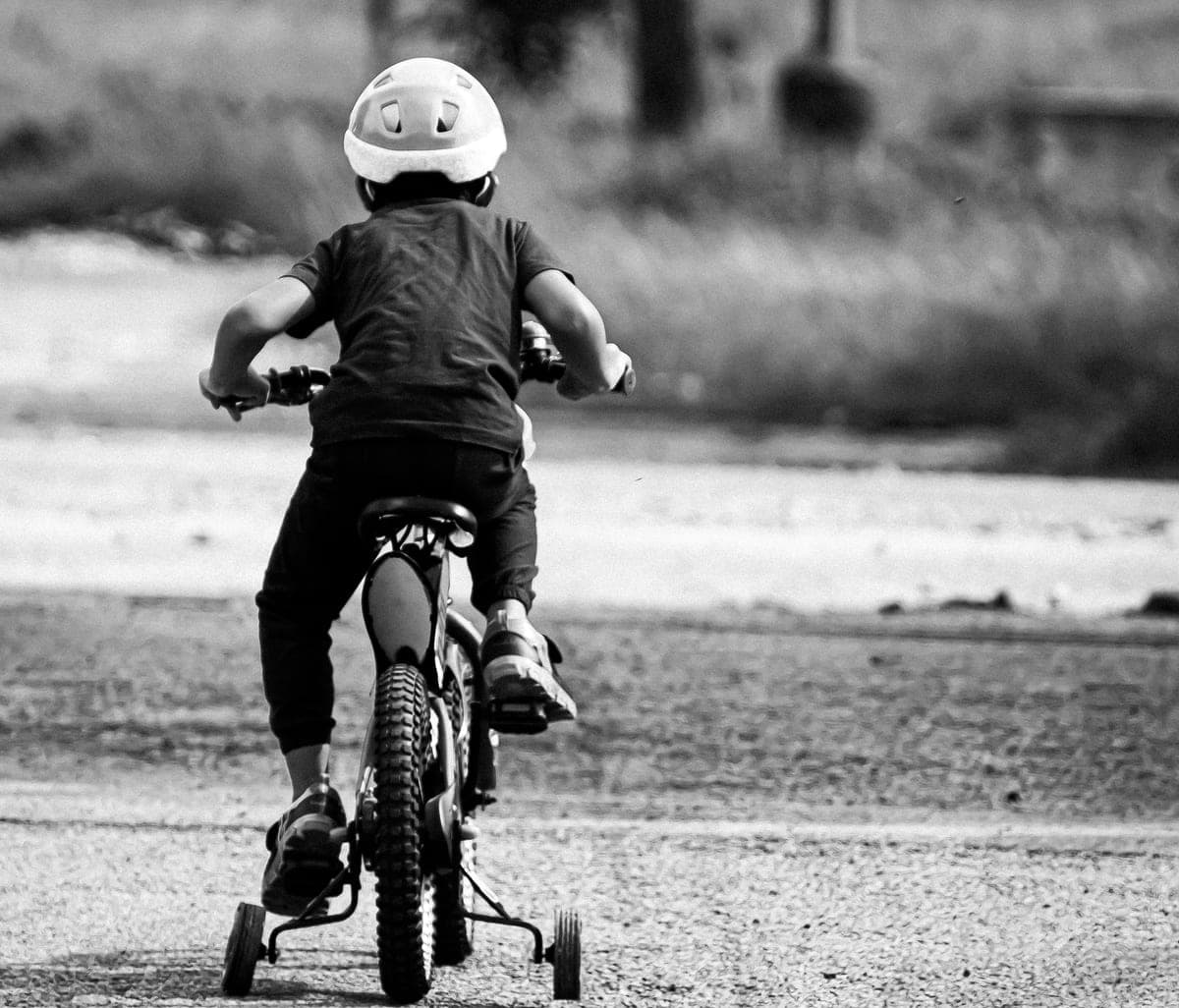
Training wheels stop the bike leaning. The child pedals, the bike stays upright regardless of what they do with the bars, and the steering-into-lean reflex never gets built. Worse, on a cambered driveway the bike leans onto one training wheel and the child learns to correct away from the lean — the exact opposite reflex.
A balance bike puts the child on a leaning two-wheeler from day one with their feet on the ground as the safety net. The reflex builds itself.
Side by side
| Balance bike | Training wheels | |
|---|---|---|
| Teaches balance | Yes, from day one | No — prevents it |
| Teaches pedaling | No | Yes |
| Teaches steering into a lean | Yes | No, often the reverse |
| Child's escape hatch | Their feet | None — they are strapped to a stable frame |
| Typical transition to a pedal bike | Often immediate | A second learning phase |
| Extra purchase | Yes, a second bike | No, usually included |
The one thing training wheels are good for
Pedaling. A child on training wheels genuinely does learn the circular motion and the leg strength for it. If your child is already balancing confidently on a balance bike but cannot work out pedals, a fortnight with training wheels is a legitimate — and unusual — use of them.
That is a narrow case. In the ordinary case they delay things.
If you already have training wheels on
Do not panic and do not throw the bike away. There is a sequence for getting them off without losing your child's confidence, and it takes about two weekends: how to get rid of training wheels.
What we would actually do
Balance bike at two or three. Pedal bike at four or five, with the pedals off for the first fortnight if the transition is bumpy. No training wheels at any point. If you are already past that decision point, the fastest fix is to remove the training wheels and the pedals together and turn the pedal bike into a balance bike for two weeks.
The picks
Every figure below is the manufacturer's own published spec, linked to the page we read it from. We have not ridden these bikes and the cards say so — here is how we choose.
Quick picks — sorted by the inseam it fits
| # | Product | Best for | Inseam | Price |
|---|---|---|---|---|
| 1 | 12" Top pickStrider 12 Sport The widest fit range of any 12-inch balance bike we found, and the one most likely to still fit a year after you buy it. | The widest age window | 12–18" | |
| 2 | 12" woom GO 1 The lowest published saddle height here, which is the whole argument for it: it fits a 10-inch inseam, and almost nothing else does. | The smallest riders | 10–14.4" | |
| 3 | 14" Guardian 14 Inch One lever brakes both wheels, which removes the single most common first-year crash — grabbing only the front brake and going over the bars. | Braking that cannot go wrong | 15–24" |
n/p = the manufacturer does not publish that figure. We do not fill in a number they never gave.
Top pick — The widest age window
Strider 12 Sport
The widest fit range of any 12-inch balance bike we found, and the one most likely to still fit a year after you buy it.
| Wheel | 12" |
|---|---|
| Weight | 6.7 lb |
| Fits inseam | 12–18 in |
| Saddle height | 11–17 in |
| Brakes | None — riders stop with their feet |
| Gearing | None (balance bike) |
| Frame | Steel |
| Brand says | Manufacturer says 1–4 years |
What works
- 11–17 in saddle range covers a 12–18 in inseam — roughly two years of growth
- 6.7 lb, light enough for a toddler to pick up unaided
- Flat-free foam tires never need air
- Tool-free saddle and bar adjustment
What doesn't
- Steel frame, so it is not the lightest 12-inch on the market
- No hand brake — fine at balance-bike speeds, but nothing to learn braking on
- Foam tires give up grip and cushioning to air tires on rough ground
Hands-on status: Researched from published specs · Strider — 12 Sport specs
#2 — The smallest riders
woom GO 1
The lowest published saddle height here, which is the whole argument for it: it fits a 10-inch inseam, and almost nothing else does.
| Wheel | 12" |
|---|---|
| Weight | 6.4 lb |
| Fits inseam | 10–14.4 in |
| Saddle height | 10.2–13.9 in |
| Brakes | Child-friendly mini V-brake with a hand lever |
| Gearing | None (balance bike) |
| Frame | 6061 aluminum |
| Brand says | Manufacturer says 1.5–3.5 years |
What works
- 10.2 in minimum saddle height fits genuinely small toddlers
- 6.4 lb aluminum frame — the lightest in this registry
- Has a real hand brake, so braking is learned before the pedal bike
- Air tires
What doesn't
- 13.9 in maximum saddle height means a fast-growing kid outgrows it early
- Costs multiples of a big-box balance bike
- Sold direct, not through Amazon, so no Prime return window
Hands-on status: Researched from published specs · woom — GO 1 specs
#3 — Braking that cannot go wrong
Guardian 14 Inch
One lever brakes both wheels, which removes the single most common first-year crash — grabbing only the front brake and going over the bars.
| Wheel | 14" |
|---|---|
| Weight | 16 lb |
| Fits inseam | 15–24 in |
| Brakes | SureStop single-lever hand brake; no coaster brake |
| Gearing | Single speed |
| Frame | Steel |
| Brand says | Manufacturer says 3–5 years, rider height 37–43 in |
What works
- SureStop puts both brakes on one lever, in the correct order
- No coaster brake, so pedaling backwards does not stop the bike
- 15 in published minimum leg length is genuinely low for a 14-inch
- Ships nearly assembled
What doesn't
- 16 lb steel frame is ~4 lb heavier than the aluminum competition
- One brake lever means no independent rear-only braking to learn later
- Single speed only
Hands-on status: Researched from published specs · Guardian — 14 inch specs
Questions parents actually ask
01Is a balance bike better than training wheels?
For learning to ride, yes. A balance bike teaches the child to steer into a lean, which is what keeps a two-wheeler upright. Training wheels stop the bike leaning, so that skill is never practiced.
02Do kids need training wheels after a balance bike?
Almost never. A child who can glide confidently on a balance bike usually rides a pedal bike within an afternoon of the pedals going on.
03Are training wheels bad for kids?
They are not dangerous, they are just slow. They teach pedaling while preventing balance practice, so the hard skill gets postponed rather than avoided.
Sources
Read next
- Learning to RideDo kids need training wheels?A straight no, and the faster alternative.
- Balance BikesAre balance bikes worth it?The case for, the case against, and when to skip it.
- Learning to RideHow to get rid of training wheelsTake both off at once. Two weekends, not two months.
- Balance BikesBest balance bikesFour real balance bikes, compared on saddle height and weight.