Bike Sizing
Kids bike types explained
Kids bicycles sort into six categories: balance bikes, first pedal bikes, geared big-kid bikes, kids mountain bikes, electric balance bikes and tricycles. The thing that actually classifies them is not the label on the box — it is wheel diameter and whether the bike has pedals, gears or neither.
Six categories cover every kids bicycle sold: balance bikes (no pedals), first pedal bikes (single speed, 12–16 inch), big-kid bikes (geared, 20–26 inch), kids mountain bikes (geared with knobbly tyres and often suspension), electric balance bikes (throttle, no pedals) and tricycles (three wheels, direct drive). Within each, wheel diameter is the real classifier.
| Category | Wheels | Drivetrain | Brakes | Typical inseam |
|---|---|---|---|---|
| Tricycle | 10–12" | Direct drive on the front wheel | None, or a parent handle brake | Feet reach the pedals |
| Balance bike | 12–14" | None — the rider scoots | None or one hand lever | 10–23" |
| First pedal bike | 12–16" | Single speed | Coaster and/or hand levers | 14–25" |
| Big-kid bike | 20–26" | 7 or 8 speed, one chainring | Rim or disc | 18.3–37" |
| Kids mountain bike | 20–26" | 7–21 speed | Mechanical or hydraulic disc | 19–33" |
| Electric balance bike | 12–20" | Hub motor, throttle, no pedals | Drum or hydraulic disc | 16–26" |
Inseam ranges are the span of the published manufacturer figures in this site's product registry, not an industry standard. Where a brand publishes rider height instead of inseam, we say so on the product page.
Why the category matters less than the measurement
Retailers sort kids bikes by age band because age is the only thing a gift buyer knows. It is also the least useful classifier available: in this registry two different 16-inch bikes disagree by nearly four inches of minimum saddle height, which is more variation than exists between some wheel sizes.
So read the category to decide what kind of bike your child needs, and read the inseam to decide which one. The chart that joins the two is the kids bike size chart.
| Wheel | Inseam | Height | Age brands quote | Stage |
|---|---|---|---|---|
| 12" | 10–18 in | 31–40 in | 1.5 – 3.5 | Balance bike |
| 14" | 14–19 in | 37–43 in | 3 – 5 | First pedal bike |
| 16" | 15.5–25 in | 40–47 in | 4 – 6 | First pedal bike |
| 20" | 18.3–28 in | 43–51 in | 5 – 9 | First gears |
| 24" | 26–32 in | 49–57 in | 7 – 11 | Big kid |
| 26" | 29.5–37.4 in | 55–65 in | 10 – 14 | Adult-adjacent |
Built from the inseam ranges woom, Prevelo, Guardian and Strider publish for their own bikes (read 2026-09-23). Age is the brands' figure, shown so you can see how loosely it maps.
Category by category
Tricycles
Three wheels, direct drive through the front wheel, and no freewheel — the pedals turn whenever the wheel turns. A trike teaches pedalling and nothing about balance, which is why it is a toy for a one- or two-year-old rather than a step toward a bicycle. Ours are compared on best tricycles for kids.
Balance bikes
A frame, two wheels, a saddle and no drivetrain at all. The child walks, then scoots, then glides. This is the category that does the real work, because balance is the hard part of riding a bicycle and pedalling is not. Weights here run from 6.4 lb to 12.5 lb, and the deciding spec is minimum saddle height.
First pedal bikes
Single speed, 12 to 16 inch wheels, and either a coaster brake, hand levers, or both. This is the most crowded and most variable category on the market: the same 16-inch label covers a 12.1 lb aluminum bike and a 26 lb steel one.
Big-kid bikes
20 to 26 inch wheels with seven or eight gears on a single chainring. Gears, hand brakes and real tyre volume turn the bike from a toy into transport. The threshold for gears is terrain, not age — see when do kids need gears.
Kids mountain bikes
Mechanically a big-kid bike with knobbly tyres, disc brakes and sometimes a suspension fork. The fork is the thing to scrutinise: on a lightweight child a cheap coil fork barely moves and adds three or four pounds. Our picks are on best kids mountain bikes.
Electric balance bikes
A throttle, a hub motor and no pedals, usually 12 to 20 inch. They are classified separately because the deciding spec is not fit but speed cap and battery certification. We cover them on best kids electric bikes.
The categories that overlap
Two products sit deliberately between categories. A convertible balance bike such as the Strider 14x takes a separate pedal kit, so one frame covers the balance and first-pedal stages. And a 12-inch pedal bike occupies a strange gap: by the time a child's legs fit one, a 14-inch is usually the better buy, which is why we rarely recommend the size.
How to use this to shop
Three questions, in order. Can they balance? If not, a balance bike regardless of age. Do they pedal confidently? If yes, a first pedal bike sized by inseam. Do they meet hills? If yes, a geared big-kid bike. Everything else — colour, suspension, basket, brand — comes after those three answers.
If you are not yet sure which kind of bike you are sizing, the six categories — trike, balance bike, first pedal, big kid, mountain and electric — are set out on kids bike types explained.
Two pages go deeper than this chart can: the categories themselves are explained on kids bike types explained, and the single most-asked size question is answered on what age is a 16 inch bike.
For the 16-inch side on its own — every model in our registry and the inseam each one needs — see what age is a 16 inch bike.
Saddle height is the first of four settings. Handlebar height, reach and brake lever position are covered on kids bike riding position.
Fit is one constraint; the published rider weight limit is the other. Every figure we can find is tabulated on kids bike weight limits.
The picks
Every figure below is the manufacturer's own published spec, linked to the page we read it from, so you can check the one number your decision turns on — here is how we choose.
Quick picks — sorted by weight
| # | Product | Best for | Weight | Price |
|---|---|---|---|---|
| 1 | 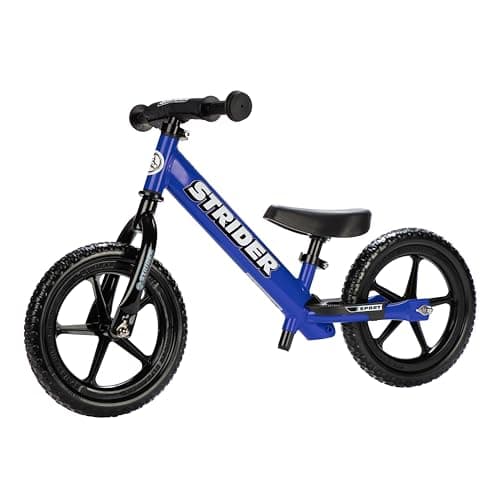 Top pickStrider 12 Sport The widest fit range of any 12-inch balance bike we found, and the one most likely to still fit a year after you buy it. | The widest age window | 6.7 lb | |
| 2 | 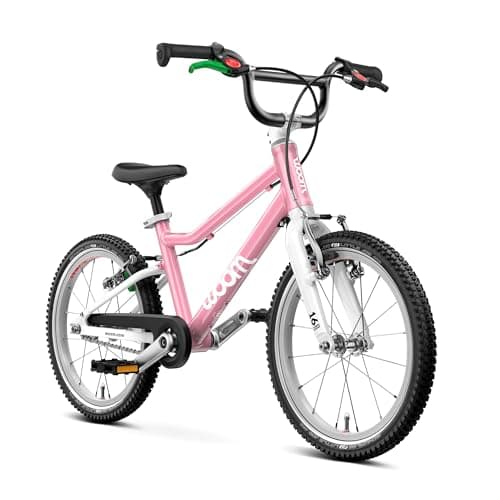 woom GO 3 13 lb with a 19–25.1 in saddle range — the widest useful fit window of any 16-inch in this registry, on the lightest frame. | The longest fit window | 13 lb | |
| 3 | 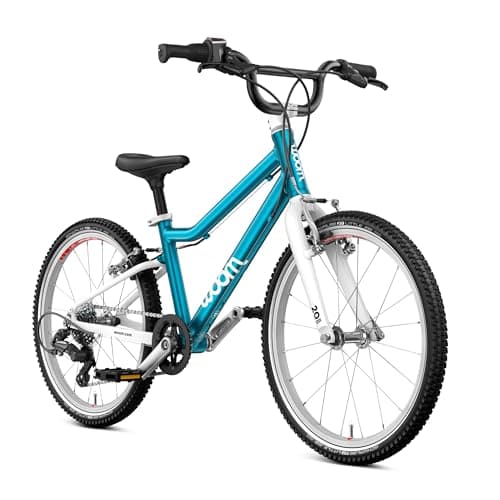 woom GO 4 Seven gears with a numbered indicator and 17.2 lb on the scale — the point where a kid's bike stops being a toy and starts being transport. | First gears done right | 17.2 lb | |
| 4 | 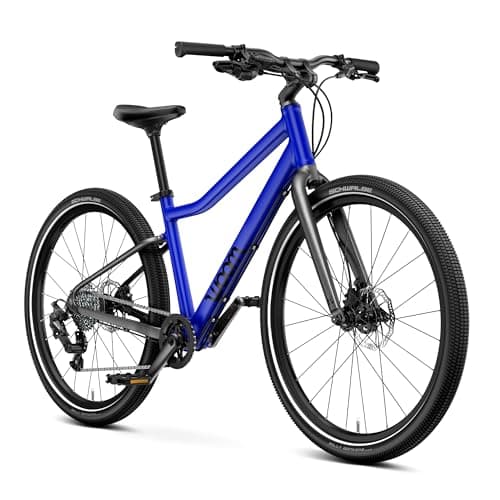 woom EXPLORE 5 The lightest 24-inch in this registry by almost five pounds, with hydraulic discs and eight gears — and the narrowest fit window, because it needs a 26.4 in inseam before it fits at all. | The lightest 24-inch | 20.75 lb |
n/p = the manufacturer does not publish that figure. Every other number here comes straight off their spec page.
Top pick — The widest age window
Strider 12 Sport
The widest fit range of any 12-inch balance bike we found, and the one most likely to still fit a year after you buy it.
| Wheel | 12" |
|---|---|
| Weight | 6.7 lb |
| Fits inseam | 12–18 in |
| Saddle height | 11–17 in |
| Brakes | None — riders stop with their feet |
| Gearing | None (balance bike) |
| Frame | Steel |
| Brand says | Manufacturer says 1–4 years |
What works
- 11–17 in saddle range covers a 12–18 in inseam — roughly two years of growth
- 6.7 lb, light enough for a toddler to pick up unaided
- Flat-free foam tires never need air
- Tool-free saddle and bar adjustment
What doesn't
- Steel frame, so it is not the lightest 12-inch on the market
- No hand brake — fine at balance-bike speeds, but nothing to learn braking on
- Foam tires give up grip and cushioning to air tires on rough ground
How we checked it: Researched from published specs · Strider — 12 Sport specs
#ad · How we make money · Price as of October 10, 2026
#2 — The longest fit window
woom GO 3
13 lb with a 19–25.1 in saddle range — the widest useful fit window of any 16-inch in this registry, on the lightest frame.
| Wheel | 16" |
|---|---|
| Weight | 13 lb |
| Fits inseam | 19.1–25.2 in |
| Saddle height | 19–25.1 in |
| Brakes | Two independently operated mini V-brakes |
| Gearing | Single speed, 18t front / 10t rear |
| Frame | 6061 aluminum |
| Brand says | Manufacturer says 4–6 years, rider height 41–47 in |
What works
- 13 lb — about 29% of the median six-year-old's body weight
- 6.1 in of saddle adjustment, so it lasts two seasons for most kids
- Two proper hand brakes with a color-coded rear lever
What doesn't
- 19 in minimum saddle is too high for a small five-year-old
- No gears, which starts to matter on hills around age six
- Costs three times what a big-box 16-inch costs
How we checked it: Researched from published specs · woom — GO 3 specs
#ad · How we make money · Price as of October 10, 2026
#3 — First gears done right
woom GO 4
Seven gears with a numbered indicator and 17.2 lb on the scale — the point where a kid's bike stops being a toy and starts being transport.
| Wheel | 20" |
|---|---|
| Weight | 17.2 lb |
| Fits inseam | 22.1–27.9 in |
| Saddle height | 22.4–28.7 in |
| Brakes | Two independently operated mini V-brakes |
| Gearing | 7 speed with a child-friendly gear indicator |
| Frame | Butted 6061 aluminum |
| Brand says | Manufacturer says 6–8 years, rider height 45–51 in |
What works
- 17.2 lb with gears fitted — about 34% of the median seven-year-old
- Gear indicator makes shifting teachable
- 6.3 in of saddle adjustment
What doesn't
- 22.4 in minimum saddle rules out shorter six-year-olds
- Rim brakes rather than discs
- Costs three times what a big-box 20-inch costs
How we checked it: Researched from published specs · woom — GO 4 specs
#ad · How we make money · Price as of October 10, 2026
#4 — The lightest 24-inch
woom EXPLORE 5
The lightest 24-inch in this registry by almost five pounds, with hydraulic discs and eight gears — and the narrowest fit window, because it needs a 26.4 in inseam before it fits at all.
| Wheel | 24" |
|---|---|
| Weight | 20.75 lb |
| Fits inseam | 26.4–32.3 in |
| Saddle height | 27.2–33.1 in |
| Brakes | Promax hydraulic flat-mount disc brakes, front and rear |
| Gearing | 8 speed, microSHIFT Acolyte trigger shifter |
| Frame | Butted AA 6061 aluminum |
| Brand says | Manufacturer says 7–11 years, rider height 49–57 in |
What works
- Published at 20 lb 12 oz — about 33% of the median nine-year-old
- Eight gears with a trigger shifter rather than a twist grip
- Promax hydraulic discs front and rear: one-finger braking, unchanged in the wet
- 5.9 in of saddle travel, 27.2–33.1 in
What doesn't
- 26.4 in minimum inseam is the highest fit floor of any 24-inch here — plenty of seven-year-olds will not fit it yet
- Hydraulic brakes eventually need a shop for a bleed
- Costs several times what a mass-market 24-inch costs
How we checked it: Researched from published specs · woom — EXPLORE 5 specs
#ad · How we make money · Price as of October 10, 2026
Questions parents actually ask
01What are the different types of kids bikes?
Six: tricycles, balance bikes, first pedal bikes, geared big-kid bikes, kids mountain bikes and electric balance bikes. Within each, wheel diameter from 10 to 26 inches is what separates one model from the next.
02How are kids bicycles classified by size?
By wheel diameter — 12, 14, 16, 18, 20, 24 and 26 inch — not by frame size as adult bikes are. The figure that decides whether a given wheel size fits is the bike's minimum saddle height against your child's inseam.
03What is the difference between a balance bike and a first pedal bike?
A balance bike has no drivetrain at all — the child scoots and glides. A first pedal bike adds pedals, a chain and a brake, and is usually five to six pounds heavier at the same wheel size.
04Is a kids mountain bike just a bike with knobbly tyres?
Largely, plus disc brakes and sometimes a suspension fork. The tyres and brakes are worth having off-road; a cheap coil fork adds three or four pounds and barely compresses under a light child.
Sources
Read next
- Bike SizingKids bike size chartWheel size mapped to inseam and height, in one table.
- Bike SizingKids bike wheel size by ageAge bands by wheel size — and how far the brands disagree.
- Balance BikesBalance bike vs regular bikeHalf the weight, five inches lower. The verdict on which to buy first.
- Big Kid BikesWhen do kids need gearsA terrain question, not an age question.