First Pedal Bikes
How to disable a coaster brake on a kids bike
A coaster brake cannot be switched off. Disabling it means replacing the rear hub or the whole rear wheel with a freewheel version, which is a bike-shop job costing a meaningful fraction of a cheap bike. Before you pay for that, check whether the bike is legally required to have one.
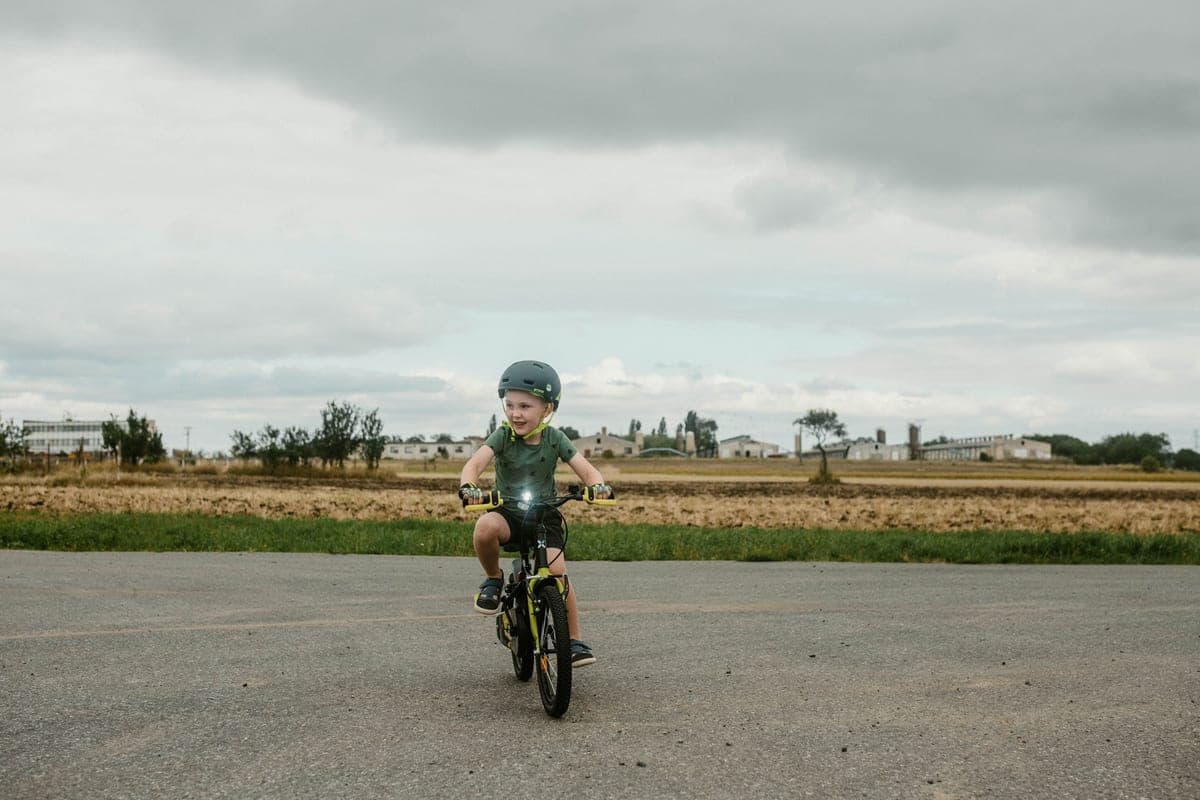
There is no setting to turn off. A coaster brake is built into the rear hub, so disabling it means replacing the hub or swapping in a freewheel rear wheel — a bike-shop job, not a driveway one. On a cheap bike the wheel swap often costs a sizeable share of what the bike cost, which is why most parents who want a freewheel are better off buying a bike that already has one.
Why the bike has one in the first place
It is usually not a styling decision. The federal bicycle regulation at 16 CFR 1512.5 requires that bicycles be equipped with front- and rear-wheel brakes or rear-wheel brakes only, and it requires a footbrake on sidewalk bicycles with a seat height of 560 mm (22 inches) or greater. It also bars sidewalk bicycles from using handbrakes as their only braking system.
In practice that means small kids bikes sold in the United States very often arrive with a coaster brake fitted whether the manufacturer wanted it or not. woom says exactly this about the GO 2: the rear coaster brake ships as a CPSC requirement, alongside the two hand brakes woom actually designed the bike around.
What actually happens when a shop disables one
Step 01
They check what brakes are left
A bike has to keep a compliant, working brake. If the coaster is the only brake on the bike, removing it is not an option — a hand brake has to be fitted first, and on many cheap frames there are no mounting bosses for one.
Step 02
They strip or swap the rear hub
The coaster mechanism lives inside the rear hub. A shop either disassembles the hub and removes the brake shoe assembly, or more commonly fits a different rear wheel built around a freewheel hub. The wheel swap is faster and more reliable.
Step 03
They re-space and re-dish the wheel
A freewheel hub is often a different width and needs the frame spacing and wheel dish checked. Skipping this is how you end up with a wheel that rubs or a chain that will not line up.
Step 04
They remove the brake arm and strap
The coaster brake arm is clamped to the chainstay. Once the hub is gone, the arm and clamp come off too.
None of this is exotic, but all of it is labour, and a replacement 16 or 20 inch freewheel wheel is not cheap relative to a bike that cost under a hundred dollars.
The things people try that do not work
Over-tightening the brake arm clamp. Does nothing to the mechanism and can crush a thin chainstay.
Removing the brake arm but leaving the hub. Worse than leaving it alone: the whole brake assembly can then rotate inside the hub, which turns a working brake into an unpredictable one.
Packing the hub with grease. Makes the brake drag and slip intermittently rather than disabling it, and a brake that sometimes works is more dangerous than one that always does.
If the symptom you are actually chasing is a bike that is hard to pedal rather than a brake you dislike, a dragging coaster is a common cause and it is usually adjustable. That is covered on kids bike pedals hard to push.
When disabling it is the right call anyway
There are two genuine cases. The first is a child who has come off a balance bike and keeps stopping by stamping backwards on the pedals, which prevents them from getting the pedal into the start position. The second is a child learning on a bike that also has a proper hand brake, where the coaster is actively fighting the lever habit you are trying to build.
In both cases, before you pay a shop, check whether the bike has hand brakes at all and whether it is small enough to fall under the sidewalk-bicycle footbrake rule. If the coaster is doing legally required work, the answer is a different bike rather than a modified one.
The cheaper route: buy the freewheel
Three bikes in this registry are worth knowing about if a freewheel is what you actually want. The woom GO 3 runs two independently operated mini V-brakes at 16 inch. The Retrospec Koda 20 specifies a reach-adjustable hand V-brake and no coaster at all, which is unusual at its price. The Prevelo Alpha Two runs dual hand brakes at 16 inch on a 12.1 lb frame.
Across a used 16-inch bike plus a wheel swap plus labour, you are often close to the price of one of those, with a lighter bike at the end of it. The full list is on best kids bikes with hand brakes, and the case for each brake type is on coaster brakes vs hand brakes.
How to tell what brake your bike actually has
Step 01
Lift the rear wheel and turn the pedals backwards
If the cranks turn backwards freely and the wheel keeps spinning, it is a freewheel. If the cranks resist and the wheel brakes, it is a coaster.
Step 02
Look for an arm clamped to the left chainstay
A short metal arm running from the rear hub to the chainstay, held by a strap or clamp, is the coaster brake reaction arm. No arm, no coaster.
Step 03
Count the levers on the handlebar
Two levers usually means two rim or disc brakes and no coaster. One lever on a small bike often means a front brake plus a coaster at the rear.
What to do instead if the problem is starting off
The complaint behind most of these searches is not really the brake. It is that the child cannot get the pedal into the starting position because back-pedalling engages the brake, so every start becomes a scramble. That is solvable without touching the hub.
Teach the forward-rotation start: with one foot on the ground, nudge the bike forwards a few inches so the leading pedal rises to the two-o'clock position, then push down on it. It takes about ten minutes to learn and it works on every bike, coaster or not. If the pedals themselves feel heavy rather than awkward, the cause is usually a dragging brake or a dry bottom bracket rather than the child.
The picks
Every figure below is the manufacturer's own published spec, linked to the page we read it from, so you can check the one number your decision turns on — here is how we choose.
Quick picks — sorted by weight
| # | Product | Best for | Weight | Price |
|---|---|---|---|---|
| 1 | 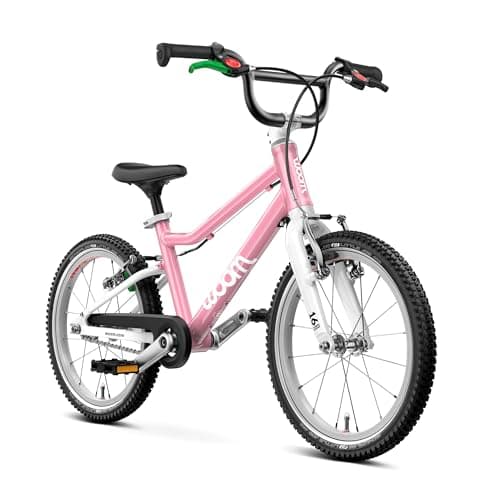 Top pickwoom GO 3 13 lb with a 19–25.1 in saddle range — the widest useful fit window of any 16-inch in this registry, on the lightest frame. | The longest fit window | 13 lb | |
| 2 | 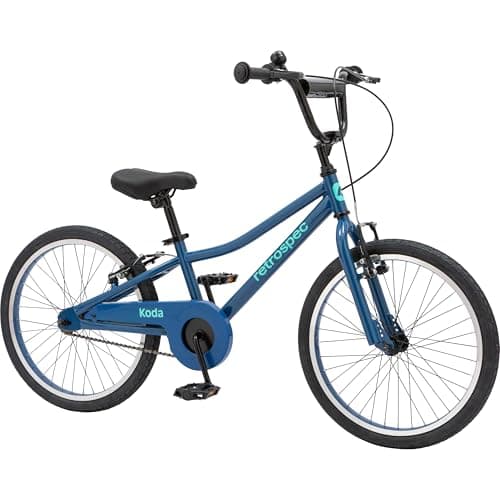 Retrospec Koda 20 A 20-inch with hand brakes and no coaster at all, a published 21.5–27.5 in saddle range, and a price that stays under the line most parents draw. | Hand brakes on a budget | 23.25 lb | |
| 3 | 16" Prevelo Alpha Two A 16.9 in minimum saddle on a 16-inch wheel, at 12.1 lb — it bridges the gap where a child has outgrown 14-inch but can't reach a woom GO 3. | The awkward in-between size | 12.1 lb | Not sold on Amazon · Prevelo specs |
n/p = the manufacturer does not publish that figure. Every other number here comes straight off their spec page.
Top pick — The longest fit window
woom GO 3
13 lb with a 19–25.1 in saddle range — the widest useful fit window of any 16-inch in this registry, on the lightest frame.
| Wheel | 16" |
|---|---|
| Weight | 13 lb |
| Fits inseam | 19.1–25.2 in |
| Saddle height | 19–25.1 in |
| Brakes | Two independently operated mini V-brakes |
| Gearing | Single speed, 18t front / 10t rear |
| Frame | 6061 aluminum |
| Brand says | Manufacturer says 4–6 years, rider height 41–47 in |
What works
- 13 lb — about 29% of the median six-year-old's body weight
- 6.1 in of saddle adjustment, so it lasts two seasons for most kids
- Two proper hand brakes with a color-coded rear lever
What doesn't
- 19 in minimum saddle is too high for a small five-year-old
- No gears, which starts to matter on hills around age six
- Costs three times what a big-box 16-inch costs
How we checked it: Researched from published specs · woom — GO 3 specs
#ad · How we make money · Price as of November 1, 2026
#2 — Hand brakes on a budget
Retrospec Koda 20
A 20-inch with hand brakes and no coaster at all, a published 21.5–27.5 in saddle range, and a price that stays under the line most parents draw.
| Wheel | 20" |
|---|---|
| Weight | 23.25 lb |
| Saddle height | 21.5–27.5 in |
| Brakes | Hand-operated aluminum V-brake with a reach-adjustable lever; no coaster brake |
| Gearing | Single speed, 32T crank and 16T freewheel cog |
| Frame | High-tensile steel, low-profile step-over |
| Brand says | Manufacturer says ages 6–8, riders 44–63 in, up to 150 lb |
What works
- 21.5–27.5 in published saddle range — 6 in of travel, the longest here at this size
- Hand V-brake only, with no coaster to confuse the feet
- 150 lb rider limit
What doesn't
- 23.25 lb — about a third of the median eight-year-old
- Single speed, so hills get walked
- Steel frame and entry-level parts; budget for adjustment
How we checked it: Researched from published specs · Retrospec — Koda 20 specs
#ad · How we make money · Price as of November 1, 2026
#3 — The awkward in-between size
Prevelo Alpha Two
A 16.9 in minimum saddle on a 16-inch wheel, at 12.1 lb — it bridges the gap where a child has outgrown 14-inch but can't reach a woom GO 3.
| Wheel | 16" |
|---|---|
| Weight | 12.1 lb |
| Fits inseam | 15.5–22 in |
| Saddle height | 16.9–25.2 in |
| Brakes | Independently operated dual hand brakes, kid-sized levers |
| Gearing | Single-speed freewheel, 18t / 10t |
| Frame | Triple-butted 6061 aluminum, THRU-TUBE design |
| Brand says | Manufacturer says 4–6 years |
What works
- 16.9 in minimum saddle height — over 2 in lower than the woom GO 3
- 12.1 lb (manufacturer figure, without pedals)
- 8.3 in of saddle travel
What doesn't
- Published weight excludes pedals
- Direct-sale only
- Single speed
How we checked it: Researched from published specs · Prevelo — Alpha Two specs
Not sold on Amazon · Prevelo specs
Questions parents actually ask
01Can you disable a coaster brake on a kids bike?
Only by replacing the rear hub or the whole rear wheel with a freewheel version. There is no adjustment that switches a coaster brake off — the mechanism is inside the hub and engages whenever the cranks turn backwards.
02Why do kids bikes come with coaster brakes?
Largely because of 16 CFR 1512.5, which requires a footbrake on sidewalk bicycles with a seat height of 560 mm (22 inches) or greater and bars them from using handbrakes as their only braking system. Brands like woom state plainly that the coaster on their smallest pedal bikes ships to meet that requirement.
03Is it safe to remove a coaster brake?
Only if the bike keeps a working, compliant brake afterwards. If the coaster is the only brake on the bike, it cannot be removed without first fitting a hand brake, and many cheap frames have no mounting bosses for one.
04Is it cheaper to buy a freewheel bike than convert one?
Usually yes. A replacement 16 or 20 inch freewheel wheel plus shop labour often approaches the price of a bike that already has hand brakes and no coaster, such as the Retrospec Koda 20, and you end up with a lighter bike.
Sources
Read next
- First Pedal BikesCoaster brakes vs hand brakesWhy the easier brake is the worse one to learn on.
- Big Kid BikesKids bike brake types explainedSix brake types on kids bikes, and who each one is for.
- First Pedal BikesBest kids bikes with hand brakesReal levers, and which bikes skip the coaster brake entirely.
- Learning to RideWhy are my kid's bike pedals hard to push?Six causes of stiff pedals, in the order to check them.