Helmets & Gear
Toddler helmet size chart
A toddler helmet is sized on head circumference, not age. Measure around the head about an inch above the eyebrows: 45 to 50 cm (17.7 to 19.7 in) is the toddler and XS band, and 48 to 54 cm is where most three- to seven-year-olds sit. Age labels are a guess; the tape measure is not.
| Size | Head (cm) | Head (in) | Age it usually lands on |
|---|---|---|---|
| Toddler / XS | 45–50 | 17.7–19.7 | 1 – 3 |
| Small / Child | 48–54 | 18.9–21.3 | 3 – 7 |
| Youth | 50–57 | 19.7–22.4 | 7 – 12 |
Measure with a soft tape around the head, about an inch above the eyebrows. Sizes come from Giro, Bell, Nutcase and Lazer published charts.
That table is the answer. Measure your toddler's head circumference with a soft tape about an inch above the eyebrows, find the band, and buy a helmet whose published centimeter range contains that number. Everything below covers how to take the measurement on a child who will not sit still, and what to check beyond the size.
How to measure a toddler's head
Step 01
Use a soft tape, or a piece of string
A fabric tailor's tape is ideal. If you do not have one, wrap a piece of string around the head, mark where it meets, and lay the string flat against a ruler.
Step 02
Sit them on your lap, facing away
Measuring from behind takes the staring contest out of it and gets you a better reading. Doing it while they watch something is not cheating.
Step 03
Wrap about an inch above the eyebrows
The tape should pass just above the ears and around the widest part at the back of the skull. Snug, not tight.
Step 04
Read it twice, and write it in centimeters
Take the measurement twice and use the larger figure. Record it in centimeters — every helmet brand publishes its sizes that way, and converting back and forth is where mistakes happen.
What each toddler-size band actually covers
The bands in the table above are built from the published ranges of four brands, and the overlap is substantial. A 49 cm head falls inside the Giro Scamp XS (45 to 49 cm), the Giro Scamp S (49 to 53 cm), the Giro Tremor Universal Child (47 to 54 cm) and the Bell Sidetrack II Child (47 to 54 cm). When a measurement lands at the edge of two sizes, take the smaller one — a helmet can be padded down a little but it cannot be made smaller.
| Helmet | Sizes (head cm) | In inches | CPSC age stated | Rotational system |
|---|---|---|---|---|
| Giro Scamp MIPS II | XS 45–49 · S 49–53 | 17.7–19.3 · 19.3–20.9 | XS: 1 and older · S: 5 and older | MIPS |
| Giro Tremor MIPS | 47–54 (Universal Child) | 18.5–21.3 | Child fit | MIPS |
| Bell Sidetrack II MIPS | Child 47–54 · Youth 50–57 | 18.5–21.3 · 19.7–22.4 | 5 and older | Mips Evolve |
Read from each manufacturer's own product page. Inch conversions are calculated from the published centimeter figures.
The certification detail that matters under five
All bicycle helmets sold in the United States must meet the CPSC standard at 16 CFR 1203, but brands state different minimum ages for different models in a range. The Giro Scamp is the clearest example: Giro certifies the XS for age one and older, and the S for age five and older. Buying the larger shell for a two-year-old because it will last longer takes you outside what the manufacturer certified.
For a child under about three, look for extended coverage at the back of the head. Toddlers fall backwards far more often than older children, and a toddler-specific shell drops lower at the rear for exactly that reason.
A size that fits is not the same as a helmet that fits
Circumference gets you the right shell. Three more checks get you a helmet that protects:
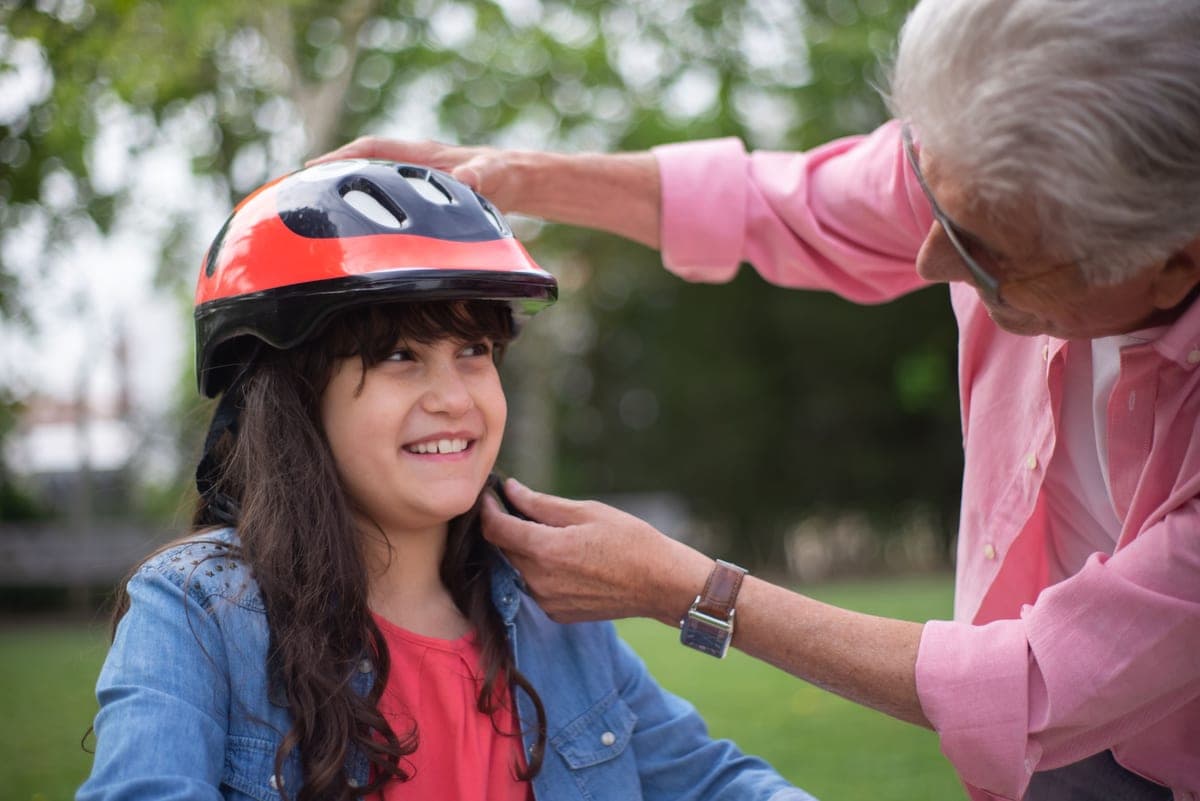
Two fingers above the eyebrows. The front rim should sit about two of your child's finger widths above the brow, not tipped back on the crown.
Straps form a V under the ear. The side straps should meet just below and slightly forward of the earlobe.
One finger under the chin strap. Done up, you should just be able to slide one finger underneath. Ask them to open their mouth wide — the helmet should pull down slightly.
The full method, with what each check is actually testing for, is on how to fit a kids bike helmet.
When to move up a size
Not on a birthday. Move up when the dial adjuster is at its loosest setting and the helmet still feels tight, or when the pads have been removed and it still will not sit level. A toddler's head grows quickly in the first two years and then slows sharply, so a helmet bought at two often fits until four or five.
Replace it rather than resize it after any impact, even one that leaves no visible mark — the foam crushes internally and does not recover. The timeline for routine replacement is on when to replace a kids helmet, and the toddler helmets we would buy are on best toddler bike helmets.
Why toddler helmets run in such narrow bands
A toddler's head is close to its adult circumference long before the rest of them catches up — which is why the bands are narrow and why guessing is risky. Between one and three the circumference changes by only a few centimeters, so a helmet bought correctly at eighteen months often still fits at three. That also means a helmet bought two sizes large will still be two sizes large a year later.
The practical consequence: do not buy up. The usual argument for sizing up — that they will grow into it — barely applies here, and the cost of a loose helmet is immediate.
Weight and coverage, the two toddler-specific checks
Weight. A toddler's neck is proportionally weak, and a heavy helmet encourages the head-down slump that makes them look where they are not going. Published weights are rare at this size, but the in-mold construction used by the Giro Scamp and Bell Sidetrack II is lighter than a hard ABS skate shell for the same coverage.
Rear coverage. Toddlers fall backwards far more than older children do, because they are still learning to catch themselves forwards. A toddler-specific shell drops lower at the back of the skull for exactly that reason. Hold the helmet beside a youth helmet of the same brand and the difference in the rear profile is visible.
A flat rear profile is also worth checking if the child will ever sit in a bike seat or a trailer, because a helmet with a pronounced tail pushes the head forwards against a seat back.
Converting between centimeters and inches
American listings often quote inches and the manufacturer's own chart quotes centimeters, which is where sizing mistakes creep in. Divide centimeters by 2.54 to get inches, or multiply inches by 2.54 to go the other way. The table above gives both for each band so you do not have to.
If you only have a string and a ruler marked in inches, measure in inches and convert once rather than estimating twice. A half-inch error is more than a centimeter, which is enough to put you in the wrong band at the edges.
The picks
Every figure below is the manufacturer's own published spec, linked to the page we read it from, so you can check the one number your decision turns on — here is how we choose.
Quick picks — sorted by head size
| # | Product | Best for | Head | Price |
|---|---|---|---|---|
| 1 | 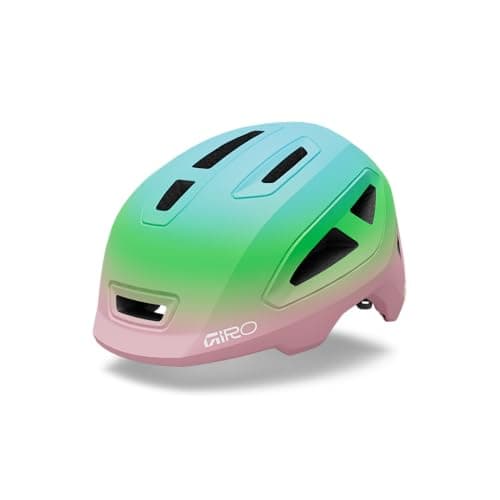 Top pickGiro Scamp MIPS II The XS covers a 45–49 cm head and carries the CPSC certification for age 1 and up with extended rear coverage — the combination most toddler helmets miss. | Toddlers and preschoolers | 45–53 cm | $75.90 · View on Amazon
|
| 2 | 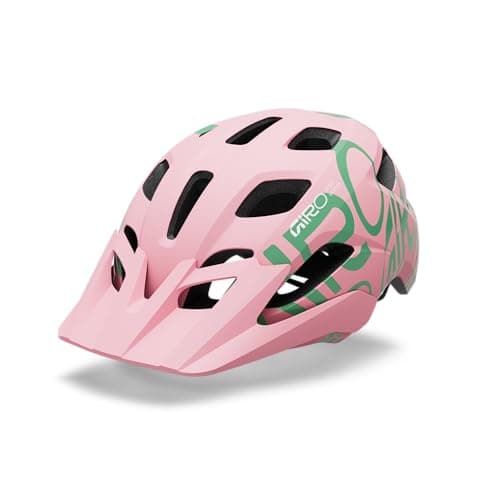 Giro Tremor MIPS One Universal Child shell covering 47–54 cm with integrated MIPS and a hard outer shell — the first helmet that still fits two birthdays later. | A first helmet | 47–54 cm | $65.00 · View on Amazon
|
| 3 | 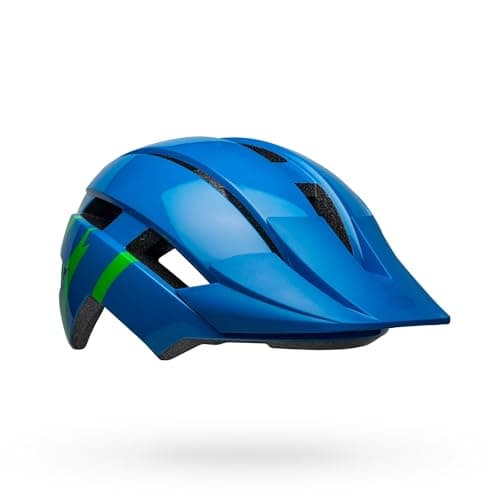 Bell Sidetrack II MIPS 320 g in youth size with a visor and Mips Evolve — the value pick once a child is past five and riding further than the driveway. | School-age riders | 47–57 cm |
n/p = the manufacturer does not publish that figure. Every other number here comes straight off their spec page.
Top pick — Toddlers and preschoolers
Giro Scamp MIPS II
The XS covers a 45–49 cm head and carries the CPSC certification for age 1 and up with extended rear coverage — the combination most toddler helmets miss.
| Head size | 45–53 cm |
|---|---|
| Brakes | — |
| Frame | In-mold polycarbonate shell, MIPS liner |
| Brand says | XS is CPSC certified for age 1 and older; S for age 5 and older |
What works
- XS 45–49 cm, S 49–53 cm — two sizes across the whole toddler-to-kid range
- Extended rear coverage on the XS
- Roc Loc Jr. dial fit with a pinch-guard buckle
What doesn't
- MIPS versions cost more than the plain shell
- Dial fit systems can loosen and need re-checking
How we checked it: Researched from published specs · Giro — Scamp MIPS II
#2 — A first helmet
Giro Tremor MIPS
One Universal Child shell covering 47–54 cm with integrated MIPS and a hard outer shell — the first helmet that still fits two birthdays later.
| Head size | 47–54 cm |
|---|---|
| Brakes | — |
| Frame | Hard outer shell over an in-mold polycarbonate lower wrap, integrated MIPS |
| Brand says | Sold in one Universal Child fit, 47–54 cm |
What works
- 47–54 cm in a single shell, so there is no size to get wrong
- Integrated MIPS at a genuinely child-sized shell
- Roc Loc Sport dial with a 7 cm adjustment range, one-handed
- Two-piece shell: a tough outer hard shell over an in-mold polycarbonate lower wrap
What doesn't
- One size only, so a very small toddler head will not fill it
- A hard outer shell is heavier than an in-mold-only helmet
- Giro publishes no helmet weight on the listing
How we checked it: Researched from published specs · Amazon listing — Giro Tremor MIPS Child
#3 — School-age riders
Bell Sidetrack II MIPS
320 g in youth size with a visor and Mips Evolve — the value pick once a child is past five and riding further than the driveway.
| Head size | 47–57 cm |
|---|---|
| Brakes | — |
| Frame | In-mold polycarbonate shell, Mips Evolve |
| Brand says | CPSC certified for age 5 and older |
What works
- Universal Child 47–54 cm and Universal Youth 50–57 cm
- 320 g in size Y, light for a helmet with rotational protection
- Removable visor for trail riding
What doesn't
- CPSC certified for age 5 and older, so it is not a toddler helmet
- Universal sizing is less precise than two distinct shells
How we checked it: Researched from published specs · Bell — Sidetrack II MIPS
#ad · How we make money · Price as of November 1, 2026
Questions parents actually ask
01What size helmet does a 2 year old need?
Measure rather than guess, but most two-year-olds fall in the 45 to 50 cm (17.7 to 19.7 in) toddler and XS band. The Giro Scamp XS covers 45 to 49 cm and is CPSC certified for age one and older.
02How do you measure a toddler's head for a helmet?
Wrap a soft tape around the head about an inch above the eyebrows, passing just above the ears and around the widest part at the back. Measure twice, use the larger figure, and record it in centimeters.
03What is the smallest bike helmet size for a toddler?
Around 45 cm. The Giro Scamp MIPS II XS starts at 45 cm and is the smallest in this registry, certified by Giro for age one and older with extended rear coverage.
04My toddler is between two helmet sizes. Which do I buy?
The smaller one. A helmet can be padded down a little but it cannot be made smaller, and a loose helmet sits back on the head and leaves the forehead exposed.
Sources
Read next
- Helmets & GearKids helmet size chartHead circumference to helmet size, in one table.
- Helmets & GearBest toddler bike helmetsHelmets certified for age 1+, with the extra coverage required.
- Helmets & GearHow to fit a kids bike helmetFour steps, two minutes, and the shake test that proves it.
- Helmets & GearWhen to replace a kids bike helmetAfter an impact, after a growth spurt, after damage.