Balance Bikes
Balance bike vs tricycle
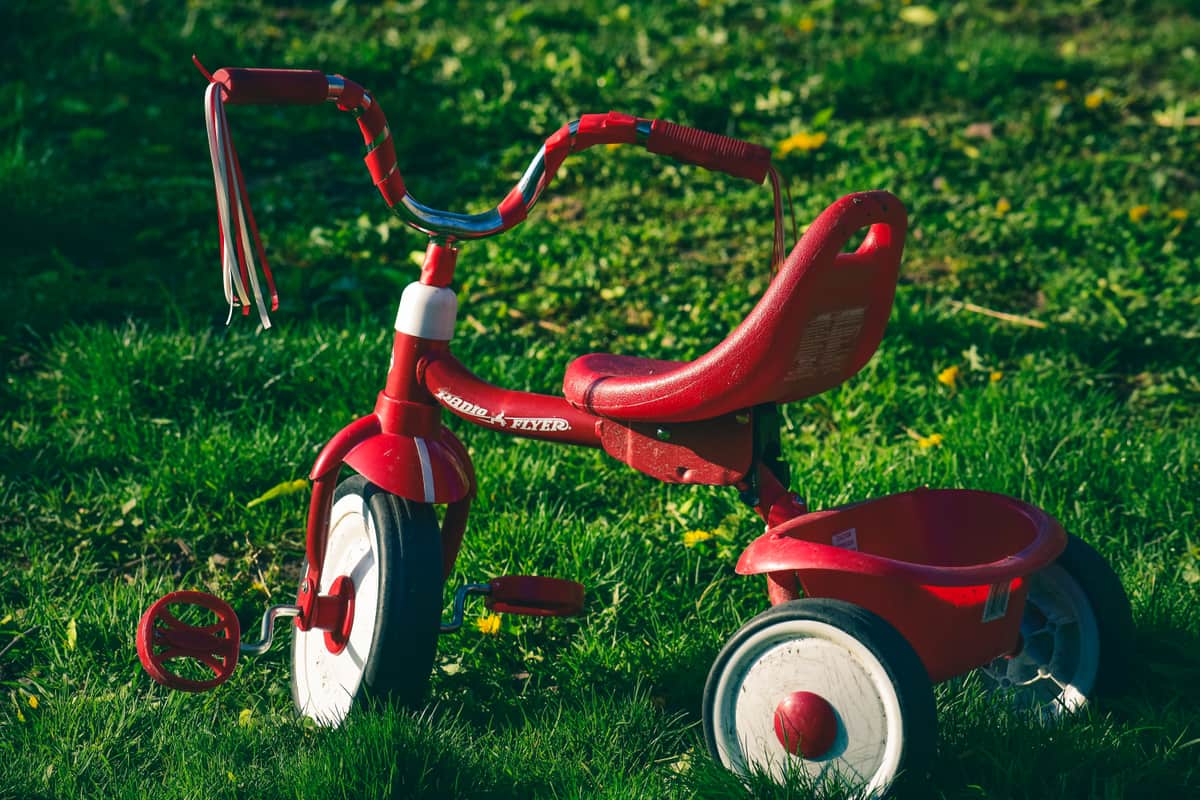
A tricycle teaches pedaling and gives a young toddler independent movement. A balance bike teaches balance, which is the skill that transfers to a real bike. If the goal is riding a bike, the balance bike is the shorter route; if the child is barely walking, the trike is the one they can use today.
Some links on this page are affiliate links. If you buy through one, we earn a commission at no extra cost to you. It never changes which bike we put first — here is exactly how we make money.
What each one teaches
A tricycle teaches pedaling, steering at low speed, and the basic idea that a vehicle goes where you point it. It is stable by design, so it teaches nothing about balance.
A balance bike teaches exactly one thing and teaches it well: how to keep a leaning two-wheeler upright. It does not teach pedaling at all.
Neither is a cheat. They are different tools and, if you want, they are sequential.
Which comes first
| If you want… | Buy | Because |
|---|---|---|
| Independent movement at 18 months | Tricycle | Stable at walking pace, nothing to master first |
| The fastest route to riding a bike | Balance bike | Balance is the hard skill and it transfers directly |
| Something for a 3-year-old | Balance bike | Most trikes are outgrown by three |
| Pedaling practice specifically | Tricycle | It is the only thing a trike drills |
| One purchase, not two | Balance bike | It leads straight into a pedal bike |
The reach problem
The real constraint at this age is not preference, it is fit. A tricycle works for a child who can reach the pedals from the seat. A balance bike works for a child who can sit on the saddle with both feet flat. Those happen at different sizes, and the balance bike usually needs slightly more leg.
If your toddler measures under a 10 inch inseam, neither of the low-saddle balance bikes we list will fit — that is genuinely a tricycle moment, and there is no shame in it.
What we would do
If a trike already exists in the house, keep using it and buy the balance bike when they can reach. If you are buying one thing, for one child, with riding a bike as the goal — buy the balance bike and check the reach first with the inseam method.
The picks
Every figure below is the manufacturer's own published spec, linked to the page we read it from. We have not ridden these bikes and the cards say so — here is how we choose.
Quick picks — sorted by the inseam it fits
| # | Product | Best for | Inseam | Price |
|---|---|---|---|---|
| 1 | 12" Top pickwoom GO 1 The lowest published saddle height here, which is the whole argument for it: it fits a 10-inch inseam, and almost nothing else does. | The smallest riders | 10–14.4" | |
| 2 | 12" Prevelo Alpha Zero A low standover and a real rear brake in a 6.9 lb package — the closest thing to the woom GO 1 with a slightly wider published inseam range. | Brake practice before pedals | 12.5–16.5" | |
| 3 | 12" Strider 12 Sport The widest fit range of any 12-inch balance bike we found, and the one most likely to still fit a year after you buy it. | The widest age window | 12–18" |
n/p = the manufacturer does not publish that figure. We do not fill in a number they never gave.
Top pick — The smallest riders
woom GO 1
The lowest published saddle height here, which is the whole argument for it: it fits a 10-inch inseam, and almost nothing else does.
| Wheel | 12" |
|---|---|
| Weight | 6.4 lb |
| Fits inseam | 10–14.4 in |
| Saddle height | 10.2–13.9 in |
| Brakes | Child-friendly mini V-brake with a hand lever |
| Gearing | None (balance bike) |
| Frame | 6061 aluminum |
| Brand says | Manufacturer says 1.5–3.5 years |
What works
- 10.2 in minimum saddle height fits genuinely small toddlers
- 6.4 lb aluminum frame — the lightest in this registry
- Has a real hand brake, so braking is learned before the pedal bike
- Air tires
What doesn't
- 13.9 in maximum saddle height means a fast-growing kid outgrows it early
- Costs multiples of a big-box balance bike
- Sold direct, not through Amazon, so no Prime return window
Hands-on status: Researched from published specs · woom — GO 1 specs
#2 — Brake practice before pedals
Prevelo Alpha Zero
A low standover and a real rear brake in a 6.9 lb package — the closest thing to the woom GO 1 with a slightly wider published inseam range.
| Wheel | 12" |
|---|---|
| Weight | 6.9 lb |
| Fits inseam | 12.5–16.5 in |
| Saddle height | 10.9–14 in |
| Brakes | Rear hand brake with a kid-sized lever |
| Gearing | None (balance bike) |
| Frame | Butted 6061 aluminum |
| Brand says | Manufacturer says 1.5 years and up |
What works
- 12.5–16.5 in published inseam range, wider at the top than the woom GO 1
- Rear hand brake teaches the lever before pedals arrive
- Low center of gravity, child-specific geometry
What doesn't
- 14 in maximum saddle height is still a short runway
- Direct-sale only
- Nothing is included beyond the bike
Hands-on status: Researched from published specs · Prevelo — Alpha Zero specs
#3 — The widest age window
Strider 12 Sport
The widest fit range of any 12-inch balance bike we found, and the one most likely to still fit a year after you buy it.
| Wheel | 12" |
|---|---|
| Weight | 6.7 lb |
| Fits inseam | 12–18 in |
| Saddle height | 11–17 in |
| Brakes | None — riders stop with their feet |
| Gearing | None (balance bike) |
| Frame | Steel |
| Brand says | Manufacturer says 1–4 years |
What works
- 11–17 in saddle range covers a 12–18 in inseam — roughly two years of growth
- 6.7 lb, light enough for a toddler to pick up unaided
- Flat-free foam tires never need air
- Tool-free saddle and bar adjustment
What doesn't
- Steel frame, so it is not the lightest 12-inch on the market
- No hand brake — fine at balance-bike speeds, but nothing to learn braking on
- Foam tires give up grip and cushioning to air tires on rough ground
Hands-on status: Researched from published specs · Strider — 12 Sport specs
Questions parents actually ask
01Should I get a tricycle or a balance bike?
If the goal is riding a bike, the balance bike gets there faster because it teaches balance. If your child is under about 18 months or cannot reach a balance bike saddle with flat feet, the tricycle is the one they can actually use.
02When to move from a trike to a balance bike?
As soon as they can sit on the balance bike's lowest saddle setting with both feet flat on the ground. For most children that is somewhere around two.
03Can a tricycle teach a child to ride a bike?
It teaches pedaling, which is useful, but not balance — and balance is the part that takes months to learn.
Sources
Read next
- Balance BikesWhat age to start a balance bikeThe readiness signal is reach, not age.
- Balance BikesAre balance bikes worth it?The case for, the case against, and when to skip it.
- Balance BikesBest balance bike for a 1 year oldWhat actually fits a 1-year-old, by saddle height.
- Balance BikesBalance bike vs training wheelsWhy one route teaches balance and the other postpones it.