Balance Bikes
When to switch from a tricycle to a balance bike
Switch when your child can push the trike along confidently, steers it deliberately, and has an inseam that clears a balance bike's lowest saddle — often between 18 months and two and a half years. Waiting for them to outgrow the trike wastes the window a balance bike is best at.
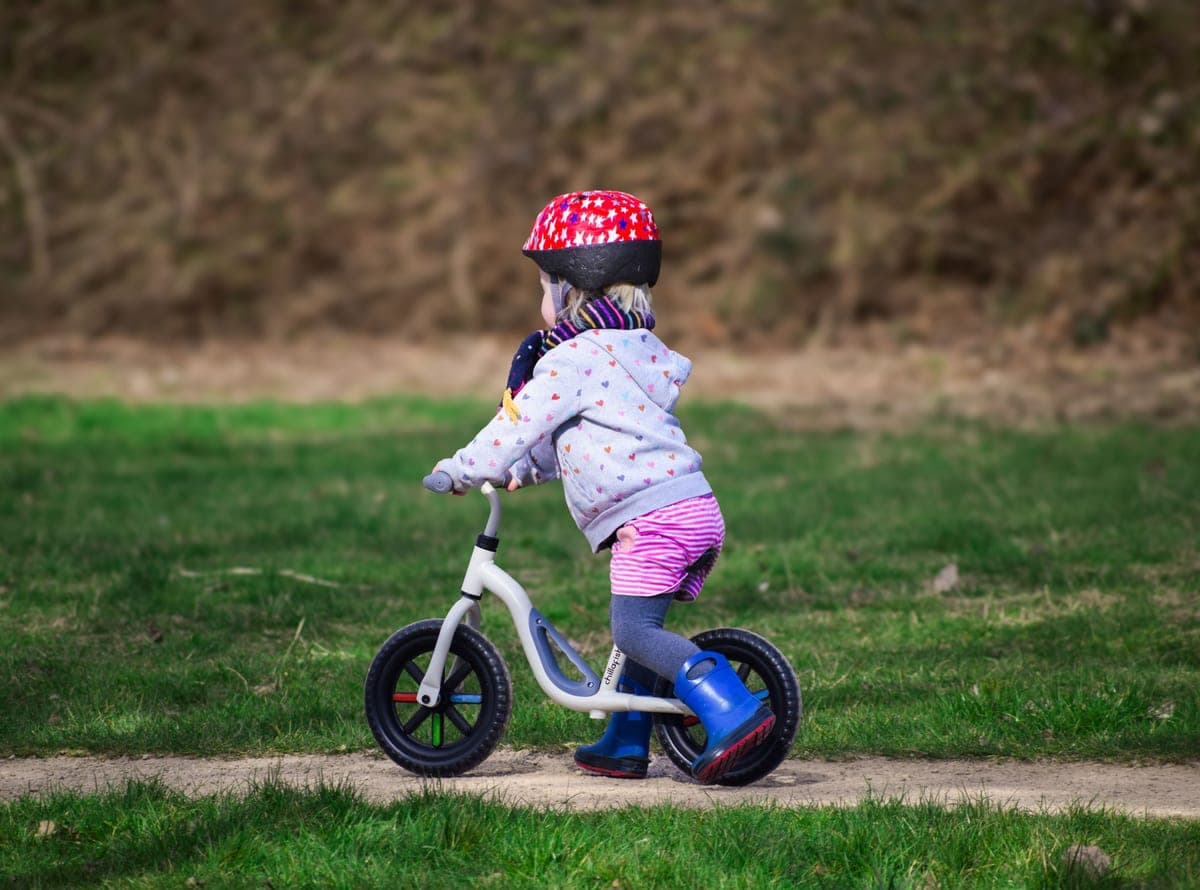
Three signals: they push the trike along with real confidence, they steer it deliberately rather than drifting, and their inseam clears the lowest saddle of the balance bike you are considering — from 11 inches on a Retrospec Cub to 10.2 on a woom GO 1. When all three are true, move. Age is the least useful of the three.
Why the switch comes earlier than you think
A tricycle and a balance bike do different jobs. A trike teaches a child to pedal, which is the easy half of riding a bicycle. A balance bike teaches balance, which is the hard half and the one that takes months of casual practice rather than an afternoon of instruction.
Because of that, the useful window for a balance bike opens before a child has finished enjoying the trike — typically somewhere between 18 months and two and a half years. Parents who wait until the trike is physically outgrown, often at three or four, lose most of that window. There is no reason both cannot live in the garage at once.
| Tricycle | Balance bike | |
|---|---|---|
| Teaches | Pedalling and steering | Balance, lean and steering under momentum |
| Typical start | Around 10 months to 2 years | Around 18 months, when the inseam fits |
| Weight in our registry | 14.11–15.87 lb | 6.4–9.3 lb |
| Rider weight limits published | 42.5–49 lb | 44–50 lb where published |
| Transfers to a pedal bike | The pedalling motion only | Almost everything that matters |
Figures from the manufacturer spec pages in this site's registry. The weight gap is the practical difference a toddler feels: a trike has to be pushed, a balance bike can be picked up.
The three signals in detail
Step 01
They move the trike confidently under their own power
Not being pushed, not using the parent handle. If they can get the trike moving and keep it moving on a flat path, they have the leg strength and the coordination a balance bike needs.
Step 02
They steer with intent
Ask them to ride around a tree or between two chalk marks. A child who can aim a trike is ready to aim something that leans. A child who drifts wherever the front wheel points has a few more weeks of trike in them.
Step 03
Their inseam clears the lowest saddle
This is the hard constraint and the one that most often decides the timing. Measure it with a book held firmly between their legs against a wall, mark the top, measure from the floor. Then compare it to the bike's published minimum saddle height — the woom GO 1 starts at 10.2 inches, the Retrospec Cub at 11, the Strider 12 Sport at 11, the Prevelo Alpha Zero at 10.9.
If the inseam is not there yet
Keep the trike and wait, or bridge the gap. Two registry products are built for exactly this moment: the Joovy Tricycoo 4.1, which has a pedal lock that disengages the cranks so a pre-pedalling child can still ride it, and the Retrospec Cricket 2, a four-wheel baby balance bike with an 8.5 inch fixed seat for children a 10-inch saddle is still too tall for.
What we would not do is buy a balance bike to grow into and leave it in the garage for six months. A toddler who cannot touch the floor on a balance bike learns to dislike it, and that is harder to undo than waiting is.
The first week on two wheels
Expect it to look like nothing is happening. The progression is walking while seated, then longer pushes, then both feet up for a second, then several seconds. Most of that happens without instruction, which is the point — the only useful adult input is dropping the saddle low enough that their feet are genuinely flat, and finding a surface with the gentlest possible slope.
Helmet from the first ride, fitted properly. The three fit checks are on how to fit a kids bike helmet.
Can they go back to the trike?
Yes, and plenty do for months. A trike is still the better vehicle for carrying things, for a long walk where the child tires, and for a sibling to push. The switch is not a graduation ceremony, it is the moment a balance bike starts earning its space. Our side-by-side comparison is on balance bike vs tricycle.
What to buy when you switch
For the widest fit window: the Strider 12 Sport — an 11 to 17 inch saddle range covers roughly two years of growth, which is more than any other balance bike in this registry.
For the smallest riders: the woom GO 1 at a 10.2 inch minimum saddle height and 6.4 lb, the lightest bike here.
On a budget, with a brake: the Retrospec Cub Plus 12 — an 11.5 to 15.25 inch saddle range and a reach-adjustable hand lever, which starts the braking habit before pedals arrive.
If you already own the trike, the question is timing rather than choice. The three signals that say move are on when to switch from a tricycle to a balance bike.
A trike is a stage, not a destination. When to move on from it is covered on when to switch from a tricycle to a balance bike.
The picks
Every figure below is the manufacturer's own published spec, linked to the page we read it from, so you can check the one number your decision turns on — here is how we choose.
Quick picks — sorted by the inseam it fits
| # | Product | Best for | Inseam | Price |
|---|---|---|---|---|
| 1 | 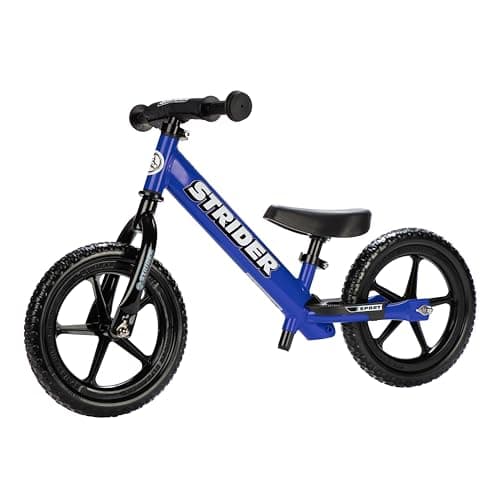 Top pickStrider 12 Sport The widest fit range of any 12-inch balance bike we found, and the one most likely to still fit a year after you buy it. | The widest age window | 12–18" | |
| 2 | 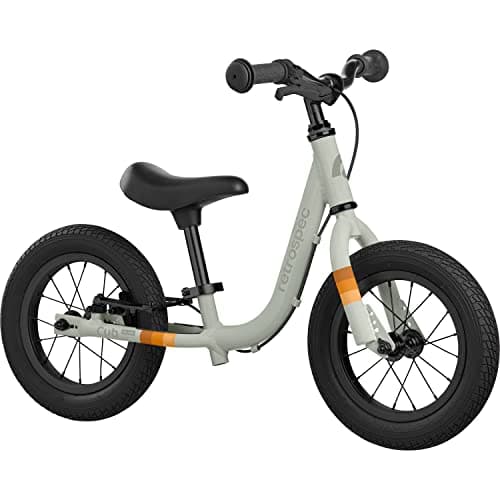 Retrospec Cub Plus 12 An aluminum balance bike with a reach-adjustable rear V-brake and a published 11.5–15.25 in seat range, at roughly a third of what the direct-sale brands charge. | A brake without the direct-sale price | n/p | $109.99 · View on Amazon
|
| 3 | 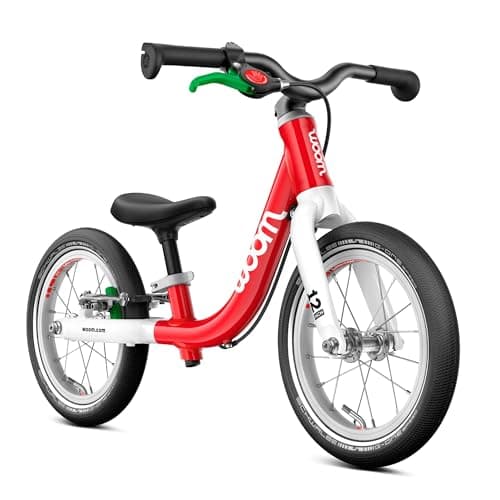 woom GO 1 The lowest published saddle height here, which is the whole argument for it: it fits a 10-inch inseam, and almost nothing else does. | The smallest riders | 10–14.4" | |
| 4 | 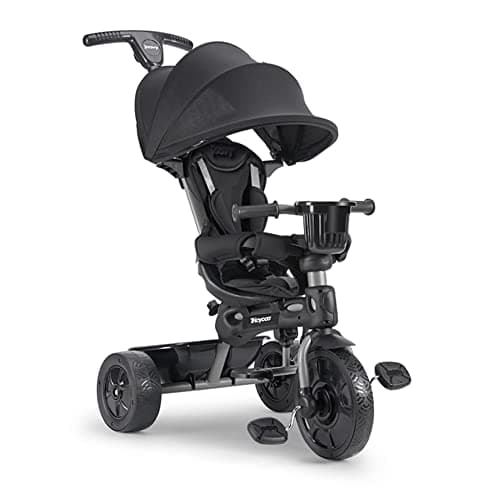 Joovy Tricycoo 4.1 The one designed around a baby rather than a toddler: a 5-point harness, a removable safety guard and a pedal lock so the cranks cannot kick a 10-month-old's legs. | Babies who cannot pedal yet | n/p |
n/p = the manufacturer does not publish that figure. Every other number here comes straight off their spec page.
Top pick — The widest age window
Strider 12 Sport
The widest fit range of any 12-inch balance bike we found, and the one most likely to still fit a year after you buy it.
| Wheel | 12" |
|---|---|
| Weight | 6.7 lb |
| Fits inseam | 12–18 in |
| Saddle height | 11–17 in |
| Brakes | None — riders stop with their feet |
| Gearing | None (balance bike) |
| Frame | Steel |
| Brand says | Manufacturer says 1–4 years |
What works
- 11–17 in saddle range covers a 12–18 in inseam — roughly two years of growth
- 6.7 lb, light enough for a toddler to pick up unaided
- Flat-free foam tires never need air
- Tool-free saddle and bar adjustment
What doesn't
- Steel frame, so it is not the lightest 12-inch on the market
- No hand brake — fine at balance-bike speeds, but nothing to learn braking on
- Foam tires give up grip and cushioning to air tires on rough ground
How we checked it: Researched from published specs · Strider — 12 Sport specs
#ad · How we make money · Price as of October 10, 2026
#2 — A brake without the direct-sale price
Retrospec Cub Plus 12
An aluminum balance bike with a reach-adjustable rear V-brake and a published 11.5–15.25 in seat range, at roughly a third of what the direct-sale brands charge.
| Wheel | 12" |
|---|---|
| Saddle height | 11.5–15.25 in |
| Brakes | Rear aluminum alloy V-brake with a reach-adjustable two-finger lever |
| Gearing | None (balance bike) |
| Frame | Hand-built aluminum alloy, Super Step-Thru |
| Brand says | Manufacturer says 18 months–4 years |
What works
- 11.5–15.25 in published seat range, so the inseam check works on paper
- A real rear V-brake with a two-finger reach-adjustable lever
- Aluminum frame, not steel, at this price
- Air-filled 12 x 2.125 tires on Schrader valves, so any bike pump fits
What doesn't
- Retrospec does not publish a weight for it
- No published rider weight limit
- One colorway showed zero inventory when we checked on 2026-09-29
- 3.75 in of seat travel is a shorter runway than a Strider 12 Sport's six
How we checked it: Researched from published specs · Retrospec — Cub Plus 12 specs
#3 — The smallest riders
woom GO 1
The lowest published saddle height here, which is the whole argument for it: it fits a 10-inch inseam, and almost nothing else does.
| Wheel | 12" |
|---|---|
| Weight | 6.4 lb |
| Fits inseam | 10–14.4 in |
| Saddle height | 10.2–13.9 in |
| Brakes | Child-friendly mini V-brake with a hand lever |
| Gearing | None (balance bike) |
| Frame | 6061 aluminum |
| Brand says | Manufacturer says 1.5–3.5 years |
What works
- 10.2 in minimum saddle height fits genuinely small toddlers
- 6.4 lb aluminum frame — the lightest in this registry
- Has a real hand brake, so braking is learned before the pedal bike
- Air tires
What doesn't
- 13.9 in maximum saddle height means a fast-growing kid outgrows it early
- Costs multiples of a big-box balance bike
- Costs multiples of a Strider 12 Sport for a narrower fit range
How we checked it: Researched from published specs · woom — GO 1 specs
#ad · How we make money · Price as of October 10, 2026
#4 — Babies who cannot pedal yet
Joovy Tricycoo 4.1
The one designed around a baby rather than a toddler: a 5-point harness, a removable safety guard and a pedal lock so the cranks cannot kick a 10-month-old's legs.
| Wheel | 10" |
|---|---|
| Weight | 14.4 lb |
| Brakes | Parent-operated brake on the push handle, plus a pedal locking system |
| Gearing | Direct drive, with a pedal lock that disengages the cranks for the youngest stage |
| Frame | Steel, with a removable safety guard |
| Brand says | Manufacturer says from 10 months, in four stages to 30 months and beyond |
What works
- Manufacturer's own minimum age is 10 months — the youngest here
- 5-point harness and a removable safety guard, both of which come off as they grow
- Pedal locking system stops the cranks spinning into their shins
- Parent-friendly brakes on the handle and a UPF 50 canopy
What doesn't
- 44 lb maximum rider weight, so it is outgrown before either Radio Flyer trike
- Joovy publishes no seat height, only stage ages
- The four-stage conversion is more fiddly than a plain trike
How we checked it: Researched from published specs · Joovy — Tricycoo 4.1 specs
#ad · How we make money · Price as of October 10, 2026
Questions parents actually ask
01When should a child move from a tricycle to a balance bike?
When they can move the trike confidently under their own power, steer it deliberately, and their inseam clears the balance bike's lowest saddle setting. That is often between 18 months and two and a half years.
02Is a balance bike better than a tricycle?
For learning to ride a bicycle, yes — a balance bike teaches balance and lean, which is what transfers to a pedal bike. A trike only teaches pedalling, which a child picks up in an afternoon anyway.
03Can a 2 year old use a balance bike?
Most can. The constraint is the saddle: the woom GO 1 starts at 10.2 inches, the Retrospec Cub at 11 and the Strider 12 Sport at 11. If their inseam clears one of those, they can ride it.
04Should I keep the tricycle after switching?
If you have the space, yes. A trike is still useful for long walks and carrying things, and children often alternate between the two for months. The switch is not a one-way door.
Sources
Read next
- Balance BikesBalance bike vs tricycleDifferent skills, different ages. Which one to buy first.
- Balance BikesWhat age to start a balance bikeThe readiness signal is reach, not age.
- Balance BikesBest balance bike for an 18 month oldFive balance bikes, ranked on the only number that matters at 18 months.
- Balance BikesBest tricycles for kidsFour real trikes, compared on seat height and rider weight limit.