Learning to Ride
How long do kids need training wheels?
Weeks, not years — and ideally not at all. Training wheels teach pedalling, which takes an afternoon, and prevent the bike from leaning, which is the skill that actually has to be learned. If a child has been on them for more than a season, the wheels are the reason, not the child.
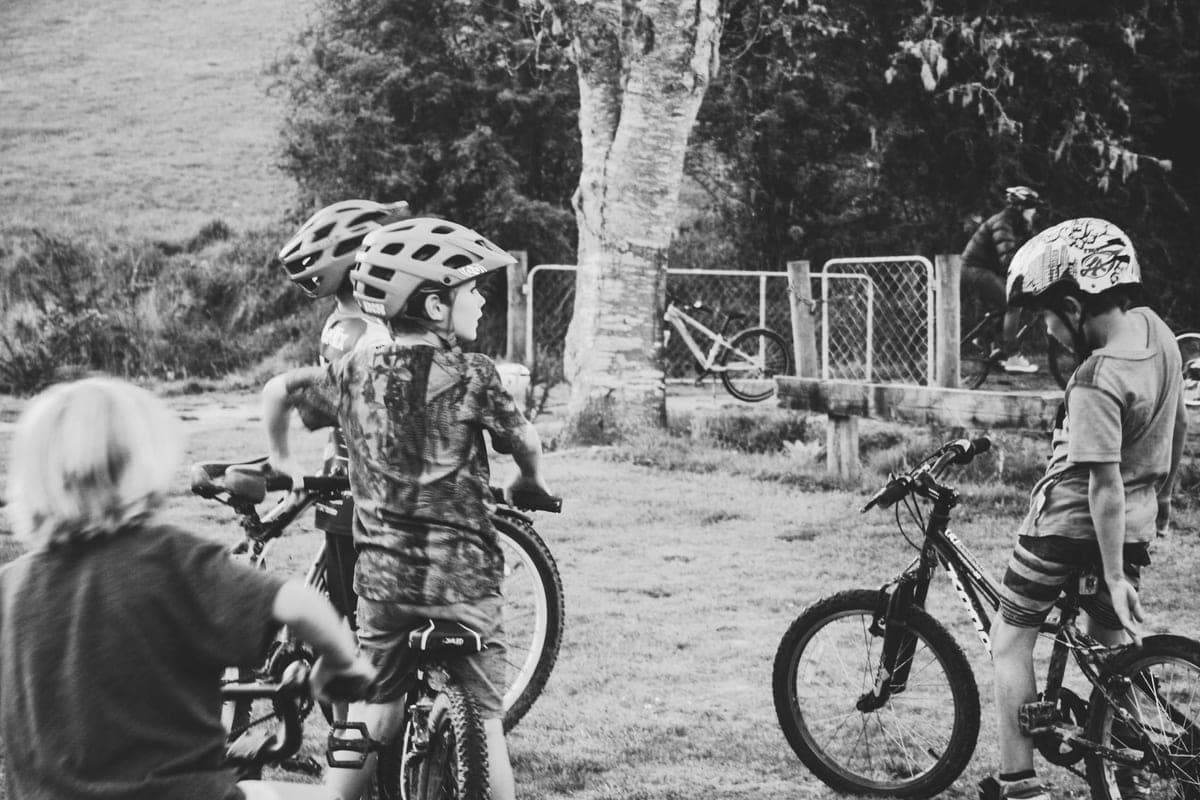
Four to eight weeks is a reasonable stay on training wheels. Beyond one season they stop helping and start holding the child back, because the thing they prevent — the bike leaning into a turn — is the thing riding a bike actually is.
Why the timeline stretches
Training wheels solve the wrong problem. Riding a bike is two separate skills: pedalling, which almost any child picks up in an afternoon, and balancing, which takes practice. Training wheels let a child practise the easy skill indefinitely while making the hard one impossible to attempt.
That is why "how long" has such a wide range of answers online. A child on training wheels is not slowly learning to balance. They are becoming a confident pedaller who has never once felt the bike lean, which means the first day without the wheels starts from zero.
| Route | Typical time to ride unaided | What it teaches first |
|---|---|---|
| Balance bike, then pedals | One or two sessions after the swap | Balance |
| Pedals-off method on their own bike | One or two sessions | Balance |
| Training wheels, then removal | Weeks to months after removal | Pedalling |
| Holding the saddle and running | Highly variable | Dependence on the adult |
These are the patterns we see and hear from parents, not measured study data. The ordering is consistent: every route that teaches balance first is faster.
The three signals it is time
Step 01
They never touch the training wheels
Watch from behind on a flat path. If the bike is tracking upright and the stabiliser wheels are spinning free or barely grazing the ground, they are already balancing. The wheels are decoration and have been for a while.
Step 02
They lean into turns
A child who leans is a child who has worked out how a bicycle steers. On training wheels a real lean is physically limited, so even a hint of it is a strong signal.
Step 03
They can start and stop without help
Push off unaided, ride where they intended, stop where they meant to. If all three happen reliably, nothing is being gained by waiting.
If they have been on them for a year
Do not simply unbolt the wheels and hope. Go back a step first: take the pedals off, drop the saddle so both feet are flat, and spend two sessions scooting and gliding on a gentle slope. It feels like backwards progress and it is the fastest route forwards — usually two afternoons rather than two months.
The step-by-step version of that is on how to teach a child to ride a bike, and the removal sequence itself is on how to get rid of training wheels.
Raising them before removing them
The middle step most people skip. Nearly every bolt-on set, including all three Wald sets, mounts on a slotted bracket that lets you raise the wheels in stages. Raise them half an inch, ride for a week, raise them again. By the third adjustment the bike is leaning several degrees before anything touches down, which is real balance practice with a safety net.
This is also the point at which rider weight matters. Wald rates the 1216 to 75 lb, the 10252 to 100 lb and the 742 to 125 lb. An older learner over the rating will bend the struts, and bent struts tilt the bike permanently — which teaches the opposite of balance. The full table of published limits is on kids bike weight limits.
What the age charts will not tell you
There is no age at which a child stops needing training wheels, because the need was never about age. We have seen three-year-olds off a balance bike ride unaided on the first attempt, and eight-year-olds on their third season of stabilisers. The difference is almost never the child; it is whether balance was taught before pedalling.
The one real age constraint is the bike itself: a child cannot learn on a bike they cannot put their feet down on. If the saddle is at its lowest and they are still on tiptoes, fix that before anything else.
The short version
Expect four to eight weeks. Raise the wheels in stages rather than leaving them where the shop set them. Watch for the three signals, and when you see them, take the wheels off that same day — the longer a child rides with a net they no longer need, the more the net itself becomes the thing they are afraid to lose.
Two things to read alongside this list: the full setup sequence is on kids bike riding position, and if the bike feels like hard work from the first push, start with why the pedals are hard to push.
Match the set to the rider as well as the bike — all three Wald sets carry a different weight rating. The published limits across our whole registry are on kids bike weight limits.
If they are already on a set, the question becomes how long to leave them there. The three signals to take them off are on how long do kids need training wheels.
For the timeline rather than the method — how long a stay on training wheels is reasonable, and why it stretches — see how long do kids need training wheels.
The single most common complaint this routine prevents is stiff pedals. The six causes, in the order to check them, are on why are my kid's bike pedals hard to push.
The picks
Every figure below is the manufacturer's own published spec, linked to the page we read it from, so you can check the one number your decision turns on — here is how we choose.
Quick picks — sorted by what it fits
| # | Product | Best for | Fits | Price |
|---|---|---|---|---|
| 1 | 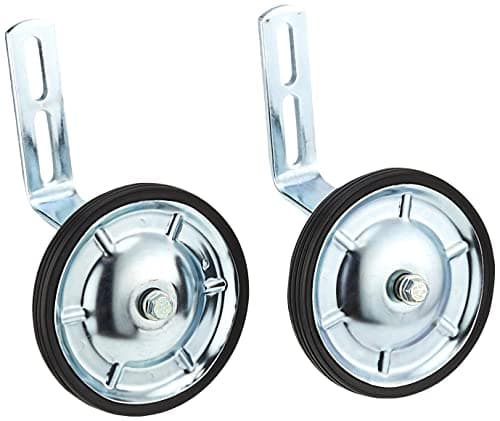 Top pickWald 1216 Training Wheels The small Wald: the set that actually fits a 12 or 14-inch first bike, which most training wheels on sale do not. | 12 and 14 inch first bikes | 12–16" bikes · ≤75 lb | |
| 2 | 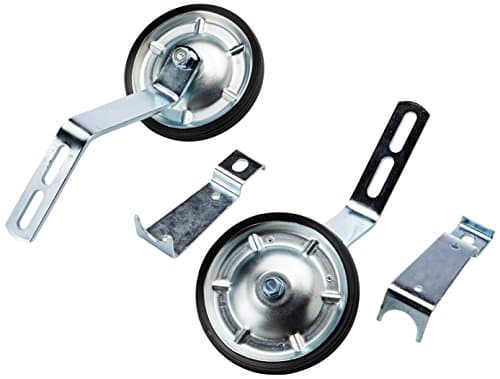 Wald 10252 Training Wheels The 16-to-20-inch set with the adapters that make it fit fat modern chainstays — the version to buy when plain brackets will not close around the frame. | Thick-stayed 16 and 20 inch bikes | 16–20" bikes · ≤100 lb | $36.65 · View on Amazon
|
| 3 | 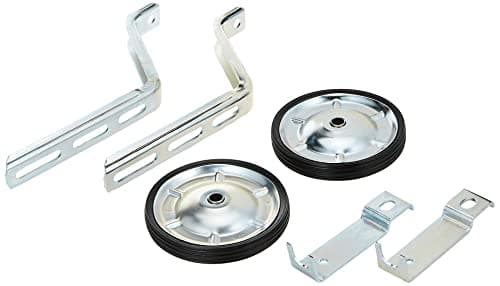 Wald 742 Training Wheels The long-reach Wald: 16 to 26 inch wheels and a 125 lb rating, which makes it the set for an older or heavier child who is still learning. | Older or heavier learners | 16–26" bikes · ≤125 lb |
n/p = the manufacturer does not publish that figure. Every other number here comes straight off their spec page.
Top pick — 12 and 14 inch first bikes
Wald 1216 Training Wheels
The small Wald: the set that actually fits a 12 or 14-inch first bike, which most training wheels on sale do not.
| Fits | 12–16" bikes · ≤75 lb |
|---|---|
| Brakes | — |
| Gearing | Single-speed bikes only — not for multi-speed |
| Frame | Steel brackets and steel wheels |
| Brand says | Wald rates them for riders up to 75 lb |
What works
- Fits 12 to 16 in wheels — the only size band that covers a genuine first pedal bike
- Steel brackets with several mounting heights, so you can raise them as balance arrives
- Wald publishes a rider weight rating (75 lb), which most brands do not
What doesn't
- Single-speed bikes only — they will not fit a geared bike
- Needs at least 3/8 in of axle outside the nut on both sides, which rules some bikes out entirely
- Steel wheels are noisy and scuff, and Wald says outright these are temporary aids
How we checked it: Researched from published specs · Wald — 1216 training wheels specs
#ad · How we make money · Price as of October 10, 2026
#2 — Thick-stayed 16 and 20 inch bikes
Wald 10252 Training Wheels
The 16-to-20-inch set with the adapters that make it fit fat modern chainstays — the version to buy when plain brackets will not close around the frame.
| Fits | 16–20" bikes · ≤100 lb |
|---|---|
| Brakes | — |
| Gearing | Single-speed bikes only — not for multi-speed |
| Frame | Steel brackets and steel wheels, with frame adapters included |
| Brand says | Wald rates them for riders up to 100 lb |
What works
- Fits 16 to 20 in wheels and riders up to 100 lb
- Frame adapters cover 0.75 and 1.00 in rear tubes; without them it takes 1.25 in tubes
- All-steel, and cheap enough to treat as disposable
What doesn't
- Single-speed only, which excludes most geared 20 in bikes sold today
- Same 3/8 in exposed-axle requirement as the smaller Wald set
- No published product weight
How we checked it: Researched from published specs · Wald — 10252 training wheels specs
#3 — Older or heavier learners
Wald 742 Training Wheels
The long-reach Wald: 16 to 26 inch wheels and a 125 lb rating, which makes it the set for an older or heavier child who is still learning.
| Fits | 16–26" bikes · ≤125 lb |
|---|---|
| Brakes | — |
| Gearing | Single-speed bikes only — not for multi-speed |
| Frame | Steel, with three slots on each brace arm |
| Brand says | Wald rates them for riders up to 125 lb |
What works
- Widest fitment of any Wald set — 16 to 26 in wheels
- 125 lb rider rating, 25 lb more than the 10252
- Three slots per brace arm, so one set adapts across that whole range
What doesn't
- Brace arms only fit rear tubes up to 0.75 in — thicker stays need the 10252 instead
- Single-speed only, which is a real limitation on a 24 or 26 in bike
- Still a temporary aid by the manufacturer's own description
How we checked it: Researched from published specs · Wald — 742 training wheels specs
#ad · How we make money · Price as of October 10, 2026
Questions parents actually ask
01How long do kids need training wheels?
Four to eight weeks is reasonable. Beyond a single season they hold a child back, because training wheels prevent the bike from leaning and leaning is the skill that has to be learned.
02What age should training wheels come off?
There is no age. Children who learned balance first often ride unaided at three or four; children who started on training wheels sometimes still have them at eight. The signal is behaviour, not birthdays.
03Should I raise training wheels before removing them?
Yes. Most bolt-on sets mount on a slotted bracket. Raise them half an inch, ride for a week, repeat. By the third step the bike leans several degrees before anything touches down.
04My child has used training wheels for a year — now what?
Go back a step. Take the pedals off, drop the saddle so both feet are flat, and spend two sessions scooting and gliding on a gentle slope. That usually takes two afternoons, where persisting without the pedals-off step can take months.
Sources
Read next
- Learning to RideHow to get rid of training wheelsTake both off at once. Two weekends, not two months.
- Learning to RideDo kids need training wheels?A straight no, and the faster alternative.
- Balance BikesBalance bike vs training wheelsWhy one route teaches balance and the other postpones it.
- Learning to RideHow to teach a child to ride a bikeThe pedals-off method, step by step.