Balance Bikes
Best toddler bikes
A toddler bike is four different products sold under one phrase: a four-wheel push-along, a tricycle, a balance bike and a small pedal bike. Which one is right is decided by one measurement, not by a birthday. Here is the decision, then the picks.
Some links on this page are affiliate links. If you buy through one, we earn a commission at no extra cost to you. It never changes which bike we put first — here is exactly how we make money.
Buy on seat height against your child's inseam, not on the age on the box. For a walking toddler of about two, the best all-round toddler bike we track is the Retrospec Cub Plus 12 — an aluminum balance bike with a rear V-brake, air tires and a published 11.5 to 15.25 inch seat range. The Retrospec Cub 12 does the same job for roughly half as much, the Strider 12 Sport fits longest at six inches of saddle travel, and for a child who is still 12 to 24 months the honest answer is a four-wheeler like the Retrospec Cricket 2 or a trike with a parent handle.
Four products, one phrase
“Toddler bike” is sold to cover four genuinely different machines, and most of the frustration parents have with this purchase comes from buying the wrong one rather than buying a bad one. In rough order of the age they suit:
| Type | Roughly when | What it teaches | The catch |
|---|---|---|---|
| Four-wheel push-along | 12–24 months | Sitting, steering, pushing with the feet | Teaches nothing about balance. You will buy a balance bike after it. |
| Tricycle | 18 months–3 years | Pedaling, as a separate skill from balancing | Three wheels cannot lean, so none of the balance transfers to a bike. |
| Balance bike | 18 months–4 years | Balance, which is the hard part of riding | No pedals, and most have no brake. It is a stepping stone, by design. |
| 12-inch pedal bike | 2.5–4 years | Everything at once, pedals included | Heavy for the rider, and usually has a coaster brake to unlearn. |
Age bands are the manufacturers' own, collected from the spec pages at the foot of this page. Every one of them is a worse predictor than a tape measure.
If you only read one thing here: a balance bike is the type that teaches the skill that makes a child able to ride a bike. A trike teaches pedaling, which children pick up in an afternoon anyway. The evidence and the argument are on are balance bikes worth it and, from the other side, on balance bike vs tricycle.
The one measurement that decides it
Every choice below is downstream of your child's inseam. Shoes off, back to a wall, pull a hardback book up firmly between the legs, mark the top of the spine and measure to the floor. That number, not the age on the box, tells you what they can ride today.
| Inseam | The type that fits | The pick |
|---|---|---|
| Under 11" | Four-wheel push-along, or a trike with a handle | Retrospec Cricket 2 (8.5" fixed seat) or Joovy Tricycoo 4.1 |
| 11–13" | Balance bike | Retrospec Cub 12 or Cub Plus 12 — both start at 11 to 11.5 inches |
| 13–15" | Balance bike | Retrospec Baby Beaumont 12, or a Strider 12 Sport if it has to last |
| 15–17" | Balance bike at the top of its range, or a first pedal bike | Strider 12 Sport, or the Retrospec Koda 12 if they are already gliding |
| Over 17" | Pedal bike | Past toddler bikes — see our first pedal bike picks |
Figures are the manufacturers' published seat or saddle heights. A trike seat height and a balance bike saddle height are not interchangeable numbers, which is why the type column comes first.
The full method, including the two mistakes people make taking the measurement, is on how to measure your child's inseam. If the number came back over 17 inches, the right page is best first pedal bikes.
What we judged these on
Published seat height, first and last
A bike that does not publish a seat height cannot be sized before it arrives, and at this age a bike that does not fit does not get ridden. Four of the eight picks below publish a range; the Cricket 2 publishes a fixed figure; the Joovy and the Schwinn trike publish none, which we say on their cards rather than guessing.
Weight, against the child's own weight
A two-year-old sits at about 27.3 lb on the CDC median. A 9.3 lb balance bike is 34% of that; a 15.9 lb pedal bike is 58%. The child has to pick the thing up off the grass repeatedly, so this is the number that decides whether the bike is fun or a chore.
6.7 lb
Lightest here — Strider 12 Sport
9.3 lb
Retrospec Baby Beaumont 12
15.9 lb
Heaviest here — Retrospec Koda 12
Seat travel, which is how long it lasts
Toddlers grow through this stage fast. The Strider 12 Sport publishes six inches of saddle travel, the Cub Plus 12 gives 3.75 and the Baby Beaumont three. Six inches is roughly two years of fit on one frame, and it is the single strongest argument for spending more here.
What stops the bike
At toddler speed feet work fine, and most bikes at this stage have no brake at all. A lever is still worth having if your street has any slope on it, and it builds the habit before the first pedal bike. Only the Cub Plus 12 on this page has one. We argue both sides on best balance bikes with brakes.
The picks, and what is wrong with each of them
Retrospec Cub Plus 12 — the best toddler bike for most families
Our top pick. A hand-built aluminum alloy Super Step-Thru frame, a published 11.5 to 15.25 inch seat range, air-filled 12 x 2.125 tires on Schrader valves and a rear aluminum V-brake with a reach-adjustable two-finger lever. Aluminum, air tires and a real brake on a balance bike a two-year-old can step through is the most complete package at this stage.
The catch: Retrospec publishes no weight and no rider limit for it, so you are buying a frame material rather than a figure. 3.75 inches of seat travel is a shorter runway than a Strider's six.
Retrospec Cub 12 — the budget pick
The cheapest bike here that still publishes the numbers you need: an 11 to 14.5 inch seat range, a 19.5 to 22.5 inch handlebar range — almost nobody publishes the handlebar figure at any price — flat-free EVA foam tires and a hand-built high-tensile steel step-through frame. For a first balance bike for a newly walking two-year-old, this is plenty of bike.
The catch: no brake, no published weight, 3.5 inches of travel, and foam tires that are harsher than air over cracked sidewalk.
Strider 12 Sport — the one that fits longest
6.7 lb, an 11 to 17 inch saddle range for a 12 to 18 inch inseam, and flat-free foam tires with nothing to inflate or puncture. Six inches of saddle travel is the longest runway of any balance bike in our registry at any price, which is why we name it first on our main balance bike roundup. If this has to be one purchase rather than two, buy this one.
The catch: no brake at all, foam rather than air, a steel frame, and it costs roughly twice the Cub 12. The substitutes, if any of that rules it out, are on Strider bike alternatives.
Retrospec Baby Beaumont 12 — air tires, a bell and a basket
9.3 lb, a published 13 to 16 inch seat range, air-filled tires, a 50 lb rider limit and a bell and a 5 lb-rated basket in the box. The 13 inch seat floor makes this the pick for a taller two-year-old rather than a first-timer, and the basket matters more to the rider than any spec on this page.
The catch: 2.6 lb heavier than a Strider 12 Sport, three inches of seat travel, and Retrospec states that the seat range differs by colorway — check the listing you are actually ordering.
Retrospec Cricket 2 — for 12 to 24 months
Four wheels, an 8.5 inch fixed seat — lower than any two-wheeler we have found — indoor-safe non-scratch wheels and a 44 lb rider limit. If your child cannot get both feet flat under a balance bike at its lowest setting, this is the honest answer instead of buying the bike anyway and watching it sit in the garage.
The catch: the seat does not adjust, Retrospec's range stops at 24 months, and four wheels teach nothing about balance. This is the step before a balance bike, not a replacement for one.
Joovy Tricycoo 4.1 — the trike that starts at ten months
Four configurations in one frame: a parent push handle with a brake on it, a removable safety guard, a footrest for legs that cannot reach the pedals yet, and a pedal lock that disengages the cranks so the feet can ride along. Joovy rates it from ten months. 14.4 lb.
The catch: Joovy publishes no seat height, so you cannot size it before it arrives, and three wheels do not lean — the balance skill does not transfer to a two-wheeler. Buy it for the pre-balance-bike stage, knowing a balance bike still comes next. When to make that swap is on when to switch from a tricycle to a balance bike.
Radio Flyer Classic Tricycle — the trike you can size on paper
12.35 lb, a published 13.5 to 15.5 inch seat-to-floor range, a 42.5 lb rider limit and ages 2 to 4 on the box. It is the only trike in our registry that publishes a seat height range, which makes it the only one you can check a leg against before ordering. Steel, chrome handlebars, direct front-wheel drive.
The catch: no brake — the rider slows the cranks with their feet — and the same structural problem as every trike: pedaling without balancing. The rest of the trike field is ranked on best tricycles for kids.
Retrospec Koda 12 — the pedal bike, for a toddler who is done gliding
15.9 lb, a published 15.5 to 18.5 inch saddle range, a hand-operated aluminum V-brake with a reach-adjustable lever, a rear coaster brake and a 50 lb rider limit. Retrospec rates it for ages two to three. For a three-year-old who has been gliding with their feet up for months, pedals now beat pedals later.
The catch: 15.9 lb is 51% of what a three-year-old weighs at the CDC median, and the coaster brake is the real issue — a child who learned on a balance bike will back-pedal to set their feet, the coaster will grab, and they will fall over at least once learning not to. The case either way is on coaster brakes vs hand brakes.
What we would skip at this stage
Anything that does not publish a seat height
This is the single filter that removes most of the toddler-bike listings you will scroll past. If the seller cannot tell you how high the seat sits off the floor, you are buying an age band — and age bands at two years old are useless, because two-year-olds differ by four inches of leg. Two bikes in our own registry are in this position and we say so on their cards rather than filling the gap in with a guess.
A 14-inch balance bike for a two-year-old
The bigger balance bikes look like better value because the frame lasts longer. They do not fit yet: the 14-inch we track publishes a 15 inch minimum saddle height against 11 inches on the 12-inch bikes, which is four inches of leg a two-year-old does not have. A 14-inch balance bike is a bike for a four or five-year-old who skipped the stage, which is a real situation and a different page — best balance bike for a 5 year old.
Training wheels bolted to a first pedal bike
The usual reflex at this age is a small pedal bike with stabilizers, and it is the slowest route to a child who can actually ride. Training wheels keep the bike upright, which means the child never learns to keep it upright themselves, and they have to unlearn the habit later. A balance bike now and pedals at three is faster and involves fewer tears. We put the case properly on balance bike vs training wheels.
A push handle, in most cases
Parent handles sell well and get used for about two weeks. They are genuinely useful on a trike for a one-year-old who cannot steer and on long walks where the bike is really a stroller; on a balance bike they mostly stop the child learning to control their own speed. If you do want one, the models that have them are on best balance bikes with a parent handle.
What else to buy with it
A helmet, and nothing else. At toddler speeds knee and elbow pads are optional — they help a nervous child commit, and they are one more argument at the door for everyone else. Gloves do nothing at this stage. What matters is that the helmet fits: the toddler and XS band runs 45 to 50 cm of head circumference, and the adjustable dial is the feature to look for, because it is what keeps the fit right over a year of growth. The sizing table and the two-finger fit check are on the toddler helmet size chart, and the picks are on best toddler bike helmets.
What we would actually buy
For a walking toddler of about two, on a flat street: the Retrospec Cub 12, and spend the difference on a helmet that fits. For the same child on a street with any slope on it, or if you want air tires and aluminum: the Retrospec Cub Plus 12.
If the bike has to cover the whole stage, or get handed down to a second child: the Strider 12 Sport, for the six inches of saddle travel.
If your child is 12 to 24 months and cannot reach a balance bike saddle: the Retrospec Cricket 2, or the Joovy Tricycoo 4.1 if you want the push handle and the harness. Then a balance bike next year.
And buy a helmet at the same time, in the same order — it is the one purchase at this stage with no trade-offs to weigh. The sizing is on the toddler helmet size chart.
The picks
Every figure below is the manufacturer's own published spec, linked to the page we read it from, so you can check the one number your decision turns on — here is how we choose.
Quick picks — sorted by the inseam it fits
| # | Product | Score | Best for | Inseam | Price |
|---|---|---|---|---|---|
| 1 | 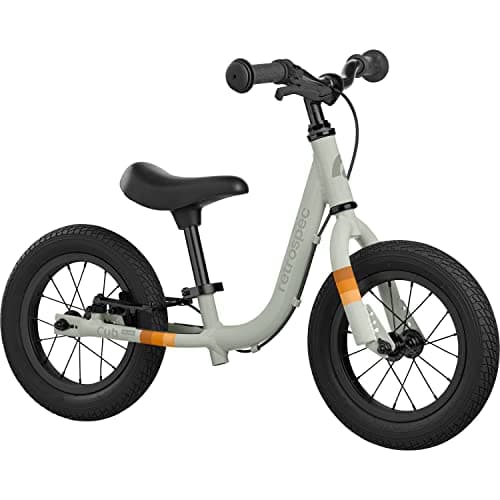 Top pickRetrospec Cub Plus 12 An aluminum balance bike with a reach-adjustable rear V-brake and a published 11.5–15.25 in seat range, at roughly a third of what the direct-sale brands charge. | 9.5/10 | A brake without the direct-sale price | n/p | $109.99 · Retrospec Cub Plus 12 on Amazon
|
| 2 | 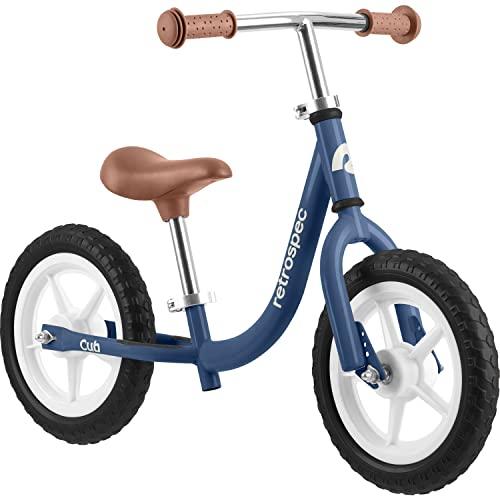 Retrospec Cub 12 An 11 inch minimum seat height with a published range, foam tires that never go flat, and a price that makes the premium 12-inch bikes look like a decision rather than a default. | 9.6/10 | The cheapest bike that publishes its fit | n/p | $59.99 · Retrospec Cub 12 on Amazon
|
| 3 | 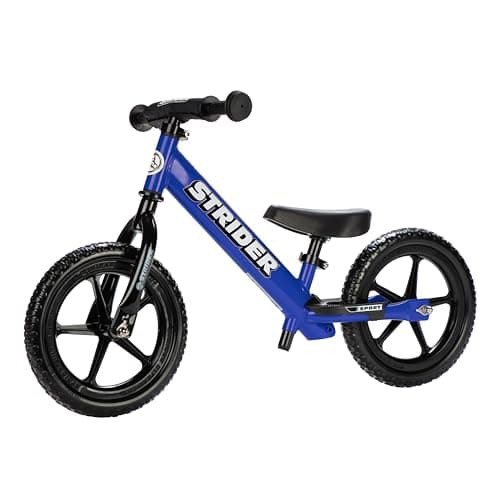 Strider 12 Sport The widest fit range of any 12-inch balance bike we found, and the one most likely to still fit a year after you buy it. | 9.8/10 | The widest age window | 12–18" | $119.99 · Strider 12 Sport on Amazon
|
| 4 | 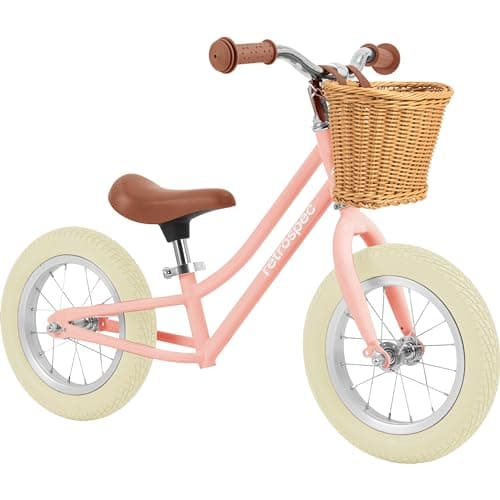 Retrospec Baby Beaumont 12 The balance bike that arrives with a bell and a basket, on air tires, with a published seat range — bought because a two-year-old wants somewhere to put a rock. | 9.2/10 | A basket on a balance bike | n/p | $89.99 · Retrospec Baby Beaumont 12 on Amazon
|
| 5 | 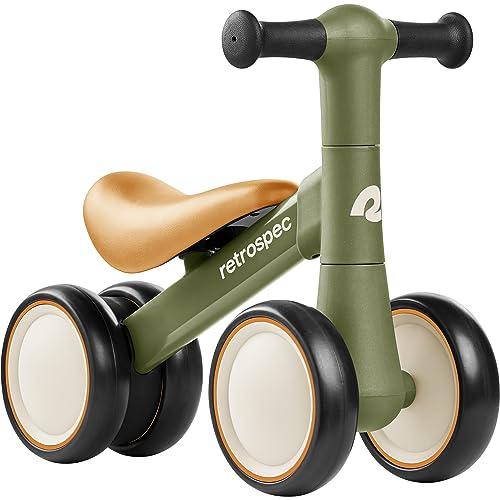 Retrospec Cricket 2 A four-wheeled ride-on with an 8.5 in seat — the only thing here a 12-month-old can actually sit on and push, and the honest answer for a child who is not ready for two wheels. | 9.3/10 | Twelve to twenty-four months | n/p | |
| 6 | 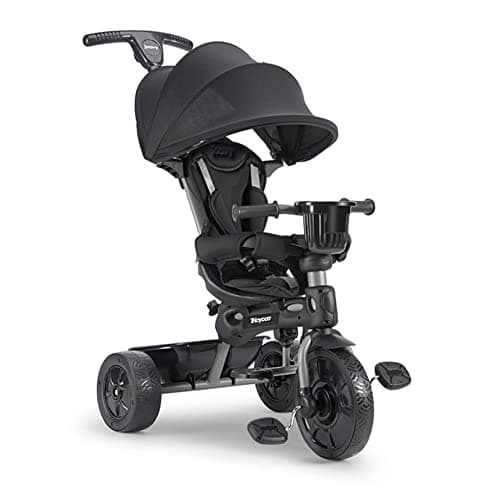 Joovy Tricycoo 4.1 The one designed around a baby rather than a toddler: a 5-point harness, a removable safety guard and a pedal lock so the cranks cannot kick a 10-month-old's legs. | 9.4/10 | Babies who cannot pedal yet | n/p | |
| 7 | 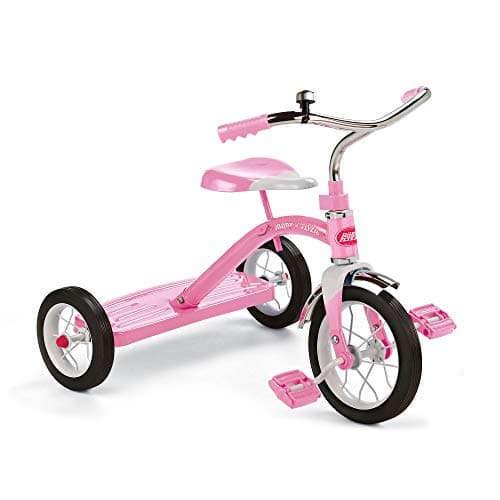 Radio Flyer Classic Pink Tricycle The only trike here that publishes an actual seat-to-floor range (13.5–15.5 in), which is the one number that tells you whether your child can reach the pedals. | 9.2/10 | Knowing it fits before you buy | n/p | |
| 8 | 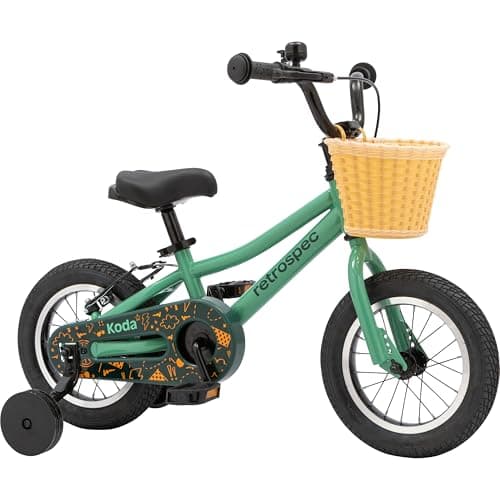 Retrospec Koda 12 The only 12-inch pedal bike here that publishes a saddle range (15.5–18.5 in), and the lightest of them at 15.9 lb — which makes it the one you can size before you buy. | 9.3/10 | The 12 inch you can size on paper | n/p |
n/p = the manufacturer does not publish that figure. Every other spec number here comes straight off their spec page. Scores are ours, on the 8.4–9.8 scale explained on our how we choose page.
Top pick — A brake without the direct-sale price
Category-defining · our scale
Retrospec Cub Plus 12
An aluminum balance bike with a reach-adjustable rear V-brake and a published 11.5–15.25 in seat range, at roughly a third of what the direct-sale brands charge.
| Wheel | 12" |
|---|---|
| Saddle height | 11.5–15.25 in |
| Brakes | Rear aluminum alloy V-brake with a reach-adjustable two-finger lever |
| Gearing | None (balance bike) |
| Frame | Hand-built aluminum alloy, Super Step-Thru |
| Brand says | Manufacturer says 18 months–4 years |
Why we picked it
- 11.5–15.25 in published seat range, so the inseam check works on paper
- A real rear V-brake with a two-finger reach-adjustable lever
- Aluminum frame, not steel, at this price
- Air-filled 12 x 2.125 tires on Schrader valves, so any bike pump fits
Good to knowRetrospec publishes no weight or rider limit, and 3.75 in of seat travel is a shorter runway than a Strider 12 Sport's six.
How we checked it: Researched from published specs · Retrospec — Cub Plus 12 specs
$119.99 · 8% off
#ad · How we make money · Price as of November 26, 2026
#2 — The cheapest bike that publishes its fit
Category-defining · our scale
Retrospec Cub 12
An 11 inch minimum seat height with a published range, foam tires that never go flat, and a price that makes the premium 12-inch bikes look like a decision rather than a default.
| Wheel | 12" |
|---|---|
| Saddle height | 11–14.5 in |
| Brakes | None — riders stop with their feet |
| Gearing | None (balance bike) |
| Frame | Hand-built high-tensile steel, Super Step-Thru |
| Brand says | Manufacturer says 18 months–4 years |
Why we picked it
- 11–14.5 in published seat range — as low as a Strider 12 Sport at the bottom
- 19.5–22.5 in published handlebar range, which almost nobody publishes
- Flat-free EVA foam tires: no pump, no punctures
- Comfortably the cheapest balance bike here that still publishes its fit
Good to knowFoam tires and no brake keep it simple, Retrospec publishes no weight, and seat travel is about three and a half inches.
How we checked it: Researched from published specs · Retrospec — Cub 12 specs
$69.99 · 14% off
#ad · How we make money · Price as of November 26, 2026
#3 — The widest age window
Category-defining · our scale
Strider 12 Sport
The widest fit range of any 12-inch balance bike we found, and the one most likely to still fit a year after you buy it.
| Wheel | 12" |
|---|---|
| Weight | 6.7 lb |
| Fits inseam | 12–18 in |
| Saddle height | 11–17 in |
| Brakes | None — riders stop with their feet |
| Gearing | None (balance bike) |
| Frame | Steel |
| Brand says | Manufacturer says 1–4 years |
Why we picked it
- 11–17 in saddle range covers a 12–18 in inseam — roughly two years of growth
- 6.7 lb, light enough for a toddler to pick up unaided
- Flat-free foam tires never need air
- Tool-free saddle and bar adjustment
Good to knowFoam tires and a steel frame mean nothing to inflate and nothing to break; there is no hand brake at this stage, so feet do the stopping.
How we checked it: Researched from published specs · Strider — 12 Sport specs
$149.99 · 20% off
#ad · How we make money · Price as of November 26, 2026
#4 — A basket on a balance bike
Outstanding · our scale
Retrospec Baby Beaumont 12
The balance bike that arrives with a bell and a basket, on air tires, with a published seat range — bought because a two-year-old wants somewhere to put a rock.
| Wheel | 12" |
|---|---|
| Weight | 9.3 lb |
| Saddle height | 13–16 in |
| Brakes | None — riders stop with their feet |
| Gearing | None (balance bike) |
| Frame | Hand-built high-tensile steel, step-through |
| Brand says | Manufacturer says 18 months–4 years, rider up to 50 lb |
Why we picked it
- 13–16 in published seat range on the lighter colorways, with a stated 9.3 lb weight
- Air-filled 12 x 2.125 tires rather than foam
- Bell and a 5 lb-rated basket included
- 50 lb published rider weight limit
Good to knowAt 9.3 lb it is heavier than an aluminum 12-inch, and the seat range differs by colorway, so check which one you are ordering.
How we checked it: Researched from published specs · Retrospec — Baby Beaumont 12 specs
$99.99 · 10% off
#ad · How we make money · Price as of November 26, 2026
#5 — Twelve to twenty-four months
Outstanding · our scale
Retrospec Cricket 2
A four-wheeled ride-on with an 8.5 in seat — the only thing here a 12-month-old can actually sit on and push, and the honest answer for a child who is not ready for two wheels.
| Saddle height | 8.5 in min |
|---|---|
| Brakes | None — feet on the floor |
| Gearing | None (four-wheel baby balance bike) |
| Frame | Four-wheel frame with non-slip, no-scratch wheels |
| Brand says | Manufacturer says 12–24 months, rider up to 44 lb |
Why we picked it
- 8.5 in seat height, lower than any two-wheel balance bike we have found
- Four wheels, so it cannot tip while they work out what their legs are for
- 44 lb rider limit, which covers most children to about four
- Indoor-safe non-scratch wheels
Good to knowThe 8.5 in seat is fixed and Retrospec's range tops out at 24 months, so this is the step before a balance bike.
How we checked it: Researched from published specs · Retrospec — Cricket 2 specs
#ad · How we make money · Price as of November 26, 2026
#6 — Babies who cannot pedal yet
Outstanding · our scale
Joovy Tricycoo 4.1
The one designed around a baby rather than a toddler: a 5-point harness, a removable safety guard and a pedal lock so the cranks cannot kick a 10-month-old's legs.
| Wheel | 10" |
|---|---|
| Weight | 14.4 lb |
| Brakes | Parent-operated brake on the push handle, plus a pedal locking system |
| Gearing | Direct drive, with a pedal lock that disengages the cranks for the youngest stage |
| Frame | Steel, with a removable safety guard |
| Brand says | Manufacturer says from 10 months, in four stages to 30 months and beyond |
Why we picked it
- Manufacturer's own minimum age is 10 months — the youngest here
- 5-point harness and a removable safety guard, both of which come off as they grow
- Pedal locking system stops the cranks spinning into their shins
- Parent-friendly brakes on the handle and a UPF 50 canopy
Good to knowThe 44 lb rider limit is the ceiling to plan around, and Joovy publishes stage ages rather than a seat height.
How we checked it: Researched from published specs · Joovy — Tricycoo 4.1 specs
#ad · How we make money · Price as of November 26, 2026
#7 — Knowing it fits before you buy
Outstanding · our scale
Radio Flyer Classic Pink Tricycle
The only trike here that publishes an actual seat-to-floor range (13.5–15.5 in), which is the one number that tells you whether your child can reach the pedals.
| Wheel | 10" |
|---|---|
| Weight | 12.35 lb |
| Saddle height | 13.5–15.5 in |
| Brakes | None — riders slow the cranks with their feet |
| Gearing | Direct drive through the front wheel |
| Frame | Steel, with chrome handlebars and fender |
| Brand says | Manufacturer says ages 2–4, up to 42.5 lb |
Why we picked it
- Publishes a 13.5–15.5 in seat height, so you can size it before it arrives
- 12.35 lb — light enough for a toddler to shove around a driveway
- Real rubber tires on spoked steel wheels
- Controlled turning radius, which is the anti-tip feature that matters at this age
Good to knowThe classic steel trike is currently listed on Amazon in pink only, and the 42.5 lb rider limit is the ceiling to plan around.
How we checked it: Researched from published specs · Radio Flyer — Classic Pink Tricycle specs
#ad · How we make money · Price as of November 26, 2026
#8 — The 12 inch you can size on paper
Outstanding · our scale
Retrospec Koda 12
The only 12-inch pedal bike here that publishes a saddle range (15.5–18.5 in), and the lightest of them at 15.9 lb — which makes it the one you can size before you buy.
| Wheel | 12" |
|---|---|
| Weight | 15.9 lb |
| Saddle height | 15.5–18.5 in |
| Brakes | Rear coaster brake plus a hand-operated aluminum V-brake with a reach-adjustable lever |
| Gearing | Single speed, 28T crank and 16T cog, 3.5 gain ratio |
| Frame | High-tensile steel, low-profile step-over |
| Brand says | Manufacturer says ages 2–3, riders 31–42 in, up to 50 lb |
Why we picked it
- 15.5–18.5 in published saddle range, so the inseam check works on paper
- 15.9 lb, the lightest 12 in pedal bike in this registry
- Training wheels included and removable
- A real hand-operated V-brake with an adjustable-reach lever, not just a coaster
Good to knowThe 15.5 in minimum saddle is a balance-bike inseam, so it suits a confident three-year-old rather than a two-year-old.
How we checked it: Researched from published specs · Retrospec — Koda 12 specs
#ad · How we make money · Price as of November 26, 2026
Questions parents actually ask
01What is the best bike for a toddler?
For a walking toddler with an inseam of 11 inches or more, a balance bike — and the most complete one we track is the Retrospec Cub Plus 12, with an aluminum frame, air tires, a rear V-brake and a published 11.5 to 15.25 inch seat range. Below 11 inches of inseam, a four-wheel push-along or a trike with a parent handle is the honest answer.
02What age can a toddler start riding a bike?
It is a measurement rather than a birthday. A child is ready for a balance bike when they can sit on the saddle at its lowest setting with both feet flat on the ground, which for most children happens somewhere between 18 months and two and a half years. The lowest published saddle heights we track are 10.2 inches (woom GO 1) and 11 inches (Strider 12 Sport, Retrospec Cub 12).
03Is a balance bike or a tricycle better for a toddler?
A balance bike, if the child is big enough for one. Balancing is the hard part of learning to ride and a balance bike teaches exactly that; a trike teaches pedaling, which children pick up quickly once they can balance. A trike earns its place earlier — from about a year, with a parent handle — when no two-wheeler fits yet.
04How much should I spend on a toddler bike?
Enough to get a published seat height range you can check an inseam against, which starts well under $100 in our registry. Spend more if the bike has to last two years or two children, because the specification that genuinely improves with price is how long it keeps fitting: six inches of saddle travel on a Strider 12 Sport against three to 3.75 on the cheaper bikes.
05Do toddler bikes need brakes?
Not for safety at this age — feet stop a balance bike perfectly well at toddler speed. A lever is worth having if your street slopes, and it builds a habit the child will need on their first pedal bike. The only pick on this page with a brake is the Retrospec Cub Plus 12.
Our recommendation
Top pick
9.5/10Retrospec Cub Plus 12
A brake without the direct-sale price. Retrospec publishes no weight or rider limit, and 3.75 in of seat travel is a shorter runway than a Strider 12 Sport's six.
$119.99 · 8% off
#ad · How we make money · Price as of November 26, 2026
Runner-up
9.6/10Retrospec Cub 12
The cheapest bike that publishes its fit. Foam tires and no brake keep it simple, Retrospec publishes no weight, and seat travel is about three and a half inches.
$69.99 · 14% off
#ad · How we make money · Price as of November 26, 2026
Brands: want your product tested? For Brands.
Sources
Read next
- Balance BikesBest balance bikes for toddlersSeven toddler balance bikes, ranked on the saddle height their makers publish.
- Balance BikesBest tricycles for kidsFour real trikes, compared on seat height and rider weight limit.
- Balance BikesBest balance bike for a 2 year oldWhat actually fits a 2-year-old, by saddle height.
- Balance BikesWhat age to start a balance bikeThe readiness signal is reach, not age.
- Balance BikesWhen to switch from a tricycle to a balance bikeThree signals the trike is done, and what fits next.
- First Pedal BikesBest bikes for a 3 year oldFour bikes for a three-year-old, and how to tell which stage they are at.
- Balance BikesStrider bike alternativesWhat to buy instead of a Strider, matched model for model on published fit.